
Creating a dementia-friendly home involves adding clear labels on doors, cabinets, and appliances with high-contrast text and simple icons to prevent confusion. Use strategic visual cues near entrances and key areas to guide daily routines, such as reminders to remove shoes or take medication. Incorporate safety devices like alarms and timers, and make sure emergency contacts are visible. By combining these features, you’ll create a supportive environment that boosts independence and safety—discover more ways to enhance your home below.

Get comfort and care essentials delivered free — and shop member deals
- Fast, free delivery on millions of items
- Access to Prime Big Deal Days deals on October 6–7
- Prime Video, Amazon Music and more included
Key Takeaways
- Use clear, high-contrast labels with simple icons on cabinets, doors, and appliances to improve recognition.
- Place visual cues near entrances and key areas to reinforce routines and aid navigation.
- Incorporate safety devices like alarms and emergency contact information in accessible locations.
- Integrate sensory stimuli such as textured objects, calming sounds, and gentle lighting to promote well-being.
- Maintain consistent labeling and cues to reduce confusion, enhance safety, and support independence for individuals with dementia.

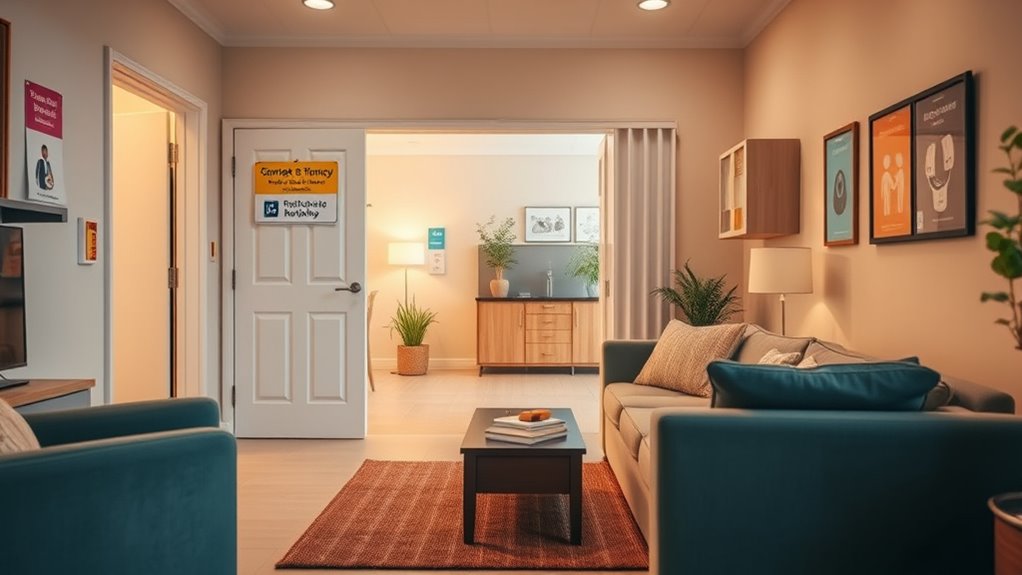
Creating a dementia-friendly home environment is essential for supporting independence and safety for loved ones with cognitive impairments. One of the most effective ways to achieve this is by using clear labels and visual cues throughout the house. Labels on cabinets, doors, and appliances help reduce confusion, making it easier for your loved one to find what they need without frustration. Use large, high-contrast text paired with simple icons or pictures to reinforce understanding. For example, label the bathroom door with a picture of a toilet or a shower to guide them easily. Consistent labeling creates a predictable environment, which can lessen anxiety and prevent accidents.
Use clear, high-contrast labels and visual cues to reduce confusion and promote safety at home.
In addition to labels, incorporating cues in strategic locations further supports navigation and daily routines. Place visual cues near the entrance to remind your loved one of essential steps, such as removing shoes, locking doors, or turning off appliances. Clear cues can also be used to signal changes in activity, like a clock with prominent labels for mealtimes or medication times, helping your loved one stay oriented throughout the day. Regular use of these cues fosters independence and reduces reliance on caregivers for simple tasks. Additionally, utilizing assistive technologies like reminder devices can further enhance their confidence and safety.
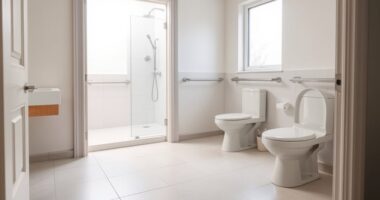
Emergency preparedness is a critical aspect of creating a safe environment. You should ensure that your loved one knows how to contact emergency services and that emergency numbers are visible in prominent spots. Installing simple, easy-to-use safety devices like door alarms or fall detectors can alert you immediately if something goes wrong. Prepare a plan for emergencies, including a list of contacts, medical information, and a safe place to go if evacuation is necessary. Regularly review and practice emergency procedures so your loved one feels confident and secure in knowing what to do if an emergency arises.
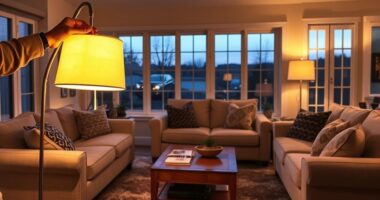
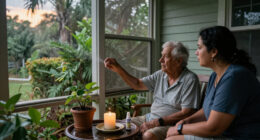
Sensory stimulation is also essential in a dementia-friendly home. Providing stimulating yet calming activities, such as textured objects, soft lighting, and familiar sounds, can help reduce agitation and improve mood. Incorporate items that engage the senses, like scented candles, gentle music, or tactile objects, to promote relaxation and mental engagement. These sensory cues can serve as anchors, helping your loved one feel more grounded in their environment. When combining sensory stimulation with clear labels and cues, you create a supportive setting that enhances safety, encourages independence, and nurtures emotional well-being.
dementia labels for cabinets and doors
As an affiliate, we earn on qualifying purchases.
As an affiliate, we earn on qualifying purchases.
Frequently Asked Questions
How Can I Ensure Safety Without Making the Home Feel Restrictive?
You can guarantee safety without making your home feel restrictive by using adaptive lighting that adjusts to different needs and times of day, creating a comfortable environment. Incorporate color contrast in key areas, like stairs or doorways, to help your loved one easily distinguish boundaries. Keep pathways clear and use subtle cues to guide them, maintaining independence while promoting safety and comfort in a welcoming space.
What Are Some Cost-Effective Ways to Create Cues?
You can create cost-effective visual cues by making DIY labels with simple materials like masking tape and markers. Use clear, large print to label doors, cabinets, and important items, helping your loved one recognize key areas easily. Incorporate visual cues like arrows or color-coded signs to guide them around the home. These inexpensive, personalized cues boost independence and safety without making the environment feel restrictive.
How Do I Personalize Cues for Different Stages of Dementia?
Personalized cues are like a map guiding you through each stage of dementia. To adapt, use stage-specific labels that reflect their changing needs, simplifying their environment step-by-step. For early stages, include familiar photos and names; for later stages, focus on clear, large symbols and simple words. Regularly update these cues as their condition progresses, helping your loved one feel more confident and secure at every step.
What Are Common Mistakes to Avoid When Labeling Rooms?
Avoid overlabeling hazards, which can cause confusion or clutter. Make sure your labels are clear and concise, avoiding inconsistent styles or wording that may mislead or frustrate your loved one. Keep labels simple, visible, and consistent across the home, so they’re easily recognizable and understandable. This helps your loved one navigate safely and confidently without feeling overwhelmed or disoriented by mismatched cues.
How Can I Involve the Person With Dementia in the Environment Setup?
Think of designing your home as a dance where every step counts. You involve the person with dementia through person-centered planning and collaborative design, asking for their preferences and feedback. Encourage them to choose colors, labels, or cues they find familiar and comforting. By actively including them, you create a space that reflects their personality, making them feel valued and safe while fostering independence and confidence in their environment.
Conclusion
Creating a dementia-friendly home with clear labels and cues makes daily life easier and safer. Did you know that 70% of people with dementia benefit from environmental cues that support independence? By implementing simple changes, you help your loved one navigate their space confidently and reduce confusion. Small adjustments can make a big difference, creating a calmer, more supportive environment where they feel secure and understood every day.
Cold & flu season Picks
humidifiers
As an affiliate, we earn on qualifying purchases.