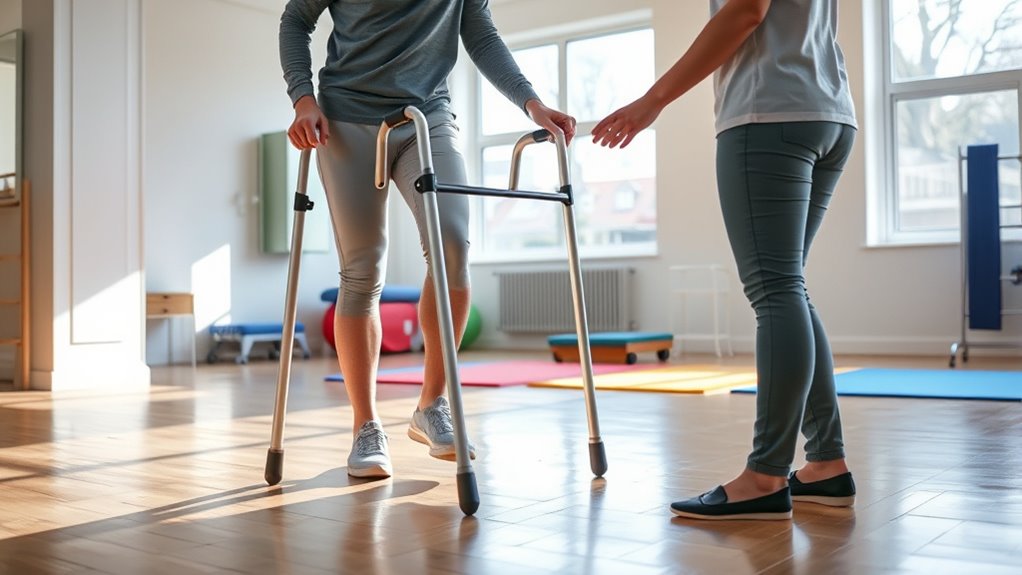

Gait training helps you improve your walking pattern with the support of assistive devices like canes or walkers. It begins with exercises to build strength, flexibility, and coordination, then progresses to more complex tasks. Using gait analysis tools, therapists track your progress and adjust your plan. The goal is to develop a safe, natural, and confident gait. Keep exploring to discover detailed techniques and how personalized plans can enhance your recovery journey.
Listen free for 30 days with Audible
Thousands of audiobooks and originals — cancel anytime.
As an affiliate, we earn on qualifying purchases.
Key Takeaways
- Gait training involves exercises and techniques to improve walking patterns, stability, and confidence.
- Assistive devices like canes and walkers support safety and proper gait mechanics during training.
- Gait analysis assesses stride, symmetry, and joint movement to guide personalized rehabilitation plans.
- Monitoring progress allows therapists to adjust exercises and device use for optimal recovery.
- The ultimate goal is restoring safe, efficient, and comfortable walking ability for independence.
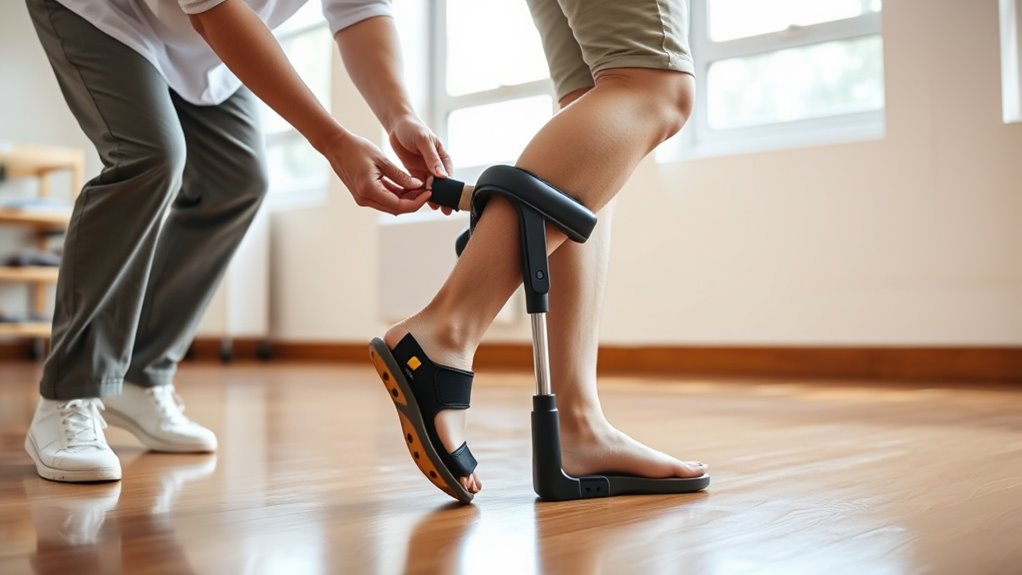
Gait training is a fundamental part of improving mobility and walking efficiency, especially for individuals recovering from injury or experiencing movement difficulties. When you start gait training, one of the key tools you’ll encounter are assistive devices. These devices, such as canes, walkers, or crutches, provide essential support and stability as you work on regaining your walking pattern. Using assistive devices correctly can help you maintain balance, reduce the risk of falls, and build confidence in your movements. They are not just crutches; they are integral to promoting proper gait mechanics during your recovery process.
Assistive devices support stability and confidence during gait training and recovery processes.
A critical step in gait training is gait analysis, which involves evaluating your walking pattern to identify specific issues or abnormalities. This analysis serves as a roadmap for your rehabilitation, pinpointing areas where your gait may be inefficient or unbalanced. A thorough gait analysis considers factors like stride length, step symmetry, weight distribution, and joint movement. By understanding these details, your therapist or trainer can tailor exercises and interventions suited to your unique needs. Gait analysis often employs tools like video recordings, pressure sensors, or motion capture technology to gather precise data, providing a clear picture of your current gait and progress over time.
Once your gait analysis is complete, the focus shifts to retraining your walking pattern. You might start with simple exercises to improve strength, flexibility, and coordination, gradually progressing to more complex tasks. During this process, assistive devices are often used to support proper mechanics and facilitate safe practice. For example, a walker might help you focus on weight shifting and balance, while a cane can assist with single-leg support during specific drills. The goal is to encourage natural movement patterns, reduce compensatory behaviors, and promote muscle memory for efficient walking.
Throughout gait training, consistent monitoring and adjustments are crucial. Your therapist will observe your gait repeatedly, using insights from gait analysis to modify your exercises or assistive device usage as needed. This iterative process ensures you develop a more efficient, safe, and comfortable walking style. Additionally, incorporating robotics and automation into therapy approaches can enhance training outcomes by providing consistent and precise feedback. Remember, gait training isn’t just about moving forward; it’s about retraining your body to move correctly and confidently. With patience, proper guidance, and the strategic use of assistive devices and gait analysis, you’ll gradually improve your walking ability and regain independence.
As an affiliate, we earn on qualifying purchases.
Frequently Asked Questions
How Long Does Gait Training Typically Take to See Results?
You can usually see initial results in gait training within a few weeks, but the progression timeline varies based on individual factors. Some people notice improvements in walking stability and confidence sooner, while others may take longer. Individual variability plays a big role, so stay patient and consistent with your exercises. With dedication, you’ll gradually regain more normal gait patterns, and progress will become more evident over time.
Are There Specific Exercises to Do at Home Between Sessions?
Yes, you should do specific home exercises between gait training sessions to improve your progress. Incorporate daily practice like ankle circles, heel-to-toe walking, and leg lifts to strengthen muscles and enhance balance. Consistency is key, so dedicate time each day to these home exercises. Not only will they complement your training, but they’ll also help you see better results faster and build confidence in your walking ability.
Can Gait Training Help With Balance Issues Unrelated to Injury?
Yes, gait training can help improve your balance issues even if they’re unrelated to injury. It focuses on posture correction and muscle strengthening, which enhance your stability and coordination. By regularly practicing gait exercises, you’ll develop better control over your movements, leading to improved balance. Consistent training helps to activate supporting muscles and refine your walking pattern, making daily activities safer and more comfortable.
What Are Common Challenges Faced During Gait Retraining?
You might struggle with patient motivation or equipment limitations during gait retraining. For example, a patient may feel discouraged after setbacks, making it hard to stay committed. Limited access to specialized equipment can also hinder progress. These challenges require patience, encouragement, and adaptable strategies to keep the patient engaged and maximize the effectiveness of the training, ensuring they stay motivated despite obstacles.
Is Gait Training Effective for Children With Developmental Delays?
Gait training can be effective for children with developmental delays because it helps improve their motor skills and supports overall child development. By engaging in targeted exercises, you can help your child develop better coordination, balance, and walking patterns. Consistent practice and tailored interventions boost their confidence and independence. While progress varies, early and specialized gait training often leads to meaningful improvements in a child’s mobility and quality of life.
Conclusion
Remember, practice makes perfect, and consistency is key to improving your gait. Focus on proper technique, stay patient, and keep pushing forward, even when progress feels slow. Gait training takes time, but with dedication, you’ll notice steady improvements. As the saying goes, “Rome wasn’t built in a day,” so trust the process and stay committed. Keep moving, stay positive, and you’ll walk with confidence before you know it.
NFL season / tailgating Picks
team gear
As an affiliate, we earn on qualifying purchases.