
To assist with bathing, start by gathering all supplies and explaining each step to guarantee comfort and trust. Safely position the person on a non-slip surface, supporting their limbs and torso as needed. Use gentle, warm water and mild soap, working from top to bottom, and rinse thoroughly. Dry carefully and dress them warmly afterwards. If you want to learn more about making the bathing process safe and respectful, continue exploring essential techniques and tips.
Key Takeaways
- Prepare all bathing supplies and ensure safety devices are in place before starting.
- Greet the individual warmly, explain each step, and position them securely on a non-slip surface.
- Support limbs and torso during clothing removal, then wash from top to bottom with mild soap and soft cloths.
- Rinse thoroughly, gently dry, and apply moisturizer if needed to maintain healthy skin.
- Assist into a warm, comfortable area, ensuring they are fully dry and dressed before concluding the bath.
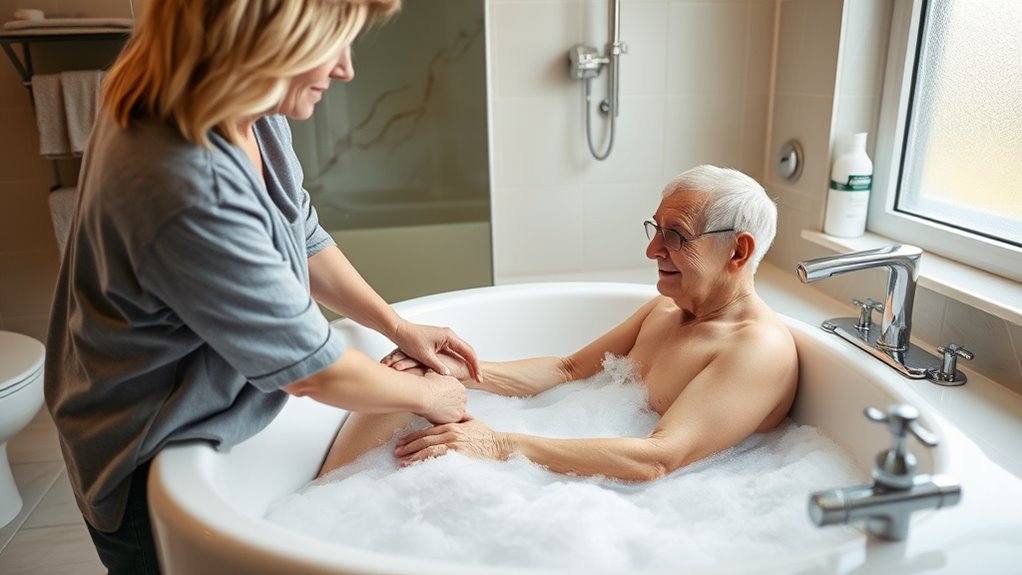
Have you ever wondered how to make bathing safer and more comfortable for someone who needs assistance? It’s essential to use adaptive techniques and safety precautions that prioritize both comfort and security. First, prepare everything you need before starting, such as towels, soap, washcloths, and a non-slip mat. Confirming everything is within arm’s reach minimizes movement and reduces the risk of falls. When you approach, greet the person warmly and explain each step, which helps ease any anxiety and builds trust.
Position yourself securely by locking the wheelchair or placing the person on a sturdy, non-slip surface. Use adaptive techniques like supportive towels or bath belts if needed, and always keep the person’s comfort in mind. To prevent slips and falls, place a non-slip mat in the bathtub or shower and encourage the person to sit rather than stand if they feel unsteady. Maintain constant communication, asking how they feel and if they’re comfortable throughout the process.
Secure the person on a non-slip surface, use adaptive tools, and maintain communication for safe bathing.
When removing clothing, do so gently, supporting the person’s limbs and torso to prevent any strain or discomfort. Use soft, moist washcloths and mild soap to clean, working from top to bottom. Pay particular attention to areas prone to moisture buildup, like underarms, behind ears, and skin folds. During rinsing, confirm that water temperature is warm but not hot, testing it on your wrist first. This helps avoid burns and discomfort, especially for sensitive skin.
Throughout the bathing process, keep safety precautions in mind. Never leave the person unattended in the tub or shower, even for a moment. Use grab bars or handrails if available, and assist with standing or transferring out of the tub safely. If mobility is limited, consider using adaptive devices like transfer benches or bath lifts, which make the process easier and safer. Always support the person’s head and neck when necessary, and be gentle to avoid any injury. Additionally, understanding the family background of the individual can help tailor the care approach to better meet their needs and preferences.
Once bathing is complete, gently pat the skin dry with a towel, and apply moisturizer if needed to prevent dryness. Help the person into a comfortable, warm place, and ensure they’re fully dry and dressed before leaving them. Remember, the key is combining adaptive techniques with safety precautions to make bathing a safe, dignified, and soothing experience. Your attention to detail and gentle approach can greatly improve their comfort and safety during this personal care routine.

TEESHLY Bath Tub and Shower Mats, Non Slip 40 x 16 Inch Extra Large Bathtub Mat, Machine Washable Bathmat with Drain Holes, Suction Cups for Bathroom Floor, Gray
- Large Non-Slip Bath Mat: 40 x 16 inches with 362 suction cups
- Massage-Style Pebbled Design: Provides a massage-like shower experience
- Optimized Drainage System: 327 large drain holes for water flow
As an affiliate, we earn on qualifying purchases.
As an affiliate, we earn on qualifying purchases.
Frequently Asked Questions
How Do I Choose the Right Bathing Aids for My Needs?
To choose the right bathing aids, start by evaluating your specific needs and mobility level. Look for assistive devices like grab bars, shower chairs, and non-slip mats that provide stability and safety. Consider the bathing accessories that make the process easier, such as long-handled sponges or handheld showers. Always prioritize comfort, ease of use, and durability, and consult with a healthcare professional if you’re unsure which aids suit your situation best.
What Precautions Should I Take for Elderly Bathing Safety?
Did you know falls in the bathroom account for 80% of senior injuries? To guarantee safety, always check water temperature to prevent burns, and make bathroom modifications like grab bars and non-slip mats. Never leave an elderly person unattended during bathing, and keep essentials within easy reach. These precautions help reduce hazards and make bathing safer and more comfortable for your loved ones.
How Can I Make Bathing More Comfortable for Disabled Individuals?
To make bathing more comfortable for disabled individuals, create a comfortable environment by guaranteeing the room is warm and private. Use soothing techniques like gentle water temperature adjustments and soft lighting to relax them. Speak calmly and explain each step to reduce anxiety. Keep necessary supplies within reach, and offer support with a caring attitude. These small adjustments help ensure a safe, comfortable, and dignified bathing experience.
What Are Signs of Skin Issues From Improper Bathing Assistance?
You might think that neglecting proper bathing could go unnoticed, but signs of skin issues quickly show up. Watch for skin irritation, redness, or rash development, which often indicate improper bathing assistance. If skin becomes inflamed or develops unexplained bumps, it’s a clear sign you need to adjust your technique. Staying attentive helps prevent discomfort and keeps their skin healthy, even when you think you’re doing “just enough.”
How Do I Handle Bathing Emergencies or Accidents?
If an accident occurs during bathing, stay calm and guarantee the person’s safety first. Use emergency contact protocols to call for help if needed. Prevent further injury by gently supporting the person and removing hazards. Follow accident prevention strategies like using non-slip mats and keeping essentials within reach. Afterward, document the incident and review safety measures to avoid future accidents. Always prioritize safety and act swiftly to handle emergencies effectively.
Conclusion
Now that you know the steps, you’re ready to provide safe, respectful bathing assistance. Remember, nearly 70% of bathing accidents happen due to slips and falls, emphasizing the importance of patience and proper support. Your attentive care can make a real difference, turning a potentially risky task into a comfortable, dignified experience. With these tips, you’ll help ensure safety and comfort for those you assist, fostering trust and independence every step of the way.