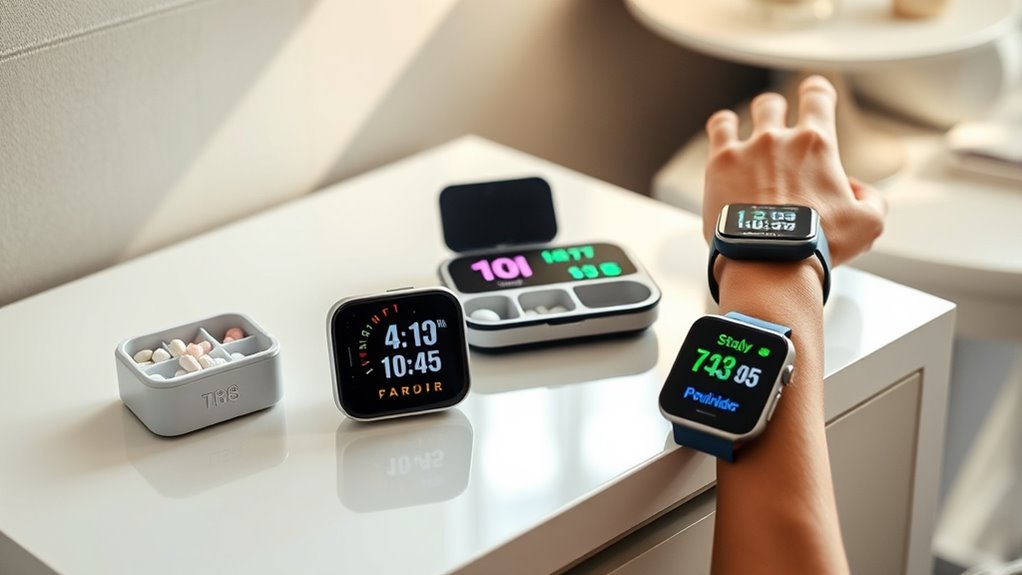

When it comes to managing medications, reliable reminder devices are essential, especially for seniors, busy individuals, or those with complex medication schedules. The best overall pick is the ORKA Talking Clock, thanks to its clear display and customizable alarms, ideal for visually impaired users. For tech-savvy users, the 21-Day Bluetooth Automatic Pill Dispenser offers app integration and lock features, enhancing safety. However, many devices face the tradeoff between simplicity and advanced features—more functions often mean higher costs and complexity. Continue reading to see how these options compare and find the perfect fit for your medication management needs.

Turn quiet afternoons into listening time
- Thousands of audiobooks, podcasts and originals
- Listen on your phone, tablet or Echo — also offline
- Cancel anytime
Complete the kit


Key Takeaways
- The top devices balance ease of use with reliable reminder features, making them suitable for seniors and busy users alike.
- Smart dispensers with app integration offer enhanced safety but come with higher costs and setup complexity.
- Loud alarms, flashing lights, and vibrations are common features that improve accessibility for hearing or visual impairments.
- Pricing varies widely, with simple alarm clocks being affordable, while advanced Bluetooth-enabled devices cost more.
- Choosing the right device depends heavily on user needs: simplicity for quick use, or tech features for detailed tracking.
| ORKA Talking Clock with Customizable Alarms and Large Display for Seniors and Visually Impaired |  | Best Overall for Visual and Hearing Assistance | Display Size: 5.69” x 9.63” x 2.68” | Digit Height: 1.93 inches | Languages: English-USA, English-UK, Spanish, German, French, Italian | VIEW ON AMAZON | See Our Full Breakdown |
| TabTime Pill Reminder & Timer – 8 Daily Medication Alarms |  | Best Value for Simplicity and Portability | Number of alarms: 8 | Power source: Battery operated | Design: Compact, pocket-sized | VIEW ON AMAZON | See Our Full Breakdown |
| Smart Pill Organizer with Alarm and Light-Up Compartments, 7-Day AM/PM |  | Best for Customized, Visual Reminders | Compartments: 14 (7 days, AM/PM) | Battery: 1000mAh rechargeable | Dimensions: 8.07 x 4.53 x 1.22 inches | VIEW ON AMAZON | See Our Full Breakdown |
| MedCenter 31-Day Pill Organizer System with 4-Time Talking Alarm |  | Best for Long-Term Management with Voice Support | Material: Plastic | Number of days: 31 | Compartments per day: 4 | VIEW ON AMAZON | See Our Full Breakdown |
| Med-Q Electronic Pill Dispenser with Alarm for Dementia and Elderly |  | Best for Loud, Progressive Alerts for Memory Loss | Alarm Volume: Loud with gradual increase | Compartment Layout: 7-day AM/PM | Number of Compartments: 14 | VIEW ON AMAZON | See Our Full Breakdown |
| 21-Day Bluetooth Automatic Pill Dispenser with App Reminders and Lock |  | Best Overall for Tech-Savvy Seniors and Caregivers | Capacity: 8 dosage rings, each holding multiple pills | Connectivity: Bluetooth 5.0 | Battery Life: Over 2 months | VIEW ON AMAZON | See Our Full Breakdown |
| Med-Q Digital Pill Box with Alarms |  | Best for Dementia and Alzheimer’s Care with Multi-Sensory Alerts | Alarm Type: Flashing lights and beeping alarms | Capacity: Up to 14 days of medication | Compartment Size: Large compartments for oversized pills | VIEW ON AMAZON | See Our Full Breakdown |
| Electronic Pill Organizer for Seniors – 7 Day Reminder with 85dB Loud Alarm, Flashing Light & Vibration |  | Best for Seniors Who Need Loud, Multi-Modal Alerts | Alarm Volume: 85dB | Alarm Type: Vibration, Flashing Light, Loud Alarm | Compartment Size: 35mm x 25mm x 15mm | VIEW ON AMAZON | See Our Full Breakdown |
| Medication Tracker & Pill Reminder – Visual 7-Day AM/PM Reminder for Elderly |  | Best Visual-Only Reminder for Simplicity and Versatility | Type: Medication Tracker & Pill Reminder | Duration: 7 days | Reminders: AM/PM | VIEW ON AMAZON | See Our Full Breakdown |
| Digital Talking Medication Alarm Clock for Seniors |  | Best for Visually Impaired and Hearing-Impaired Seniors | Display: Extra-large, easy-to-read digital | Voice Reminders: Yes, customizable recordings | Alarms: Multiple daily alarms | VIEW ON AMAZON | See Our Full Breakdown |
| Medication Pill Reminder, Rechargeable Talking Alarm Clock with Custom Voice Alarms, Touch-to-Talk, Digital Display |  | Best for Personalized, Easy-to-Use Medication Reminders | Alarm Count: 3 | Power Source: USB rechargeable | Display: High-contrast LCD with auto-dimming | VIEW ON AMAZON | See Our Full Breakdown |
More Details on Our Top Picks
ORKA Talking Clock with Customizable Alarms and Large Display for Seniors and Visually Impaired
This talking clock stands out for its large, easy-to-read display and customizable voice alarms, making it ideal for seniors and users with vision impairments. Unlike the Med-Q Electronic Pill Dispenser, which lacks voice features, the ORKA provides auditory cues that are crucial for users with cognitive challenges. Its multiple alarms and 30-minute loop help reinforce medication routines, but it relies solely on AC power, limiting portability. Setup can be complex for some, especially those unfamiliar with digital devices, and it lacks a built-in battery for portable use. Overall, this device offers a comprehensive reminder solution for those needing both visual and auditory cues, but it’s less suited for users requiring mobility or battery-powered independence.
Pros:- Large, easy-to-read display with extra-large digits
- Customizable voice alarms in multiple languages
- Loud volume and mute option for hearing-impaired users
- Supports multiple alarms and a 30-minute reminder loop
Cons:- Requires AC power, not portable for battery-only use
- Setup may be complex for some users
- No built-in battery for portable operation
Best for: Seniors or visually impaired individuals who need large displays and customizable alarms with loud, clear sound.
Not ideal for: People looking for a portable, battery-operated device or simple, no-fuss setups, as the clock requires AC power and may be complex to configure.
- Display Size:5.69” x 9.63” x 2.68”
- Digit Height:1.93 inches
- Languages:English-USA, English-UK, Spanish, German, French, Italian
- Power Source:AC powered with battery backup
- Volume:Up to 90 decibels
- Alarm Count:Up to 8 alarms
- Loop System:30-minute loop
- Additional Features:USB port, Sun/Moon icon, mute switch, flashing display during alarms
Our verdict“This pick is best for users who need clear visual and auditory medication reminders in a stationary setup with customizable options.”
TabTime Pill Reminder & Timer – 8 Daily Medication Alarms
This compact pill reminder offers eight independent alarms, making it suitable for managing multiple medications throughout the day, similar to the Med-Q Digital Pill Box but with a more portable design. Its straightforward controls and easy setup benefit elderly users who prefer minimal complexity, but it’s limited to only 8 alarms, which may not accommodate complex medication schedules. Battery operation ensures portability, unlike the AC-powered ORKA, but it requires periodic battery replacements, adding ongoing maintenance. For those who prioritize simplicity and travel-friendly features over advanced reminders, this device excels, though it lacks integration with apps or voice features found in more sophisticated options.
Pros:- Multiple alarms ensure no missed doses
- Easy to set up with simple controls
- Compact and lightweight for travel
- Battery operated for portability
Cons:- Battery replacement needed for continuous use
- Limited to 8 alarms per day
- No app or digital integration
Best for: Elderly users or caregivers seeking a simple, portable, and reliable multi-dose reminder device with minimal setup.
Not ideal for: Users with complex medication routines requiring more than 8 alarms or those wanting smartphone connectivity and advanced features.
- Number of alarms:8
- Power source:Battery operated
- Design:Compact, pocket-sized
Our verdict“This device is ideal for users who need a straightforward, portable medication reminder without extra bells and whistles.”
Smart Pill Organizer with Alarm and Light-Up Compartments, 7-Day AM/PM
This smart pill organizer combines visual cues with customizable sound and light reminders, making it suitable for tech-savvy users or those who prefer multi-sensory cues over basic alarms like the Med-Q. Its rechargeable battery and USB-C charging provide convenience, unlike the battery-dependent Med-Q, but its focus remains solely on organization and reminders, lacking app integration or remote monitoring. The light-up compartments help users quickly identify doses, yet it doesn’t replace professional oversight or handle complex medication regimens beyond a week. It’s a good choice for daily medication routines that benefit from clear visual and light cues, though it isn’t suitable for users needing long-term, multi-week management without recharging.
Pros:- Customizable sound and light reminders
- Light-up compartments for easy identification
- Portable and compact for travel
- Rechargeable battery with USB-C charging
Cons:- Reminder alerts do not replace medical supervision
- Battery life may vary with use
- Limited to one week without recharging
Best for: Tech-savvy seniors or caregivers who want customizable sound and light alerts for weekly medication routines.
Not ideal for: Users needing detailed tracking or app connectivity, or those with very complex medication schedules beyond 7 days.
- Compartments:14 (7 days, AM/PM)
- Battery:1000mAh rechargeable
- Dimensions:8.07 x 4.53 x 1.22 inches
- Lighting:Light-up compartments
- Power Source:USB-C cable
Our verdict“This device suits users who want a visually engaging, customizable medication reminder for weekly routines, especially with light cues.”
MedCenter 31-Day Pill Organizer System with 4-Time Talking Alarm
Designed for long-term medication adherence, the MedCenter offers a 31-day organizer with high-contrast labels and a built-in talking alarm—features that clearly differentiate it from simpler organizers like the Med-Q. Its talking alarm provides auditory reinforcement, ideal for seniors or visually impaired users, but it requires batteries (not specified) and may be bulky for travel purposes. While it excels in supporting consistent daily routines over a month, the lack of app connectivity limits its integration potential. This device is a strong choice for those managing long-term medications who prioritize easy-to-see labels and spoken reminders, though it’s less suited for users seeking a compact or tech-connected device.
Pros:- High-contrast labels for visibility
- Built-in talking alarm for reliable reminders
- Removable daily boxes for easy filling
- Supports long-term medication management
Cons:- Batteries needed for alarm (not specified)
- Bulky design may hinder portability
- Limited to 31 days without extension
Best for: Seniors or caregivers managing long-term medication routines who need reliable voice alerts and high visibility.
Not ideal for: Travelers or users desiring a lightweight, rechargeable device with digital app integration.
- Material:Plastic
- Number of days:31
- Compartments per day:4
- Alarm:Talking alarm system
Our verdict“This system is best for long-term medication routines requiring clear visual aids and spoken alerts, especially for seniors with vision challenges.”
Med-Q Electronic Pill Dispenser with Alarm for Dementia and Elderly
The Med-Q Electronic Pill Dispenser emphasizes high-volume, adjustable alarms with flashing lights, making it highly suitable for individuals with dementia or severe memory challenges. Its large compartments with braille markings improve accessibility for users with visual impairments, similar to the ORKA but with a focus on tactile and auditory cues. While its loud alarm with volume increase ensures doses are noticed, it lacks app integration or remote monitoring, which limits its use for caregivers wanting digital oversight. The dispenser’s 14 removable compartments provide flexibility, but its size and reliance on AA batteries may be inconvenient for some users. It excels in environments where a highly audible, straightforward reminder is needed, yet it isn’t a smart device with remote features.
Pros:- Loud alarm with gradual volume increase
- Large compartments with braille markings
- Removable compartments for flexible use
- Long battery life of approximately 14 months
Cons:- No smartphone or app connectivity
- Requires 2 AA batteries, which need replacement
- Bulky design may be less portable
Best for: Seniors with severe memory impairment or caregivers seeking a loud, reliable alarm with visual and tactile cues.
Not ideal for: Tech-savvy users or those who need digital tracking and app control, as it lacks connectivity features.
- Alarm Volume:Loud with gradual increase
- Compartment Layout:7-day AM/PM
- Number of Compartments:14
- Capacity per Compartment:Up to 23 aspirin (325 mg)
- Batteries:2 AA (about 14 months)
- Water Resistance:Yes
- Dimensions:8.75 x 4.5 x 1 inches
- Weight:11 ounces
Our verdict“This dispenser is ideal for users needing a loud, tactile, and visual medication cue in environments with significant memory challenges.”
21-Day Bluetooth Automatic Pill Dispenser with App Reminders and Lock
This dispenser stands out for its combination of Bluetooth connectivity and app-based management, making it ideal for users comfortable with smartphones. Compared to the Med-Q Digital Pill Box, it offers more flexible scheduling and adherence tracking via the app, but its reliance on a smartphone can be a barrier for less tech-savvy users. Its large LCD display and locking mechanism enhance safety, especially for seniors prone to accidental double dosing. The main tradeoff is setup complexity, which could deter some users, and the limited 21-day cycle may not suit those needing longer-term management. Overall, this model makes the most sense for tech-literate seniors or caregivers who want detailed oversight and remote control.
Pros:- Bluetooth app allows easy medication scheduling and tracking
- Senior-friendly large display and easy access design
- Locks prevent accidental double dosing with safety focus
- Long battery life with low-battery alerts
Cons:- Requires smartphone for full functionality
- Setup may be complex for some users
- Limited to a 21-day cycle, not ideal for long-term use
Best for: Seniors with smartphones and caregivers seeking detailed medication tracking
Not ideal for: Older adults unfamiliar with smartphones or those preferring simple, standalone devices
- Capacity:8 dosage rings, each holding multiple pills
- Connectivity:Bluetooth 5.0
- Battery Life:Over 2 months
- Power Source:Battery operated and plug-in options
- Materials:Food-grade materials
- Pod Size:Holds 12 capsules or softgels
- Display:LCD screen
- Time Formats:12 and 24-hour
Our verdict“This device is best suited for tech-savvy seniors and caregivers who want comprehensive remote management, despite setup challenges.”
Med-Q Digital Pill Box with Alarms
This digital pill box emphasizes effective alarms with flashing lights and beeping sounds, making it suitable for users who need visual and auditory cues. Compared to the Electronic Pill Organizer with loud alarms, the Med-Q offers more robust sensory alerts, which are especially helpful in dementia or Alzheimer’s care. Its large compartments accommodate various pill sizes, simplifying medication management for caregivers. However, it’s less discreet and portable, which limits use during travel. The alarms could also be disruptive in quiet environments, and it requires batteries, adding ongoing maintenance. This pick makes the most sense for caregivers managing medications for seniors with cognitive impairments who benefit from multi-sensory reminders.
Pros:- Effective multi-sensory alarms ensure timely medication
- Large compartments fit various pill sizes
- Easy-open design suitable for seniors
- Reliable visual and auditory cues
Cons:- Requires batteries, no power backup
- Too large for travel or discreet use
- Alarm sounds may be disruptive in quiet settings
Best for: Caregivers of seniors with dementia or Alzheimer’s needing reliable multi-sensory alerts
Not ideal for: Individuals seeking a portable or minimalistic reminder device, as it’s bulky and more suited for home use
- Alarm Type:Flashing lights and beeping alarms
- Capacity:Up to 14 days of medication
- Compartment Size:Large compartments for oversized pills
- Designed For:Seniors, caregivers, dementia, Alzheimer’s
Our verdict“This device excels for caregivers needing a robust, multi-sensory solution for seniors with cognitive impairments, despite its size and potential disturbance.”
Electronic Pill Organizer for Seniors – 7 Day Reminder with 85dB Loud Alarm, Flashing Light & Vibration
This organizer combines a loud 85dB alarm with vibration and flashing lights, making it ideal for seniors with hearing impairments or those prone to forgetting medications. Compared to the Med-Q Digital Pill Box, it offers a more straightforward, electronic reminder system that does not require a smartphone or complex setup. Its individual LED lights provide visibility, and the simple lid design facilitates quick access. The tradeoff is its limited pill capacity per compartment and the need to replace batteries every few months, which could be inconvenient for some users. This device makes the most sense for seniors who need a reliable, multi-sensory reminder system without digital complexity.
Pros:- Loud 85dB alarm with vibration and flashing lights ensures medication adherence
- Easy one-touch lid for quick access
- Simple setup for seniors
- Effective multi-modal alerts
Cons:- Battery replacement required every 80-120 days
- Limited pill capacity per compartment
- Alarm reprogramming needed after battery changes
Best for: Seniors with hearing impairments or those who prefer simple, loud reminders
Not ideal for: Users needing larger pill capacities or seeking a device with smartphone connectivity
- Alarm Volume:85dB
- Alarm Type:Vibration, Flashing Light, Loud Alarm
- Compartment Size:35mm x 25mm x 15mm
- Pill Capacity:20 pills or 8 capsules per compartment
- Material:Food-Grade PCTG (BPA-Free)
- Battery Life:80-120 days
Our verdict“This device offers dependable, multi-sensory reminders perfect for seniors with hearing impairments or those who prefer straightforward alarms, despite limited capacity.”
Medication Tracker & Pill Reminder – Visual 7-Day AM/PM Reminder for Elderly
This tracker emphasizes simplicity through visual cues, making it ideal for users who do not require electronic alerts. Compared to electronic devices like the Electronic Pill Organizer, it relies solely on stickers and visual setup, which minimizes technical barriers. Its versatility allows placement on countertops, walls, or fridges, fitting into various routines. The key tradeoff is the lack of timed electronic alerts, which could lead to missed doses if manual checks are overlooked. It’s best for caregivers and seniors comfortable with manual management and seeking a low-tech solution for daily medication adherence.
Pros:- Simple and easy to use without electronics or batteries
- Versatile placement options (countertop, wall, fridge)
- Effective for multiple medications and caregiver oversight
- Reusable, customizable stickers
Cons:- Limited to visual tracking, no alarms or alerts
- Manual operation and sticker management required
- Less effective for those needing timed prompts
Best for: Caregivers and seniors preferring manual, visual medication tracking without electronic complexity
Not ideal for: Individuals needing timed, electronic reminders or with memory impairments requiring more proactive alerts
- Type:Medication Tracker & Pill Reminder
- Duration:7 days
- Reminders:AM/PM
- Features:Visual, reusable, customizable stickers
- Placement:Wall, countertop, fridge
- Battery:None
Our verdict“This visual medication tracker suits users preferring a straightforward, manual approach, though it lacks the proactive prompts of electronic devices.”
Digital Talking Medication Alarm Clock for Seniors
This clock supports personalized voice reminders, large display, and multiple alarms, making it well-suited for seniors with vision or hearing challenges. Compared to the electronic pill organizers with alarms, it focuses on delivering clear, spoken alerts rather than visual or multi-sensory cues, which enhances independence for users with impairments. The large digital display provides easy reading, and its multiple alarms allow flexible scheduling. The main limitation is the setup process for personalized recordings, which can be complex, and it lacks smartphone connectivity for remote management. This pick is ideal for seniors who need straightforward, personalized reminders to stay on track with medication without additional devices.
Pros:- Supports personalized voice medication reminders
- Large, easy-to-read display
- Loud alarms suitable for hearing-impaired users
- Multiple alarms for flexible scheduling
Cons:- Setup of personalized recordings may be complex
- Limited info on battery life or power source
- No smartphone connectivity or remote control
Best for: Seniors with visual or hearing impairments needing personalized, spoken medication reminders
Not ideal for: Users seeking integrated app control or digital tracking features
- Display:Extra-large, easy-to-read digital
- Voice Reminders:Yes, customizable recordings
- Alarms:Multiple daily alarms
- Designed For:Seniors, dementia patients, hearing-impaired
Our verdict“This talking clock excels for visually or hearing-impaired seniors needing clear, personalized alerts, though setup can be tricky without smartphone integration.”
Medication Pill Reminder, Rechargeable Talking Alarm Clock with Custom Voice Alarms, Touch-to-Talk, Digital Display
This rechargeable talking alarm clock excels at delivering personalized voice reminders, making it ideal for users who benefit from clear, custom alerts. Unlike the ORCA Talking Clock, which offers larger displays and multiple alarms, this device focuses on simplicity with three alarms and a compact design, reducing complexity for seniors and caregivers. The ability to record custom voices enhances clarity and engagement, but the limited alarm count may fall short for those with complex medication schedules. Its USB rechargeability and long standby time minimize battery concerns, yet the need for charging might be inconvenient for users without easy access to power. The auto-dimming high-contrast LCD improves readability in various lighting conditions, but the absence of features like snooze or multiple language options limits flexibility. Overall, this pick is best suited for individuals who prefer straightforward, customizable reminders without needing extensive alarm setups.
Pros:- Personalized voice reminders improve clarity and user engagement
- USB rechargeable with long standby reduces battery worries
- Easy-to-use interface suitable for seniors and caregivers
- Auto-dimming high-contrast LCD enhances readability in different lighting
Cons:- Limited to three alarms, which may not suit all medication routines
- Requires USB charging, which could be inconvenient without a nearby power source
- No additional features like snooze or multiple language options
Best for: Seniors or caregivers seeking simple, personalized medication reminders with clear voice alerts
Not ideal for: Users with complex medication schedules requiring more than three alarms or those who want advanced features like snooze or multilingual support
- Alarm Count:3
- Power Source:USB rechargeable
- Display:High-contrast LCD with auto-dimming
- Battery Life:Up to 6 months standby
- Volume Levels:3 adjustable levels
- Voice Recording:Customizable voice alarms
- Dimensions:Compact design
Our verdict“This device makes the most sense for users who want simple, customizable voice reminders without the need for extensive alarm options.”

How We Picked
The products in this roundup were evaluated based on several key criteria: reliability of alarms, ease of use, build quality, versatility, and value for money. We prioritized devices that cater to different user needs—whether simplicity, advanced features, or affordability—ensuring a diverse selection. Devices with customizable alarms, loud notifications, and clear displays scored higher, as these features directly impact usability for individuals with visual or hearing impairments. Our ranking reflects the overall performance, user-friendly design, and how well each product balances cost against feature set, aiming to guide users toward the best fit for their specific medication routines.Factors to Consider When Choosing Medication Reminder Devices
Choosing the right medication reminder device depends on several important factors. Beyond just alarm sound, consider how easy the device is to operate, its compatibility with your daily routine, and whether additional safety features are needed. Understanding these aspects can prevent costly mistakes, such as selecting a device that’s too complicated or lacking sufficient alert options. The following sections highlight key considerations to help you make an informed decision and find a device that truly supports your medication adherence.Ease of Use and Accessibility
For many users, especially seniors or those with visual or motor impairments, simplicity is paramount. Devices with large, clear displays, minimal setup, and straightforward controls reduce frustration and improve adherence. Features like voice prompts or tactile buttons can significantly enhance usability. Keep in mind that overly complicated devices might discourage consistent use, so prioritize intuitive design over excessive features if ease of operation is your main concern.
Alarm Types and Alert Options
The effectiveness of a medication reminder depends largely on its alert system. Loud alarms, flashing lights, and vibrations are common, but their availability varies. For users with hearing impairments, visual or vibrating alerts are essential, while those with visual impairments benefit from loud, clear alarms or spoken prompts. Combining multiple alert types can increase the likelihood of medication being taken on time, but also adds complexity and cost, so choose according to your specific needs.
Portability and Size
If you need to carry your medication device on the go, size and weight matter. Compact models fit easily into bags or pockets, making them ideal for travelers or those who move between locations frequently. Larger devices with built-in stands or wall mounts suit home use, especially for those who prefer a stationary reminder. Balance portability with screen size and button accessibility to find a device that fits your lifestyle.
Additional Safety and Security Features
Advanced devices may include lock features or app controls to prevent accidental or unauthorized medication access, which is important for managing multiple users or preventing misuse. Bluetooth-enabled dispensers with app alerts can provide remote monitoring and verification, but these often involve higher costs and setup efforts. Evaluate whether these features align with your safety concerns and comfort with technology before investing.
Price and Long-Term Value
Budget-friendly options like simple alarms are affordable upfront but might lack durability or advanced features. Conversely, investing in a more costly smart dispenser can offer added safety and convenience but may be unnecessary for basic needs. Consider your medication schedule complexity, tech comfort level, and whether additional features justify the price. Long-term value includes durability, ease of maintenance, and how well the device integrates into your daily routine.
Frequently Asked Questions
Can I use a medication reminder device if I have cognitive impairments?
Yes, many devices designed for cognitive impairments feature simple interfaces, loud alarms, and visual cues to support memory lapses. Devices with large displays, clear labels, and straightforward operation help reduce confusion. Some models even include voice prompts or automated routines to simplify medication management. Choosing an easy-to-use device tailored to cognitive challenges can greatly improve adherence and safety.
Are Bluetooth-enabled medication dispensers worth the extra cost?
Bluetooth-enabled dispensers offer benefits like remote monitoring, app alerts, and lock features, which can enhance safety for users managing multiple medications or at risk of misuse. However, they come with higher upfront costs and require smartphone familiarity. If you need detailed tracking or have complex medication schedules, these devices can provide peace of mind. For simpler needs, basic alarms may suffice and be more budget-friendly.
How loud should a medication alarm be to be effective?
The ideal alarm volume depends on individual hearing ability and environment. For most users, a volume of around 80-100 decibels is sufficient to wake or alert without being disruptive. Devices with adjustable volume controls are preferable, so you can set the loudness according to your needs. In noisy environments or for those with hearing impairments, visual or vibrating alerts should complement sound alarms for best results.
Is a rechargeable device better than one with batteries?
Rechargeable devices offer the convenience of not needing frequent battery replacements, which can be more cost-effective and environmentally friendly over time. They typically include a charging dock or cord, making daily or weekly charging necessary. Battery-operated devices are often simpler and more portable without dependence on power outlets, but they may require ongoing battery purchases. Consider your daily routine and convenience preferences when choosing between the two.
What features are most important for elderly users?
For elderly users, features like large, easy-to-read displays, loud and clear alarms, and simple controls are critical. Visual and auditory cues should be prominent, and the device should be straightforward to operate without complex programming. Additional safety features such as lockout options or remote monitoring can add peace of mind. Prioritizing ease of use and accessibility ensures the device effectively supports medication adherence without adding frustration.
Conclusion
For those seeking the best overall balance of features and ease of use, the ORKA Talking Clock stands out as a reliable choice. If you prioritize advanced safety features and tech integration, the 21-Day Bluetooth Automatic Pill Dispenser is worth considering, despite its higher price. Budget-conscious users will find the TabTime Pill Reminder a straightforward, affordable solution. Beginners or those with simple routines should lean toward basic alarms or loud clocks, while caregivers managing multiple family members might need devices with lock or remote features. Ultimately, selecting the right device depends on your specific needs, lifestyle, and comfort with technology, ensuring medication adherence becomes a seamless part of your daily routine.
Halloween Picks
halloween
As an affiliate, we earn on qualifying purchases.