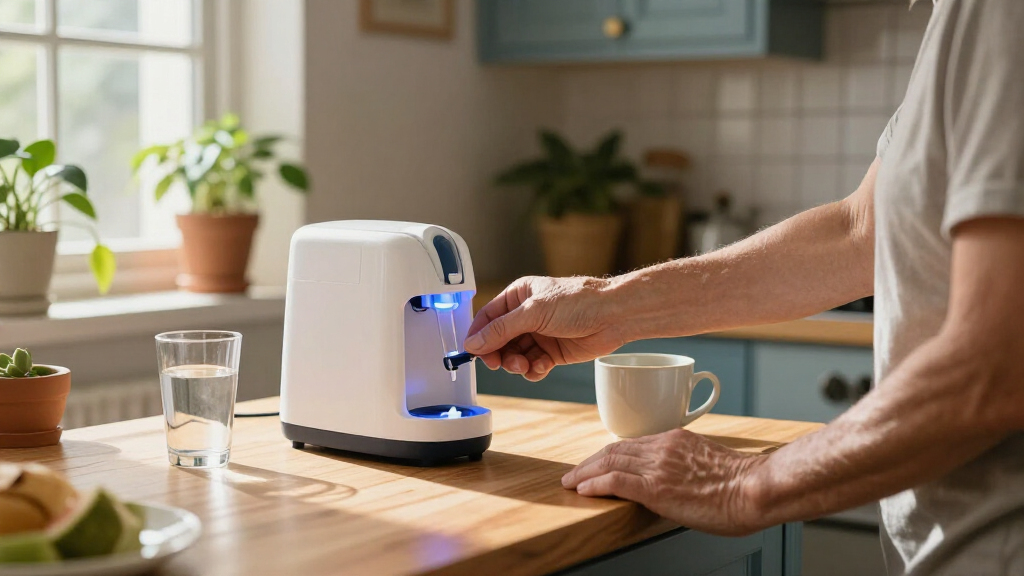

Automatic medication dispensers solve one of the most stressful parts of caring for an aging parent: knowing the right pills get taken at the right time, without a daily argument. After comparing 15 popular dispensers, the Live Fine Automatic Locking Pill Dispenser, 28-Day stands out as the best overall pick for balancing capacity, a locking lid, and simple setup seniors can actually use. If you want remote oversight, the 42-Day Automatic Pill Dispenser with App Control adds caregiver alerts, while the Med-Q Electronic Pill Dispenser is the easiest entry point for anyone intimidated by programming. The main tradeoff in this category is between smart features and simplicity — app connectivity and rising pods help caregivers, but bigger machines with more menus can confuse the senior using them. Capacity is the second tension: a 42-day tray means fewer refills, but it also means a bulkier device on the counter. Keep reading for the full breakdown of what each model does well and who should skip it.

Turn quiet afternoons into listening time
- Thousands of audiobooks, podcasts and originals
- Listen on your phone, tablet or Echo — also offline
- Cancel anytime
Complete the kit


Key Takeaways
- Locking lids separated the serious contenders from the rest: dispensers like the Live Fine 28-Day and the Front Key Lock model prevent pre-dosing or double-dosing, which matters more for memory loss than any alarm feature.
- App control appeared on only two of the fifteen models (the 42-Day App-Control dispenser and the Bluetooth 21-Day model), and both trade simplicity for oversight — they suit long-distance caregivers more than the seniors loading them.
- Capacity clustered around 21 to 28 days, but the expandable tray designs (the 42-Day 3-Tray and the Two-Tray 28-Day) are the only ones that can grow with a medication regimen that adds prescriptions over time.
- Rising pod dispensers proved more forgiving than gravity-drop designs for seniors with tremors or weak grip, since the correct dose is presented rather than poured.
- The cheapest alarm-only models without locks are fine as reminders for self-motivated seniors but fail the core test of this category: stopping a missed or doubled dose when memory lapses.
| Med-Q Electronic Pill Dispenser with Alarm |  | Best for Simple Twice-Daily Routines | Layout: 7-day AM/PM with 14 removable compartments | Capacity: Up to 23 full-size 325 mg aspirin per compartment | Alarm: Grows louder over 5 minutes; repeats every 30 minutes if missed | VIEW LATEST PRICE | See Our Full Breakdown |
| 42-Day Automatic Pill Dispenser with App Control and Expandable 3-Tray Design |  | Best Smart Pick for Remote Caregivers | Capacity: 3 trays with 14 dose slots each, up to 42 doses | Supply duration: Up to 42 days at one dose per day | Setup: Companion app or on-device buttons with voice prompts | VIEW LATEST PRICE | See Our Full Breakdown |
| 21-Day Automatic Pill Dispenser with Rising Pods, Alarms, and LCD Display |  | Best Dispensing Design for Limited Dexterity | Capacity: Up to 21 days | Dosing rings / alarms: 8 each | Pod capacity: Up to 12 capsules or softgels per pod | VIEW LATEST PRICE | See Our Full Breakdown |
| Live Fine Automatic Locking Pill Dispenser, 28-Day |  | Best for Complex Multi-Dose Schedules | Capacity: 28 days | Maximum doses per day: 9 | Dosage rings: 9 interchangeable | VIEW LATEST PRICE | See Our Full Breakdown |
| LiveFine Automatic Pill Dispenser for Elderly, 28-Day Supply with Locking Lid |  | Best Value Pick for Set-and-Forget Care | Capacity: 28-day supply | Doses per day: Up to 9, with alarms as frequent as every 30 minutes | Pills per slot: Up to 18 | VIEW LATEST PRICE | See Our Full Breakdown |
| Automatic Pill Dispenser with Sound Alarm and Flashing Light |  | Best Built-In Battery Backup | Capacity: 28 compartments | Doses per day: 1, 2, 3, or 4 | Pills per compartment: Up to 9 standard-sized pills | VIEW LATEST PRICE | See Our Full Breakdown |
| Windtrace Automatic Pill Dispenser with Alarm |  | Best for Complex Daily Schedules | Compartments: 28 | Daily reminder times: 1 to 6 | Alerts: Audio alarm and flashing blue light | VIEW LATEST PRICE | See Our Full Breakdown |
| 28-Day Automatic Pill Dispenser with Alarm and Desiccant |  | Best Moisture Protection | Capacity: 28 compartments | Operation: Manual one-button dispensing; no app required | Alerts: Sound, light, or sound and light | VIEW LATEST PRICE | See Our Full Breakdown |
| Windtrace Automatic Pill Dispenser with Alarm |  | Best Starter Pick | Daily reminder settings: 1 to 6 times | Compartments: 28 | Display: LCD | VIEW LATEST PRICE | See Our Full Breakdown |
| Bluetooth Automatic Pill Dispenser with 21-Day Capacity and Rising Pods |  | Best Smart Tracking | Capacity: Up to 21 days | Dose rings / alarms: 8 | Connectivity: Bluetooth 5.0 with app | VIEW LATEST PRICE | See Our Full Breakdown |
| 28-Day Automatic Pill Dispenser with Expandable Two-Tray Design |  | Best for Remote Caregiver Management | Capacity: 28 doses across two trays | Tray layout: 14 slots per tray; one slot equals one dose | Supply duration: 28 days at once daily; 14 days at twice daily | VIEW LATEST PRICE | See Our Full Breakdown |
| Automatic Pill Dispenser with 9 Alarms and Front Key Lock |  | Best for Complex Daily Schedules | Daily alarms: Up to 9 | Controls: 4-button setup | Volume levels: 3 | VIEW LATEST PRICE | See Our Full Breakdown |
| Automatic Pill Dispenser with Safety Lock for Seniors |  | Best Budget-Friendly Locking Option | Capacity: 28 days for one daily dose | Daily alarms: Up to 6 | Alarm volume: 80 dB | VIEW LATEST PRICE | See Our Full Breakdown |
| Colorwing Smart Pill Dispenser for Seniors, 31-Slot Automatic Medication Organizer |  | Best Premium Smart Pick | Capacity: 31 slots | Access: Palm-activated press-release picker box | Security: Fingerprint scanner and physical backup key | VIEW LATEST PRICE | See Our Full Breakdown |
| LiveFine Automatic Pill Dispenser, 28-Day Capacity | 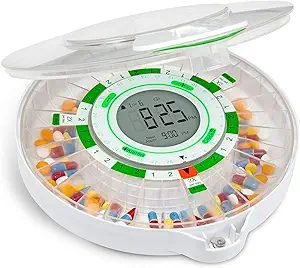 | Best for Easy Refilling and Monitoring | Capacity: 28 days | Doses per day: Up to 9 | Reminder types: Audio and visual with 3 volume levels | VIEW LATEST PRICE | See Our Full Breakdown |
| automatic medication dispensers for senior | Capacity |
|---|---|
| Med-Q Electronic Pill Dispense | Up to 23 full-size 325 mg aspirin per compartment |
| 42-Day Automatic Pill Dispense | 3 trays with 14 dose slots each, up to 42 doses |
| 21-Day Automatic Pill Dispense | Up to 21 days |
| Live Fine Automatic Locking Pi | 28 days |
| LiveFine Automatic Pill Dispen | 28-day supply |
| Automatic Pill Dispenser with | 28 compartments |
| Windtrace Automatic Pill Dispe | — |
| 28-Day Automatic Pill Dispense | 28 compartments |
| Windtrace Automatic Pill Dispe | — |
| Bluetooth Automatic Pill Dispe | Up to 21 days |
| 28-Day Automatic Pill Dispense | 28 doses across two trays |
| Automatic Pill Dispenser with | — |
| Automatic Pill Dispenser with | 28 days for one daily dose |
| Colorwing Smart Pill Dispenser | 31 slots |
| LiveFine Automatic Pill Dispen | 28 days |
More Details on Our Top Picks
Med-Q Electronic Pill Dispenser with Alarm
This option stands out for seniors who take morning and evening doses and would be overwhelmed by a programmable machine. Instead of motorized dispensing, the flashing red light pinpoints the exact compartment due, and the alarm grows louder over five minutes and repeats every 30 minutes until the dose is taken. Compared with the 42-Day App Control model, there is no app, no programming, and almost nothing that can go wrong — a tradeoff that many caregivers will welcome. The braille markings and easy-open tabs make it one of the most accessible picks here for low vision or weak grip. The compromise is capacity: it holds a single week, so someone must refill it every seven days, and it cannot dispense doses automatically the way the Live Fine 28-Day can.
Pros:- Escalating, repeating alarm with a flashing light identifies the exact dose due
- Braille markings, large letters, and easy-open tabs aid low-vision users
- Minimal setup — no programming required
- Roughly 14 months of battery life with early low-battery warnings
Cons:- Only a 7-day AM/PM capacity, requiring frequent refills
- Does not lock, so it cannot prevent missed or double doses on its own
Best for: Seniors on a simple AM/PM regimen, or those with low vision and limited dexterity who need guidance rather than automation
Not ideal for: Anyone taking medication three or more times a day or needing a locked dispenser to prevent double dosing
- Layout:7-day AM/PM with 14 removable compartments
- Capacity:Up to 23 full-size 325 mg aspirin per compartment
- Alarm:Grows louder over 5 minutes; repeats every 30 minutes if missed
- Battery:2 AA batteries, approximately 14 months of use
- Accessibility:Large letters, braille markings, easy-open tabs
- Dimensions:8.75 x 4.5 x 1 inches, 11 ounces
- Case:Water-resistant
Our verdict“This pick makes the most sense for seniors who need a foolproof reminder for twice-daily pills rather than a full automated system.”
42-Day Automatic Pill Dispenser with App Control and Expandable 3-Tray Design
This model is better suited to long-distance caregivers than anything else in this lineup. The companion app allows remote setup, dose tracking, and monitoring, so an adult child can confirm from across the country that Mom took her 8 a.m. pills — something the Live Fine 28-Day, which relies entirely on on-device programming, simply cannot do. The 42-dose capacity across three trays cuts refill visits to roughly every six weeks at one dose per day, though that duration shrinks fast with morning/afternoon/evening schedules. Voice guidance during setup softens the learning curve compared with the 4-button-plus-rotary-knob interface on the 21-Day Rising Pods model. The sealed lid with a desiccant pack is a thoughtful touch for humid climates. The main caveat: it is explicitly not intended for regulated care facilities, and the app dependence means less tech-savvy users will need a caregiver to manage it.
Pros:- App-based remote setup, tracking, and monitoring for caregivers
- 42-dose capacity reduces refill frequency
- Choice of voice alert, buzzer, melody, or LED light reminders
- Sealed lid with desiccant pack protects medication from moisture
Cons:- Stated 42-day supply drops quickly with multi-dose daily regimens
- Excluded from use in regulated institutions such as assisted living
Best for: Tech-comfortable families and remote caregivers who want app-based monitoring and long intervals between refills
Not ideal for: Residents of nursing homes or assisted living, since the dispenser is designed for home use only
- Capacity:3 trays with 14 dose slots each, up to 42 doses
- Supply duration:Up to 42 days at one dose per day
- Setup:Companion app or on-device buttons with voice prompts
- Alerts:LED light, voice alert, buzzer, or melody
- Security:Digital lock with remote unlock options
- Storage:Sealed lid with built-in desiccant pack
- Intended use:Home use only; not for regulated institutions
Our verdict“This is the pick for families who want to supervise a loved one’s medication schedule remotely rather than relying on the senior to manage the device alone.”
21-Day Automatic Pill Dispenser with Rising Pods, Alarms, and LCD Display
The rising pod mechanism is what separates this model from the field: the correct pod physically lifts open at dose time, so the user never has to rotate a drum, slide a window, or hunt for the right slot. Compared with the Live Fine 28-Day’s sliding retrieval window, which still requires reaching into a fixed opening, this design is kinder to arthritic hands and confused moments alike. The key lock prevents tampering and double dosing, matching the security of the LiveFine 28-Day model, while dual battery and plug-in power adds peace of mind the battery-only LiveFine lacks. Eight dosage rings and eight alarms cover complex schedules. The real limitation is pod size — 12 capsules or softgels per pod — so anyone juggling a large pill burden may not fit each dose. Programming through the 4-button rotary-knob interface also takes patience on first setup.
Pros:- Rising pods deliver the dose without lifting, tipping, or sliding a window
- Key lock guards against accidental schedule changes and double dosing
- Dual power options — battery or plug-in — with over 3 months of battery life
- Includes 8 dosage rings, spare pods, charger, and batteries
Cons:- Pod capacity of about 12 capsules may not fit larger daily regimens
- Initial programming with the button-and-knob interface has a learning curve
Best for: Seniors with arthritis, tremors, or early cognitive decline who benefit from doses being physically presented at dose time
Not ideal for: Anyone taking large handfuls of pills per dose, since each pod caps out around 12 capsules
- Capacity:Up to 21 days
- Dosing rings / alarms:8 each
- Pod capacity:Up to 12 capsules or softgels per pod
- Controls:4-button control with rotary knob
- Power:Battery or plug-in; over 3 months of battery life
- Time formats:12-hour and 24-hour
- Security:Key lock
- Included:8 dosage rings, key, batteries, charger with cable, manual, 3 backup pods
Our verdict“This pick makes the most sense when physical ease of access matters more than maximum capacity or app features.”
Live Fine Automatic Locking Pill Dispenser, 28-Day
Where most dispensers in this roundup top out at four or six daily alarms, this model supports up to nine doses per day with nine interchangeable dosage rings, which makes it the practical choice for seniors on complicated regimens — antibiotics around the clock, insulin-adjacent timing, or layered supplement schedules. The 28-day capacity means a monthly refill routine, and the lockable cover with a manual key keeps an impulsive or forgetful user from doubling up, the same safeguard philosophy as the 21-Day Rising Pods model but with far more schedule flexibility. Reminders persist for a full 30 minutes with adjustable audio and visual alerts on a jumbo LCD. The tradeoffs are familiar ones for this category: a caregiver must program it initially, and the physical key is a genuine weak point — lose it and refills become a hassle.
Pros:- Supports up to 9 doses per day with 9 interchangeable dosage rings
- Full 28-day capacity between refills
- Lockable cover helps prevent double dosing and unauthorized access
- Adjustable audio and visual reminders with a jumbo LCD display
Cons:- Requires initial programming and setup
- Manual key must be kept safe — losing it complicates refilling
Best for: Seniors or caregivers managing complicated schedules with many daily dose times spread across the day
Not ideal for: Technophobes or solo seniors without a helper, since programming the rings and alarm schedule is required
- Capacity:28 days
- Maximum doses per day:9
- Dosage rings:9 interchangeable
- Alerts:Adjustable audio and visual reminders
- Reminder duration:30 minutes
- Display:Jumbo LCD
- Security:Lockable cover with manual key
- Retrieval window:Sliding
Our verdict“If dose frequency, not simplicity, is the challenge, this model’s nine-alarm flexibility beats every simpler dispenser in the lineup.”
LiveFine Automatic Pill Dispenser for Elderly, 28-Day Supply with Locking Lid
This option stands out as the straightforward, no-frills workhorse of the lineup: 28 days of capacity, up to nine doses a day, a locking lid, and a sliding retrieval window — the same core formula as the Live Fine model above, minus the layers of extras. Its three-button interface is simpler to program than the 42-Day App Control dispenser’s app-plus-device setup, which matters when the caregiver doing the programming is a senior’s 70-year-old spouse rather than a tech-savvy adult child. Each slot holds up to 18 pills, comfortably more per dose than the 21-Day Rising Pods model’s 12-capsule limit. The jumbo LCD with three volume levels and alarms as frequent as every 30 minutes cover most reminder needs. Being battery-operated with no plug-in backup, a battery failure mid-month is the main risk — worth swapping batteries on a fixed schedule.
Pros:- 28-day capacity with alarms up to 9 times per day
- Slots hold up to 18 pills, handling larger daily regimens
- Locking lid prevents unauthorized or duplicate access
- Simple 3-button programming is easier than app-based alternatives
Cons:- Battery-operated only, with no plug-in or backup power option
- Setup of dosage rings and alarm schedules still falls on a caregiver
Best for: Budget-conscious families who want core automated dispensing and locking security without app complexity
Not ideal for: Seniors on very large single doses, and anyone who wants plug-in power or remote monitoring as a safety net
- Capacity:28-day supply
- Doses per day:Up to 9, with alarms as frequent as every 30 minutes
- Pills per slot:Up to 18
- Display:Jumbo LCD with 3 volume levels
- Controls:3-button interface
- Power:Battery-operated
- Security:Locking cover with manual key
- Retrieval window:Sliding
Our verdict“For families who want dependable locked dispensing at a basic level of complexity, this covers the fundamentals without paying for features they won’t use.”
Automatic Pill Dispenser with Sound Alarm and Flashing Light
Most dispensers in this lineup run on disposable AA batteries or nothing at all when the power cuts out, which is a real risk for seniors who depend on timely doses. This model stands out for its rechargeable NiMH battery delivering up to 48 hours of backup power, so a power outage never silently interrupts a medication schedule. Compared with the Windtrace dispenser, it trades away flexibility — only 4 daily doses versus 6 — in exchange for independently adjustable alert types and an 85-decibel alarm that runs up to 30 minutes. The tamper-resistant lock with two keys limits access to one dose at a time, matching the security of the Live Fine locking models. The tradeoff is clear: no remote monitoring means caregivers must physically check the unit.
Pros:- 48-hour rechargeable battery backup keeps doses on schedule during outages
- Audible and flashing-light alerts can be enabled or disabled independently
- Tamper-resistant lock dispenses only one dose at a time
- Removable tray supports quick weekly loading
Cons:- No remote monitoring for off-site caregivers
- Each compartment caps out at 9 standard pills, limiting complex regimens
Best for: Seniors in areas with unreliable power who need a locked, high-visibility alarm dispenser and don’t need app connectivity
Not ideal for: Caregivers who want to track doses remotely — this unit has no monitoring or notifications at all
- Capacity:28 compartments
- Doses per day:1, 2, 3, or 4
- Pills per compartment:Up to 9 standard-sized pills
- Alarm volume:85 decibels
- Alert duration:Up to 30 minutes, adjustable
- Access control:Tamper-resistant lock with 2 keys
- Battery backup:Rechargeable NiMH, up to 48 hours
- Remote monitoring:Not included
Our verdict“This pick makes the most sense for seniors who need dependable, locked dispensing that keeps working when the power doesn’t.”
Windtrace Automatic Pill Dispenser with Alarm
When a senior’s regimen calls for more than the usual four daily doses, most 28-compartment dispensers fall short. This Windtrace model supports up to six reminder times per day, putting it ahead of the Torrance-built unit above, which tops out at four. Its sliding retrieval window is a thoughtful touch — compared with the flip-lid designs common to Live Fine models, a slide is often easier for arthritic hands to open. The package arrives with six dosage rings, three keys, and four AA batteries, so it works out of the box with no extra purchases. The main friction point is setup: someone has to program the schedule before the first use, and the alarm is loud enough that noise-sensitive users may find it startling.
Pros:- Supports up to 6 daily reminders, more than most 28-compartment rivals
- Combined audio alarm and flashing blue light for hearing or vision limitations
- Sliding retrieval window easier on arthritic hands than flip lids
- Batteries, keys, and dosage rings all included
Cons:- Requires manual programming before first use
- Loud alarm may distress noise-sensitive users
Best for: Seniors taking 5–6 scheduled doses daily who need clear audio and visual reminders without app complexity
Not ideal for: Households with light sleepers or noise-sensitive seniors — the alarm is genuinely loud and not volume-adjustable
- Compartments:28
- Daily reminder times:1 to 6
- Alerts:Audio alarm and flashing blue light
- Display:LCD
- Accessories:6 dosage rings, 3 keys, manual, 4 AA batteries
- Tray:Removable
Our verdict“This model is better suited than its four-dose competitors for anyone whose medication schedule is genuinely busy.”
28-Day Automatic Pill Dispenser with Alarm and Desiccant
Humidity quietly ruins medications, and almost none of the dispensers in this roundup address it. This model’s dual desiccant slots, water-resistant lid, and silicone seal make it the standout choice for humid climates or steamy bathrooms where capsules tend to degrade or stick. Its one-button slide-door dispensing keeps operation simple — no app, no programming hoops — which contrasts with the Bluetooth pod-style dispenser later in this list that depends on a companion app for its smart features. The timing window of 15 minutes early to 30 minutes late adds sensible flexibility for seniors who don’t move at exact clock times. The limitations are real though: gummy-style capsules may stick in the compartments, and it won’t accept add-on trays to extend capacity.
Pros:- Dual desiccant slots and silicone seal protect medications from humidity
- One-button slide-door operation with no app or steep setup required
- Flexible timing window tolerates early or late doses
- Choice of sound, light, or combined alerts
Cons:- Gummy-style capsules may stick inside compartments
- No expandable tray options to grow capacity
- Not intended for assisted living or regulated facilities
Best for: Seniors in humid environments who take capsules or tablets and want no-app simplicity with moisture protection
Not ideal for: Anyone taking gummy supplements, or facilities — the manufacturer states it’s not for regulated institutions
- Capacity:28 compartments
- Operation:Manual one-button dispensing; no app required
- Alerts:Sound, light, or sound and light
- Dose timing window:15 minutes early to 30 minutes late
- Moisture protection:Water-resistant lid, silicone seal, dual desiccant slots
- Gummy capsules:Not recommended
Our verdict“This option stands out for seniors whose bigger enemy is humidity rather than complexity — just keep gummies elsewhere.”
Windtrace Automatic Pill Dispenser with Alarm
For families buying their first automatic dispenser, this Windtrace model offers the friendliest entry point. Like the similar Windtrace with six dosage rings and keys, it handles 1 to 6 daily reminders with audio and flashing-light alerts, but it simplifies the package — no keys to manage, just the dispenser, rings, manual, and batteries. The food-grade removable tray makes weekly loading and cleaning straightforward, and the sliding retrieval window mirrors the arthritic-friendly access of its Windtrace sibling. Compared with the app-driven Bluetooth model in this guide, there’s no phone dependency: everything is programmed on the unit itself. That simplicity cuts both ways — a senior comfortable with menus will be fine, but someone else may need to handle the initial programming.
Pros:- No smartphone or app needed for any function
- 1 to 6 daily reminders cover both simple and busy regimens
- Food-grade removable tray simplifies loading and cleaning
- Batteries and dosage rings included, so setup starts immediately
Cons:- On-device programming can confuse non-technical seniors
- No locking mechanism for dementia or over-dosing concerns
Best for: First-time buyers who want a straightforward, no-app dispenser with flexible reminders and everything included in the box
Not ideal for: Seniors who can’t manage on-device programming and have no family member nearby to set it up
- Daily reminder settings:1 to 6 times
- Compartments:28
- Display:LCD
- Alerts:Audio alarm and flashing blue light
- Dosage rings:6 included
- Power:4 AA batteries included
- Tray:Removable, food-grade material
Our verdict“This pick makes the most sense as a low-commitment first dispenser for families testing whether automated reminders help.”
Bluetooth Automatic Pill Dispenser with 21-Day Capacity and Rising Pods
This is the only dispenser in this batch built around a Bluetooth 5.0 app, and that changes who it serves. Unlike the fully self-contained Windtrace models, it lets a caregiver set reminders, manage doses, and review 14 days of medication records from a phone — a meaningful advantage for adult children monitoring a parent from across town. The automatically rising pods (holding up to 12 capsules each) physically lift the dose toward the user, which can help seniors with limited reach or grip compared with the slide-window designs elsewhere in this roundup. Flexibility continues with dual power — over two months on battery or plug-in — plus a key lock for security. The tradeoffs: capacity is 21 days rather than 28, and the smart features simply don’t exist without the app.
Pros:- App enables reminders, dose management, and intake-history review
- Rising pods and removable tray ease access and cleaning
- Runs over 2 months on battery or plugs in continuously
- Key lock and flashing-light plus audible alarms cover safety and visibility
Cons:- Medication history is retained for only 14 days
- Bluetooth features require companion-app setup and ongoing use
- 21-day capacity falls short of the 28-day standard in this guide
Best for: Tech-comfortable families who want app-based dose tracking and remote schedule management for a parent living alone
Not ideal for: Seniors without a smartphone or a willing app manager — the Bluetooth features are useless without one
- Capacity:Up to 21 days
- Dose rings / alarms:8
- Connectivity:Bluetooth 5.0 with app
- Medication record history:14 days
- Pod capacity:Up to 12 capsules or softgels per pod
- Power:Battery or plug-in; over 2 months battery life
- Materials:Food-grade
- Access control:Key lock
Our verdict“This model is better suited than any non-connected rival for families who want visibility into whether doses are actually taken.”
28-Day Automatic Pill Dispenser with Expandable Two-Tray Design
This option stands out for its two-way control model: schedules can be programmed on the device with voice guidance or adjusted remotely through a free companion app with no subscription. Compared with the Automatic Pill Dispenser with 9 Alarms and Front Key Lock, which offers no wireless features at all, this model gives off-site caregivers real oversight — dose history, adherence trends, remote lid lock/unlock, and even emergency dispensing. The sealed lid with a built-in desiccant pack also keeps medications dry, something the LiveFine 28-Day model doesn’t address. The tradeoff is capacity flexibility: twice-daily dosing cuts the supply to 14 days, so frequent refillers may prefer the 42-Day three-tray design. Note it’s also restricted to home use, not institutional settings.
Pros:- Free app with no subscription and remote schedule updates
- Dose history and adherence trends for caregivers
- Sealed lid with desiccant pack keeps pills dry
- Remote lid lock/unlock and emergency dispensing options
Cons:- Twice-daily dosing reduces supply to just 14 days
- Not suitable for assisted living facilities or nursing homes
Best for: Long-distance caregivers who want app-based monitoring and control of a senior’s medication schedule
Not ideal for: Assisted living or nursing home residents — the manufacturer restricts it to non-institutional home use
- Capacity:28 doses across two trays
- Tray layout:14 slots per tray; one slot equals one dose
- Supply duration:28 days at once daily; 14 days at twice daily
- Setup:On-device buttons with voice prompts or companion app
- App:Free; no subscription; includes software updates
- Alerts:LED light, voice alert, buzzer, or melody
- Storage:Sealed lid with built-in desiccant pack
- Intended use:Home and non-institutional use only
Our verdict“This pick makes the most sense for families managing a senior’s medications remotely and wanting adherence data without a monthly fee.”
Automatic Pill Dispenser with 9 Alarms and Front Key Lock
Where most dispensers in this roundup cap out at six alarms, this model handles up to nine daily reminders, making it the strongest choice for seniors juggling complicated regimens spread across the whole day. Its loud audio plus flashing light alerts cover both hearing and vision limitations, and the front key lock secures both pills and the battery cover — a more tamper-resistant placement than the lid locks on the LiveFine 28-Day model. Unlike the 28-Day Two-Tray dispenser, there’s no app or connectivity, which simplifies things for tech-averse households but means no remote monitoring. The four-button setup is straightforward, and settings survive battery changes, so there’s no reprogramming every few months.
Pros:- Supports up to nine customizable daily alarms
- Audio alerts and flashing lights serve different accessibility needs
- Front key lock secures pills and battery compartment
- Ships with batteries, nine dosage rings, and two keys
Cons:- Requires AA battery replacement every 2–3 months
- No app or wireless connectivity for remote oversight
Best for: Seniors on complex multi-dose schedules whose caregivers prefer a simple, no-connectivity device
Not ideal for: Caregivers who want remote scheduling or adherence tracking — there’s no app, Bluetooth, or Wi-Fi
- Daily alarms:Up to 9
- Controls:4-button setup
- Volume levels:3
- Ringtones:3
- Lock:Front-mounted key lock
- Power:4 AA batteries
- Battery life:Up to 2–3 months per set
- Connectivity:None required — no app, Bluetooth, or Wi-Fi
Our verdict“This model is better suited to households that prioritize maximum daily alarm flexibility and physical security over smart features.”
Automatic Pill Dispenser with Safety Lock for Seniors
This dispenser covers the fundamentals — a 28-day supply, six daily alarms, and an 80 dB alert with flashing light — at a simpler feature set than its competitors. Compared with the Colorwing Smart Dispenser, it skips fingerprint scanners, Bluetooth, and rechargeable batteries entirely, which means fewer things to set up and nothing to charge. The caregiver-controlled locking lid with two backup keys prevents double-dosing, matching the security approach of the LiveFine 28-Day model but with three-button programming and a large-letter LCD that’s easier to read. The main ergonomic letdown is dispensing: users must slide the window and turn the unit upside down to retrieve pills, which is clumsier than the Colorwing’s palm-activated picker box for anyone with weak grip or tremors.
Pros:- Audible and flashing alarms at 80 dB for reliable reminders
- Locking lid helps prevent accidental access and double-dosing
- Settings retained through battery changes
- Includes 6-dose ring, two backup keys, and manual
Cons:- Pills must be retrieved by sliding the window and inverting the unit
- Requires caregiver setup and monthly refilling
Best for: Budget-conscious caregivers who need basic locked dispensing with reliable alarms and minimal tech
Not ideal for: Seniors with arthritis or limited hand strength — upside-down dispensing is awkward compared with push-button designs
- Capacity:28 days for one daily dose
- Daily alarms:Up to 6
- Alarm volume:80 dB
- Display:Large-letter LCD
- Controls:3 buttons
- Security:Locking lid with 2 backup keys
- Included accessories:6-dose ring, 2 keys, user manual
Our verdict“A straightforward, locked 28-day dispenser for families who want dependable reminders without paying for smart features.”
Colorwing Smart Pill Dispenser for Seniors, 31-Slot Automatic Medication Organizer
This is the most feature-rich dispenser in this batch. The palm-activated press-release picker box is the standout: unlike the Safety Lock model, which requires inverting the unit, seniors with arthritis just press down to release a dose. Security runs deeper than anything else here too — a fingerprint scanner plus a mechanical backup key gives dual access control, and the free Bluetooth app handles dose planning and intake tracking without a subscription. Custom voice recordings as reminders add a personal touch that tone-only devices like the 9-Alarm Front Key Lock model can’t match. The tradeoffs are real: the 1200 mAh battery needs recharging roughly monthly, and the fingerprint plus app setup demands more upfront effort than any button-only dispenser in this roundup.
Pros:- One-touch palm-activated access suited to arthritis and limited grip
- Fingerprint lock with physical backup key for dual security
- Custom voice reminders and flexible monthly or weekly dose plans
- Rechargeable battery lasting 30+ days in energy-smart mode
Cons:- Requires recharging roughly every 30 days depending on use
- Bluetooth and fingerprint features demand initial setup effort
Best for: Seniors with dexterity challenges and families who want biometric security and app-based intake tracking
Not ideal for: Tech-averse households — fingerprint enrollment, app setup, and monthly charging add complexity that simpler key-lock models avoid
- Capacity:31 slots
- Access:Palm-activated press-release picker box
- Security:Fingerprint scanner and physical backup key
- Reminders:Custom voice recording or 3 alert tones
- Dose planning:Full-month or weekly plans; 7 reversible rings
- Battery:1200 mAh rechargeable; 2-hour charge, 30+ days in energy-smart mode
- Connectivity:Bluetooth 5.0 with free companion app, no subscription
Our verdict“The strongest choice for buyers who want maximum accessibility and security and don’t mind a more involved setup and charging routine.”
LiveFine Automatic Pill Dispenser, 28-Day Capacity
This LiveFine model pairs a 28-day capacity with an easy-fill rotating carousel and clear lid, making monthly refills and at-a-glance supply checks easier than on sealed designs like the Two-Tray 28-Day dispenser. Caregivers can see remaining doses without opening anything, and the jumbo LCD is larger than the displays on most competitors here. It supports up to nine doses per day with nine interchangeable dosage rings and three volume levels — matching the alarm flexibility of the Front Key Lock model. Reminder setup is manual, though, so unlike the Colorwing there’s no app to adjust schedules remotely, and the lack of published power or battery specifications is a gap worth noting before purchase compared with models that clearly list battery life.
Pros:- Full 28-day supply reduces refill frequency
- Rotating carousel and clear lid simplify loading and supply checks
- Up to 9 daily doses with 9 interchangeable dosage rings
- Lockable cover with sliding retrieval window for secure access
Cons:- Reminder settings must be configured manually on the device
- Power and battery specifications not clearly published
Best for: Caregivers who refill monthly and want easy loading plus a clear view of remaining medication
Not ideal for: Buyers who need confirmed battery specs or app-based scheduling — power details aren’t specified and all setup is on-device
- Capacity:28 days
- Doses per day:Up to 9
- Reminder types:Audio and visual with 3 volume levels
- Beep patterns:3
- Dosage rings:9 interchangeable
- Access:Lockable cover with manual key; sliding retrieval window
- Display:Jumbo LCD
Our verdict“A practical choice for families that value simple monthly refills and visible dose levels over smart connectivity.”
How We Picked
I evaluated each dispenser through one lens: can a senior with declining memory and dexterity get the correct dose at the correct time, safely, with minimal frustration? That meant prioritizing physical safeguards — locking lids, key locks, and dose-confirmation designs like rising pods — over feature counts. A dispenser with ten alarm tones but no lock is a reminder, not a safeguard, and I ranked accordingly. I also weighed programming difficulty, because a device a caregiver sets up once per month beats one the senior must fiddle with daily.
Capacity and refill frequency came next: 28-day trays align with typical monthly refills, while expandable or 42-day designs earn bonus points for reducing caregiver visits. Finally, I considered caregiver visibility — app alerts, flashing lights, and escalating alarms — but only when those features didn’t complicate the senior’s side of the experience. Products near the top combine safeguards, sane capacity, and simple operation; those lower down either trade safety for price or pile on features at the expense of usability.
Factors to Consider When Choosing Automatic Medication Dispensers For Seniors
The right dispenser depends less on the machine and more on the person using it. Before picking, think honestly about the senior’s memory, dexterity, medication schedule, and who will actually load the device.Locking Mechanisms: The Feature Families Skip Most Often
The single most common mistake I see is buying an open dispenser for a senior with any degree of memory loss. An unlocked tray lets a confused person take Tuesday’s dose on Monday, or take a second dose after forgetting the first — and neither mistake triggers an alarm. Locking lids and key locks exist specifically for this failure mode. The tradeoff is real, though: locks mean a caregiver must hold the key or code, so the senior cannot self-load or access pills early. If the senior is independent but occasionally forgetful, a lock may feel insulting and go unused; if there’s a dementia diagnosis, a lock is non-negotiable. Decide which situation you’re actually in before shopping, not after the first missed dose.
Capacity vs. Size: Matching the Tray to the Refill Schedule
Capacity sounds like a pure advantage — more days means fewer refills — but bigger trays mean physically larger machines and longer stretches between safety checks. A 28-day tray lines up neatly with a monthly prescription refill, which is why it’s the most common size in this roundup. A 42-day or expandable design makes sense when a caregiver can only visit every five or six weeks, but it also means up to six weeks of medication sits accessible in one place. Small pods or 21-day trays are easier for arthritic hands to load and fit better in a small kitchen or bedroom. Match the capacity to the caregiver’s real visit rhythm rather than maximizing the number.
Dose Delivery: Rising Pods vs. Gravity Drop
How the pills reach the senior matters as much as when. Gravity-drop designs pour the dose into a cup or tray opening, which works fine for sturdy hands but can scatter small pills for someone with tremors. Rising pod systems lift the correct cup up to the opening, so the senior sees and retrieves exactly one dose — a meaningful difference for Parkinson’s, arthritis, or post-stroke recovery. The catch is that rising-pod mechanisms have more moving parts and can jam with oddly shaped capsules or half-pills, so they demand more careful loading. If the medication list includes irregular tablets or cut pills, ask whether the mechanism tolerates them before choosing this design.
Alarms, Lights, and Escalation
Every dispenser here has an alarm, but they differ in what happens when the alarm is ignored. Basic models beep once and give up; better designs combine sound with a flashing light for seniors with hearing loss, and the best escalate — repeating or getting louder for a set window. Some app-connected models notify a caregiver when a dose goes unclaimed, which is the only way to know from a distance whether medication was actually taken. Be honest about hearing and vision when evaluating this: a loud alarm means nothing to someone who removes hearing aids at night. Also check how the alarm is silenced, because a confused senior who can’t stop the beeping may unplug the machine entirely.
Who Programs It: Setup Burden and Battery Backup
Someone has to set the schedule, load the trays, and respond when things go wrong — and that someone is usually a family member. Models with small buttons and multi-step menus can take a frustrating afternoon to configure, and a mistake there silently breaks the whole system. Battery backup is easy to overlook until a power outage wipes the schedule or the device sits dead through a dose window. Look for how the clock behaves after unplugging, whether settings survive a battery change, and whether the alarm runs on the same power as the motor. If a caregiver will only visit monthly, any glitch means a month of failed doses, so reliability features earn their cost.
Smart Features: When Connectivity Helps and When It Hurts
App control is the most hyped feature in this category and the most situational. For a long-distance caregiver, app notifications of missed doses are genuinely valuable — they turn a monthly guess into daily visibility. But every smart feature adds setup steps, pairing problems, and dependence on WiFi that may not exist in an older home. Some seniors also find a companion app intimidating, and if the app fails, the dispenser may fail with it. My rule of thumb: buy connectivity for the caregiver’s needs, not the senior’s, and confirm the device still works fully offline as a dumb locked dispenser before relying on it.
Frequently Asked Questions
Can a senior with early dementia use an automatic dispenser safely?
It depends on the stage and the dispenser. For early cognitive decline, a locking model with escalating alarms often works well because it presents one dose at a time and physically blocks access to the rest. As confusion deepens, no dispenser is foolproof — a senior may still fail to swallow the dispensed dose, pocket pills, or fight the lock entirely. Locking lids with a caregiver-held key are the safer configuration for dementia, but they should be paired with actual supervision rather than treated as a replacement for it. If wandering or agitation around the device begins, it’s time to discuss medication support with a healthcare provider rather than upgrading hardware.
Is a 28-day or 42-day capacity better?
The right answer follows the refill and visit schedule, not the spec sheet. A 28-day tray matches the standard monthly prescription cycle, so refills happen at the same time as the pharmacy run — an easy routine to sustain. A 42-day or expandable design suits caregivers who can only visit every five or six weeks, cutting one trip per quarter. The downside of larger trays is that more medication sits in one device, which raises the stakes if the lock fails or the schedule was loaded incorrectly. Larger machines also take up more counter space, which can be a real constraint in a senior apartment. Choose the smallest capacity that fits the caregiver’s realistic visit rhythm.
Do these dispensers work if the senior is hard of hearing?
Sound alone is a weak link for many seniors, especially those who remove hearing aids in the evening or overnight. That’s why several models in this roundup pair the alarm with a flashing light, and those are the better picks for hearing loss. Placement helps too: a dispenser in the bedroom where the person actually is at dose time beats a louder alarm in the kitchen. Vibration is rare in this category, so don’t count on it. If hearing loss is severe, the app-connected models that alert a caregiver of a missed dose create a second line of defense rather than relying on the senior perceiving the alarm at all.
What happens to the dispenser during a power outage?
This varies enough between models that it deserves a check before buying. Some dispensers run primarily on batteries and are immune to outages; others rely on wall power and lose their clock or schedule when unplugged, which can mean doses dispensed at the wrong time or not at all. The best configurations keep the motor, clock, and alarm on battery backup so the schedule survives an outage intact. After any power event, verify the displayed time before assuming doses are correct, because a wrong clock silently shifts every alarm. If the senior lives alone in an outage-prone area, battery-first models are worth prioritizing over feature-rich plug-in units.
Are app-controlled dispensers worth the extra complexity?
They’re worth it for one specific buyer: a caregiver who isn’t in the home daily and needs to know whether doses are being taken. Missed-dose notifications convert worry into actionable information, and remote schedule changes save a trip when a prescription changes. The complexity cost lands on setup — pairing, WiFi requirements, and app accounts — and some models become partially useless if the connection drops. Before choosing one, confirm the device still functions as a standalone locked dispenser offline, and that someone nearby can troubleshoot it if the app misbehaves. If the caregiver visits weekly anyway, a simpler locked dispenser usually serves the household better.
Conclusion
The right pick depends on who the dispenser is really for. For best overall, the Live Fine Automatic Locking Pill Dispenser, 28-Day earns the top spot because it combines the two things that matter most — a locking lid and a full month of doses — without app complexity standing between the senior and their pills. For best value, the Windtrace Automatic Pill Dispenser with Alarm covers the reminder-and-dispense basics at a price that makes trying a dispenser low-risk. For best premium, the 42-Day Automatic Pill Dispenser with App Control justifies its cost for long-distance caregivers who need missed-dose alerts and the longest refill interval in the lineup. For beginners, the Med-Q Electronic Pill Dispenser with Alarm is the gentlest introduction — minimal programming, no lock to manage, and an easy upgrade path if needs grow. For specific needs, choose the 21-Day Rising Pod model with Bluetooth for tremors or weak grip, the Front Key Lock dispenser for a dementia concern, and the Expandable Two-Tray 28-Day when prescriptions keep multiplying. Whatever you pick, anchor the decision to the senior’s actual memory and dexterity — not the feature list — and the choice usually becomes obvious.
Halloween Picks
halloween
As an affiliate, we earn on qualifying purchases.