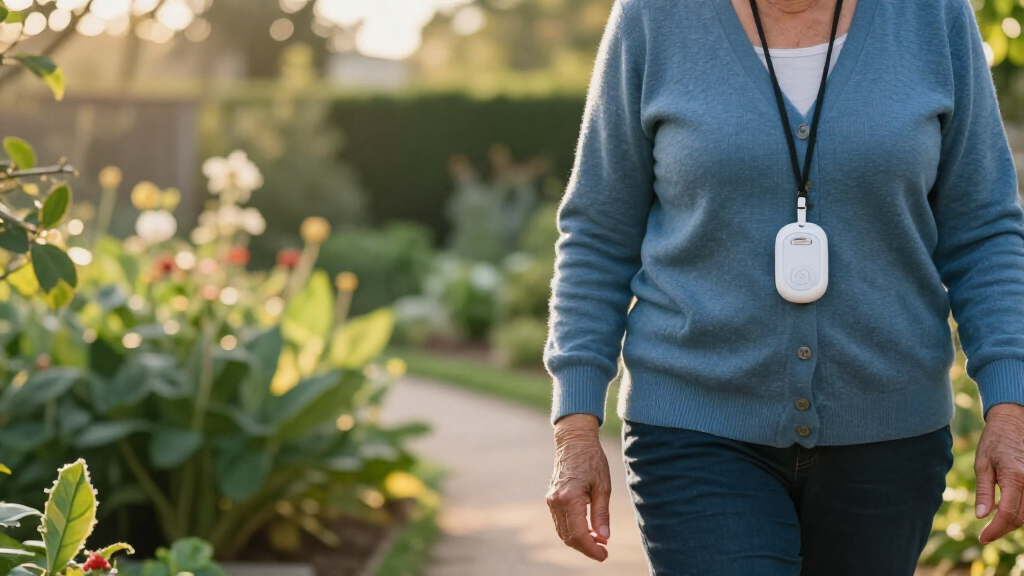

GPS medical alert systems for seniors come down to one core question: how much protection do you need outside the home, and who answers when the SOS button is pressed? Among the 13 systems I compared, the ADT On-The-Go Mobile Medical Alert System stands out as the best overall pick for its professional 24/7 monitoring and reliable nationwide coverage, while the Bay Alarm Medical SOS Mobile GPS system offers a similar monitored experience at a friendlier price, and the SecuLife SOS Wristband is the strongest choice for seniors who want fall detection without a monthly monitoring commitment. The main tradeoffs in this category are between self-monitored devices (no subscription but family handles emergencies) and professionally monitored services (faster response but recurring fees), plus battery life versus device size. Read on for the full breakdown of all 13 systems.

Turn quiet afternoons into listening time
- Thousands of audiobooks, podcasts and originals
- Listen on your phone, tablet or Echo — also offline
- Cancel anytime
Complete the kit


Key Takeaways
- Professionally monitored systems (ADT On-The-Go, Bay Alarm Medical) deliver faster emergency response but require monthly fees, while self-monitored devices like the FONIE and SecuLife wristbands shift responsibility to family caregivers — the single biggest decision in this lineup.
- Fall detection is standard on most picks here, but its reliability varies by form factor: wristbands and watches (SecuLife SOS, Seculife Smartband) detect impacts more consistently than pendants worn loosely around the neck.
- The PAJ GPS EASY Finder and AngelSense watch trade medical features for tracking depth — better suited to wandering risks and location check-ins than emergency response.
- Battery life ranged widely across the lineup, from multi-day standby on pendants like the Bay Alarm SOS Mobile to daily charging on feature-heavy smartwatches with health monitoring.
- Several devices (Medical Alert Pendant with Optional Fall Detection, ResQ Shakti V2) let you add fall detection later, which keeps upfront costs down but means verifying compatibility before you buy.
| Senior Fall Detection Watch with GPS Tracking, SOS, Two-Way Communication, and Health Monitoring |  | Best Feature-Rich Smartwatch | Connectivity: 4G cellular | GPS: Built-in GPS with geofencing | Health features: Heart rate, blood pressure reference, blood oxygen, sleep tracking, step count, temperature | VIEW LATEST PRICE | See Our Full Breakdown |
| Medical Alert Pendant with 24/7 Monitoring, GPS, and Optional Fall Detection |  | Best for 24/7 Professional Monitoring | Connectivity: 4G LTE on Verizon and AT&T networks | Monitoring: 24/7 emergency monitoring | Fall detection: Optional add-on | VIEW LATEST PRICE | See Our Full Breakdown |
| FONIE GPS Medical Alert System for Seniors with Fall Detection |  | Best Value Subscription | Connectivity: 4G, GPS, Wi-Fi | Fall detection: Yes | Two-way calling: Yes with 3 speed-dial lines and up to 10 preset contacts | VIEW LATEST PRICE | See Our Full Breakdown |
| SecuLife SOS Wristband with Fall Detection, GPS Tracking, and Two-Way Calling |  | Best Screen-Free Simplicity | Connectivity features: GPS tracking, geofencing, two-way voice calling | Fall detection: Automatic fall alerts | Design: Screen-free wristband | VIEW LATEST PRICE | See Our Full Breakdown |
| Seculife Medical Alert Smartband for Seniors with Fall Detection and GPS |  | Best for Caregiver Oversight | Connectivity: GPRS, GPS, and satellite | Calling: Two-way calling with automatic answering for pre-approved contacts | Safety features: Fall alerts, SOS calling, GPS tracking, and geofencing | VIEW LATEST PRICE | See Our Full Breakdown |
| ResQ Shakti V2 Medical Alert Safety Necklace with Fall Detection and GPS |  | Most Discreet Design | Design: Gold-tone necklace, jewelry style | Connectivity: Bluetooth to smartphone | Sensors: Accelerometer, GPS | VIEW LATEST PRICE | See Our Full Breakdown |
| PAJ GPS EASY Finder 4G Tracker with SOS Button and Voice Messages |  | Best for Long Battery Life | Connectivity: 4G with integrated multi-network SIM | Location updates: Every 30 seconds while in motion | Battery: 3,000 mAh; up to 10 days use, 14 days standby | VIEW LATEST PRICE | See Our Full Breakdown |
| ADT On-The-Go Mobile Medical Alert System for Seniors with Neck Pendant |  | Best Trusted-Brand Monitoring | Connectivity: AT&T nationwide network | Monitoring: U.S.-based agents, monthly plan required | Contracts: No long-term contracts | VIEW LATEST PRICE | See Our Full Breakdown |
| Safety+ 4G Medical Alert System with Fall Detection and GPS |  | Best for Caregiver Visibility | Connectivity: Nationwide 4G | Monitoring: 24/7 emergency monitoring | Fall detection: Included | VIEW LATEST PRICE | See Our Full Breakdown |
| SecuLife Medical Alert Pendant with Fall Detection and GPS Tracking |  | Best Value Subscription | Fall detection: Yes, automatic | GPS tracking: Real-time with geofence alerts | Location history: Up to 1 year | VIEW LATEST PRICE | See Our Full Breakdown |
| Bay Alarm Medical SOS Mobile GPS Medical Alert System |  | Best for Caregiver Visibility | Connectivity: 4G LTE | Location tracking: GPS | Weight: Under 2 oz | VIEW LATEST PRICE | See Our Full Breakdown |
| Medical Alert Pendant with GPS Tracking and Optional Fall Detection |  | Best for Fall Detection Flexibility | Connectivity: 4G LTE on Verizon and AT&T networks | Monitoring: 24/7 emergency monitoring | Fall detection: Optional add-on | VIEW LATEST PRICE | See Our Full Breakdown |
| AngelSense GPS Watch for Teens and Older Adults |  | Best for Dementia Wandering | GPS tracking: Real-time indoor and outdoor | Speakerphone: Assistive with auto-answer, 60 voice minutes per month | Safety features: SOS button, geofences, alerts, safe ride monitoring | VIEW LATEST PRICE | See Our Full Breakdown |
| GPS medical alert systems for senior | Water resistance | Connectivity | Battery life |
|---|---|---|---|
| Senior Fall Detection Watch wi | IP67 | 4G cellular | — |
| Medical Alert Pendant with 24/ | Suitable for shower use | 4G LTE on Verizon and AT&T networks | Up to 5 days per charge; daily charging recommended |
| FONIE GPS Medical Alert System | IPX67 | 4G, GPS, Wi-Fi | Up to 7 days |
| SecuLife SOS Wristband with Fa | IP67 | — | — |
| Seculife Medical Alert Smartba | IP67; listed depth of 1 meter | GPRS, GPS, and satellite | 1 day (680 mAh) |
| ResQ Shakti V2 Medical Alert S | — | Bluetooth to smartphone | — |
| PAJ GPS EASY Finder 4G Tracker | IP65 | 4G with integrated multi-network SIM | — |
| ADT On-The-Go Mobile Medical A | Waterproof | AT&T nationwide network | — |
| Safety+ 4G Medical Alert Syste | Shower and rain safe | Nationwide 4G | Up to 6 days |
| SecuLife Medical Alert Pendant | IP67 | — | Up to 6 days with 24-hour interval tracking |
| Bay Alarm Medical SOS Mobile G | Water-resistant | 4G LTE | Up to several days, varies with usage and network |
| Medical Alert Pendant with GPS | Water-resistant, shower-safe | 4G LTE on Verizon and AT&T networks | Up to 5 days |
| AngelSense GPS Watch for Teens | — | — | 16 hours |
More Details on Our Top Picks
Senior Fall Detection Watch with GPS Tracking, SOS, Two-Way Communication, and Health Monitoring
This option stands out for packing the most into a single wrist-worn device: fall detection, GPS geofencing, video calling, and a full health dashboard covering heart rate, blood oxygen, sleep, and temperature. Compared with the screen-free SecuLife SOS Wristband, the large touchscreen makes it friendlier for seniors who want to see their stats and place calls themselves rather than rely entirely on a caregiver app. A year of included data service also softens the ongoing-cost picture that subscription-only rivals can’t match. The tradeoff is a real one: the preinstalled SIM is data-only, so voice calls require adding a separate SIM with voice service — an extra setup step that less tech-savvy households may find frustrating. Still, for families who want monitoring plus wellness tracking in one gadget, this watch covers the most ground.
Pros:- Fall detection with alerts to preset emergency contacts
- GPS tracking plus geofencing for caregiver monitoring
- Broad health monitoring including heart rate, blood oxygen, sleep, and temperature
- One year of data service included and IP67 water resistance
Cons:- Included SIM does not support voice calls
- Voice calling requires purchasing and installing a separate SIM with voice service
Best for: Families who want a do-everything watch combining safety alerts with health and activity tracking for an active senior
Not ideal for: Buyers wanting simple, guaranteed voice calling out of the box — the included SIM handles data only, so voice requires a separate SIM
- Connectivity:4G cellular
- GPS:Built-in GPS with geofencing
- Health features:Heart rate, blood pressure reference, blood oxygen, sleep tracking, step count, temperature
- Communication:Video calling, voice chat, SOS alerts
- Water resistance:IP67
- Operating system:Android Wear 1.0
- Included service:One year of data service with preinstalled data-only SIM
Our verdict“A strong pick for seniors and families who want safety and wellness features together, as long as they’re willing to handle an extra SIM for voice calls.”
Medical Alert Pendant with 24/7 Monitoring, GPS, and Optional Fall Detection
What separates this pendant from every other device in this lineup is who answers when help is needed: a trained emergency operator available around the clock, not just a family member who might miss a call. That professional layer puts it closer to a traditional medical alert service like Bay Alarm Medical’s SOS Mobile than to self-monitored gadgets such as the FONIE, which only alerts your own contact list. Dual-network support on Verizon and AT&T broadens coverage where weaker carriers fail, and shower-safe water resistance covers the room where falls most often happen. The compromises are financial and practical: monitoring costs $39.99 per month, fall detection adds $4.99 more, and the maker recommends daily charging despite the up-to-five-day battery. For seniors living alone, though, professional response is a level of security family contacts can’t replicate.
Pros:- 24/7 access to trained emergency operators
- Works across both Verizon and AT&T 4G LTE networks
- Water resistant for safe shower use
- Battery can last up to five days per charge
Cons:- Requires a monthly monitoring subscription
- Fall detection costs an additional monthly fee
- Daily charging recommended for reliable use
Best for: Seniors living alone whose families want a trained emergency operator responding, not just relatives
Not ideal for: Budget-conscious buyers — monthly monitoring plus fall detection fees add up fast compared with family-contact devices
- Connectivity:4G LTE on Verizon and AT&T networks
- Monitoring:24/7 emergency monitoring
- Fall detection:Optional add-on
- Water resistance:Suitable for shower use
- Battery life:Up to 5 days per charge; daily charging recommended
- Activation:Contact provider after receiving the device
- Monthly subscription:$39.99/month
- Fall detection add-on:$4.99/month
Our verdict“The pick for buyers who want a real human responder on the other end of the SOS button and accept the subscription that comes with it.”
FONIE GPS Medical Alert System for Seniors with Fall Detection
Among subscription-based devices here, the FONIE makes the most sense for long-term cost control: service starts at $15.95 per month after three free months, roughly a third of what the professionally monitored pendant costs. That lower fee doesn’t mean thin features — buyers still get fall detection, GPS and Wi-Fi tracking with 10-second updates, two-way calling, and a year of location history, plus thoughtful daily-living extras like pill reminders and a talking clock that the SecuLife wristband skips entirely. Seven-day battery life also beats nearly everything in this roundup, including the Seculife Smartband’s single-day runtime. The catch is that alerts go to your own preset contacts rather than a monitoring center, so someone in the family needs to be reachable and willing to act. For budget-minded families with responsive relatives, that’s a trade worth making.
Pros:- Lowest ongoing subscription cost in the category at $15.95/month
- Fall detection, GPS tracking, and two-way calling combined
- Up to 7 days of battery life with IPX67 waterproofing
- Includes pill reminders, talking clock, and step tracking
Cons:- Requires a paid subscription after the three free months
- Alerts go to personal contacts only — no professional monitoring
Best for: Budget-conscious families with reachable contacts who want fall detection and GPS tracking at the lowest ongoing cost
Not ideal for: Seniors without dependable family or friends nearby — there’s no professional monitoring center behind the SOS button
- Connectivity:4G, GPS, Wi-Fi
- Fall detection:Yes
- Two-way calling:Yes with 3 speed-dial lines and up to 10 preset contacts
- Battery life:Up to 7 days
- Water resistance:IPX67
- Tracking:Updates every 10 seconds with up to 1 year of location history
- Included service:3 months free
- Subscription:Required; starts at $15.95/month
- Warranty:Limited lifetime
Our verdict“The best value for families comfortable acting as the emergency response team themselves.”
SecuLife SOS Wristband with Fall Detection, GPS Tracking, and Two-Way Calling
This model earns its spot by removing the thing that confuses many seniors most: the screen. One button places calls to preset contacts, falls trigger automatic alerts, and the hands-free auto-answer lets a caregiver speak with a disoriented wearer who can’t press anything. Compared with the touchscreen-heavy Senior Fall Detection Watch, this design suits older adults who find menus and icons frustrating — there’s simply nothing to learn. Caregivers still get GPS tracking, geofence alerts, and a year of location history through the companion app. The tradeoffs: at $25 per month it costs more to run than the FONIE while offering fewer onboard features, and the IP67 rating covers rain and handwashing rather than shower submersion. For families whose priority is a device the senior will actually wear and use without help, that simplicity justifies the premium.
Pros:- Single-button calling to preset contacts with automatic fall alerts
- GPS tracking and geofence alerts through a caregiver app
- Hands-free auto-answer for two-way calling
- Screen-free design that removes learning curve entirely
Cons:- Requires a $25 monthly subscription
- Water resistance covers rain and splashes, not shower immersion
- Fewer onboard features than similarly priced rivals
Best for: Seniors who struggle with touchscreens and need a one-button device a caregiver manages remotely
Not ideal for: Buyers seeking shower-safe wear or onboard features like health stats and pill reminders — this band keeps things deliberately minimal
- Connectivity features:GPS tracking, geofencing, two-way voice calling
- Fall detection:Automatic fall alerts
- Design:Screen-free wristband
- Water resistance:IP67
- Location history:1 year
- Subscription:$25 per month
- Warranty:1 year
Our verdict“The right choice when ease of use matters more than features — nothing to learn, nothing to fumble with.”
Seculife Medical Alert Smartband for Seniors with Fall Detection and GPS
This smartband is built for the family member doing the watching as much as the senior wearing it. A three-second SOS hold or a detected fall automatically dials preselected contacts, and approved callers get auto-answered — so a worried relative can check in unannounced. The app surfaces GPS location, geofencing, and health metrics including heart rate, blood oxygen, and temperature, giving caregivers a fuller picture than the screen-free SecuLife wristband provides. Its place in this lineup sits between the FONIE’s budget approach and the fully featured Senior Watch: more caregiver tooling than the former, less communication flexibility than the latter (no video calling). The clear weak point is one-day battery life, the shortest here by far, which means nightly charging discipline — a genuine risk for the very seniors who forget such routines. For involved families, the oversight is worth the charging schedule.
Pros:- Automatic fall and SOS calling to preselected contacts
- Auto-answer lets approved caregivers reach the wearer hands-free
- GPS tracking, geofencing, and location history in an app
- Health monitoring including heart rate, blood oxygen, and temperature
Cons:- One-day battery life requires diligent nightly charging
- Monthly subscription required starting at $25
Best for: Hands-on caregivers who want health data, location tracking, and the ability to silently check in via auto-answer
Not ideal for: Seniors who can’t be relied on to charge a device nightly — the one-day battery is the shortest in this roundup
- Connectivity:GPRS, GPS, and satellite
- Calling:Two-way calling with automatic answering for pre-approved contacts
- Safety features:Fall alerts, SOS calling, GPS tracking, and geofencing
- Health metrics:Heart rate, blood oxygen, and body temperature
- Water resistance:IP67; listed depth of 1 meter
- Display:2-inch touchscreen
- Battery life:1 day (680 mAh)
- Compatibility:iOS and Android
- Subscription:Required; from $25 per month
Our verdict“Pick this if a proactive caregiver wants maximum oversight, but only if daily charging is a realistic habit.”
ResQ Shakti V2 Medical Alert Safety Necklace with Fall Detection and GPS
Most medical alert devices look like medical devices, and for seniors who resist wearing anything that signals vulnerability, that’s the whole problem. The ResQ Shakti V2 solves it by disguising protection as gold-tone jewelry, which makes it the easiest option in this lineup to actually keep on the body all day. Push-button alerts, fall detection via accelerometer, and GPS location sharing all work through a paired smartphone, and users can choose between trusted contacts or 24/7 live agents. The catch is structural: the safety features lean on Bluetooth to a phone, unlike the ADT On-The-Go or Safety+ 4G, which connect directly to cellular networks on their own. Premium features also sit behind the Safety Enrollment plan after the first included month, so the true cost of ownership only becomes clear later. This pick makes the most sense for style-conscious buyers who accept a smartphone-dependent design.
Pros:- Jewelry-style design that removes the stigma of wearing a medical device
- Fall detection and GPS location sharing built in
- Choice between trusted contacts and 24/7 live agent response
- Both silent and loud alert modes for different situations
Cons:- Depends on a paired smartphone via Bluetooth rather than standalone cellular
- Premium features require ongoing Safety Enrollment after the first month
- Less field-proven than established monitoring brands like ADT
Best for: Seniors who refuse traditional medical pendants and want a device that passes as everyday jewelry
Not ideal for: Anyone without a reliably charged smartphone nearby, since the Bluetooth connection is the weak link
- Design:Gold-tone necklace, jewelry style
- Connectivity:Bluetooth to smartphone
- Sensors:Accelerometer, GPS
- Alert options:Push button, silent and loud alerts
- Monitoring:Trusted contacts or 24/7 live agents
- Included service:1 month of Safety Enrollment
- Control method:Push button
Our verdict“Choose this if the biggest barrier to protection is willingness to wear the device at all — just plan on keeping a smartphone close.”
PAJ GPS EASY Finder 4G Tracker with SOS Button and Voice Messages
The PAJ GPS EASY Finder isn’t a traditional medical alert system — it’s a rugged 4G GPS tracker with an SOS button bolted on, and that distinction cuts both ways. Where the Safety+ 4G tops out around six days per charge, this unit runs up to ten days of normal use with a 3,000 mAh battery, and its IP65 housing shrugs off rain in a way jewelry-style options like the ResQ Shakti V2 can’t. Location updates arrive every 30 seconds while moving, geofencing works for wandering-prone users, and short voice messages add a basic two-way channel. What’s missing is a professional monitoring layer: the SOS button reaches app-based alerts, not trained agents. Compared with the ADT On-The-Go, you trade emergency call centers for battery life and 365 days of route history. Families managing dementia-related wandering get more from this than seniors who need live dispatch.
Pros:- Up to 10 days of battery in normal use, the longest in this batch
- 30-second location updates while in motion plus geofencing
- IP65 water resistance and coverage in over 100 countries
- 365-day route history for reviewing patterns of movement
Cons:- No professional monitoring agents — SOS alerts go through the app
- Tracking requires a subscription with a multi-network SIM
- Bulky compared with pendant-style wearables
Best for: Caregivers tracking a senior with dementia who wanders and needs long-lasting location data
Not ideal for: Seniors who need a live emergency agent on the other end of an SOS press, since this is tracker-first
- Connectivity:4G with integrated multi-network SIM
- Location updates:Every 30 seconds while in motion
- Battery:3,000 mAh; up to 10 days use, 14 days standby
- Water resistance:IP65
- SOS and communication:SOS button, voice messages
- Route history:Up to 365 days
- Coverage:100+ countries
- Subscription:Required; approximately $5.50/month
- Warranty:3-year manufacturer; lifetime device warranty with active subscription
Our verdict“This is the pick when location history and battery endurance matter more than live-agent emergency response.”
ADT On-The-Go Mobile Medical Alert System for Seniors with Neck Pendant
When an emergency happens, the quality of who answers matters more than the hardware, and that’s where ADT On-The-Go earns its place. This pendant rides on AT&T’s nationwide network and connects to U.S.-based monitoring agents who can loop in emergency contacts — a level of professional response the PAJ GPS EASY Finder and SecuLife pendant simply don’t offer, since both route alerts to family members or an app instead. The wearable is fully waterproof, so it stays on in the shower, where falls are common. The tradeoffs are honest ones: it requires phone activation before first use, there’s no fall detection mentioned, and a monthly monitoring plan is mandatory — though the no long-term contract flexibility softens the commitment compared with traditional landline-based systems. This model is better suited to seniors who prioritize a proven monitoring operation over gadget features.
Pros:- Backed by ADT’s U.S.-based professional monitoring agents
- Nationwide AT&T cellular coverage with no base station needed
- Fully waterproof pendant wearable in the shower
- Flexible month-to-month plans with no long-term contracts
Cons:- Monthly monitoring plan is required for the device to function
- Phone activation adds a setup step before use
- No automatic fall detection listed
Best for: Seniors and families who want an established security company answering the call rather than relying on relatives
Not ideal for: Buyers who want automatic fall detection, which this system doesn’t advertise
- Connectivity:AT&T nationwide network
- Monitoring:U.S.-based agents, monthly plan required
- Contracts:No long-term contracts
- Wearable:Neck pendant
- Water resistance:Waterproof
- Activation:Phone activation required
Our verdict“The safest choice for buyers who value a professional call center over app-based alerts, provided a monthly plan fits the budget.”
Safety+ 4G Medical Alert System with Fall Detection and GPS
What separates the Safety+ 4G from most rivals in this roundup is its caregiver app, which surfaces location, step count, activity tracking, battery status, and emergency notifications in one place. For adult children managing an independent parent from another city, that visibility is the whole point. It bundles the features families usually have to choose between: 24/7 monitoring with trained responders like the ADT On-The-Go, plus automatic fall detection that the ADT option lacks. Battery life runs up to six days, and the included charging dock, lanyard with magnetic clasp, and belt clip give flexible wearing options. The costs are real, though — ongoing service runs $40 per month after the first included month, a steeper commitment than the SecuLife pendant’s $20 subscription, and activation requires a phone call. Compared with the PAJ tracker, you give up nothing on monitoring but pay noticeably more per year.
Pros:- Caregiver app with location, activity, step count, and battery alerts
- 24/7 professional monitoring combined with automatic fall detection
- Up to 6 days of battery life with a convenient charging dock
- Two wear options — magnetic-clasp lanyard or belt clip
Cons:- Ongoing service costs $40 per month after the included first month
- Requires phone-call activation before the device works
- No smartphone-free setup for relatives without one
Best for: Long-distance caregivers who want app-based oversight plus professional monitoring and fall detection in one package
Not ideal for: Budget-conscious buyers, since $40 monthly adds up to nearly $500 a year after the first month
- Connectivity:Nationwide 4G
- Monitoring:24/7 emergency monitoring
- Fall detection:Included
- Location services:GPS
- Battery life:Up to 6 days
- Water resistance:Shower and rain safe
- Wear options:Lanyard or belt clip
- Included service:First month included; $40/month after
Our verdict“The strongest all-around package for families who want both live monitoring and remote oversight, if the monthly fee is manageable.”
SecuLife Medical Alert Pendant with Fall Detection and GPS Tracking
The SecuLife pendant undercuts the ongoing cost of everything else here with a $20 monthly subscription — half the Safety+ 4G rate — while still packing fall detection, real-time GPS, geofence alerts, and two-way calling with hands-free auto-answer. That auto-answer feature matters: a disoriented senior who can’t press anything else can still be reached and heard through the pendant itself. One year of location history rivals the PAJ tracker’s retention, and the IP67 rating beats the PAJ’s IP65 for water exposure. Instead of a professional call center like ADT’s, SOS alerts go to preselected contacts, which works well when family lives nearby and responds quickly. The built-in display showing time, battery, and signal is a small but practical touch the Safety+ device omits. The tradeoff is simple: cheaper monitoring means the emergency plan depends on your contacts picking up.
Pros:- Lowest ongoing subscription cost in this batch at $20 per month
- Two-way calling with hands-free auto-answer for non-responsive situations
- IP67 waterproof rating and up to 6 days of battery life
- Geofence alerts plus one year of location history
Cons:- Alerts reach personal contacts, not a 24/7 monitoring center
- Battery life depends on 24-hour interval tracking settings
- Phone-call setup of contacts required before it’s useful in an emergency
Best for: Families with responsive local contacts who want fall detection and GPS without a $40 monthly bill
Not ideal for: Seniors living alone without reliable nearby contacts, since there’s no professional monitoring agent
- Fall detection:Yes, automatic
- GPS tracking:Real-time with geofence alerts
- Location history:Up to 1 year
- Calling:Two-way with hands-free auto-answer
- Battery life:Up to 6 days with 24-hour interval tracking
- Water resistance:IP67
- Subscription:$20 per month
- Included:Charging cable, SIM card, user manual
Our verdict“The smart budget play for seniors with an engaged family network, trading professional dispatch for half the monthly cost.”
Bay Alarm Medical SOS Mobile GPS Medical Alert System
Among the pendants in this lineup, Bay Alarm Medical’s SOS Mobile stands out for how much visibility it hands to family members. The companion app shows device status, battery level, and activity, so a distant son or daughter can confirm Mom actually charged and wore the device — something the generic Medical Alert Pendant with GPS Tracking doesn’t offer at the same level of detail. It also works without a smartphone, which keeps things simple for the wearer. Compared with the AngelSense GPS Watch, its multi-day battery is far less fussy than daily top-ups, though fall detection isn’t part of the package at all — buyers who want automatic fall alerts should look at the pendant from Product 12 instead.
Pros:- One-button connection to a trained emergency operator
- Works entirely without a smartphone for the wearer
- Under 2 oz with both lanyard and belt clip wearing options
- Caregiver app tracks device status, battery, and activity
Cons:- Requires an ongoing monthly subscription
- Battery life fluctuates with usage and network conditions
- No fall detection option, even as a paid add-on
Best for: Long-distance caregivers who want app-based confirmation that the device is charged, worn, and working
Not ideal for: Seniors at high fall risk — there’s no fall detection option, so every emergency requires a button press
- Connectivity:4G LTE
- Location tracking:GPS
- Weight:Under 2 oz
- Water resistance:Water-resistant
- Communication:Built-in two-way speaker
- Battery life:Up to several days, varies with usage and network
- Wearing options:Lanyard or belt clip
- Subscription required:Yes
Our verdict“This pick makes the most sense for families separated by distance who want reassurance the device is actually in use, not just sitting on a charger.”
Medical Alert Pendant with GPS Tracking and Optional Fall Detection
This pendant’s strongest selling point is choice: fall detection is available as an add-on rather than baked into a higher-priced plan, so buyers only pay for it when it’s genuinely needed. That’s a sharper value proposition than the Bay Alarm Medical SOS Mobile, which can’t add fall detection at any price. The battery is also the most generous in this batch — up to five days — though the daily charging recommendation suggests real-world life may fall short of that figure. Shower-safe water resistance is a practical plus, since bathroom falls are among the most common. The main friction point: activation requires contacting the seller directly, which adds a step other devices skip.
Pros:- Optional fall detection add-on lets buyers control costs
- Water-resistant enough to wear in the shower
- 24/7 access to trained emergency operators
- Battery rated for up to five days
Cons:- Fall detection carries an additional monthly fee on top of the subscription
- Requires contacting the seller to activate the service
- Daily charging is recommended despite the five-day rating
Best for: Seniors with moderate fall risk who want the option to add automatic fall detection without paying for it upfront
Not ideal for: Gift-buyers who want a plug-and-play experience — seller-based activation means it isn’t ready out of the box
- Connectivity:4G LTE on Verizon and AT&T networks
- Monitoring:24/7 emergency monitoring
- Fall detection:Optional add-on
- Fall detection fee:$4.99 per month
- Subscription fee:$39.99 per month
- Water resistance:Water-resistant, shower-safe
- Battery life:Up to 5 days
Our verdict“The right choice for buyers who want fall detection available but prefer to decide later whether the extra monthly fee is worth it.”
AngelSense GPS Watch for Teens and Older Adults
AngelSense plays a different game than every pendant here. Rather than waiting for an emergency button press, it emphasizes real-time indoor and outdoor tracking, geofences, and route monitoring — tools built for wandering prevention in dementia and autism care. The auto-answer speakerphone lets a caregiver reach the wearer even if they can’t or won’t answer, which no button-only pendant in this roundup can do. The tradeoffs are real: a 16-hour battery demands daily charging, and the subscription locks buyers into a one-year contract, a bigger commitment than the month-to-month model of the pendant from Product 12. It’s less an emergency alert device and more a continuous supervision system.
Pros:- Real-time tracking works indoors and outdoors
- Geofences, safety alerts, and route monitoring support wandering prevention
- Auto-answer speakerphone lets caregivers reach a non-responsive wearer
- Full app support across iOS, Android, and PC
Cons:- 16-hour battery requires daily charging
- Subscription includes a 1-year contract commitment
- Only 60 voice minutes per month included
Best for: Families of seniors with dementia or adults with special needs who need proactive wandering alerts, not just emergency response
Not ideal for: Seniors who mainly want a simple emergency call button — the daily charging routine and 1-year contract add hassle without adding value
- GPS tracking:Real-time indoor and outdoor
- Speakerphone:Assistive with auto-answer, 60 voice minutes per month
- Safety features:SOS button, geofences, alerts, safe ride monitoring
- Battery life:16 hours
- Display:0.96-inch OLED
- Weight:1.6 oz
- Compatibility:iOS, Android, and PC
- Subscription:$49.99 per month with 1-year contract
Our verdict“Choose this if wandering is the central safety concern — but skip it if a straightforward one-button emergency pendant is all that’s needed.”
How We Picked
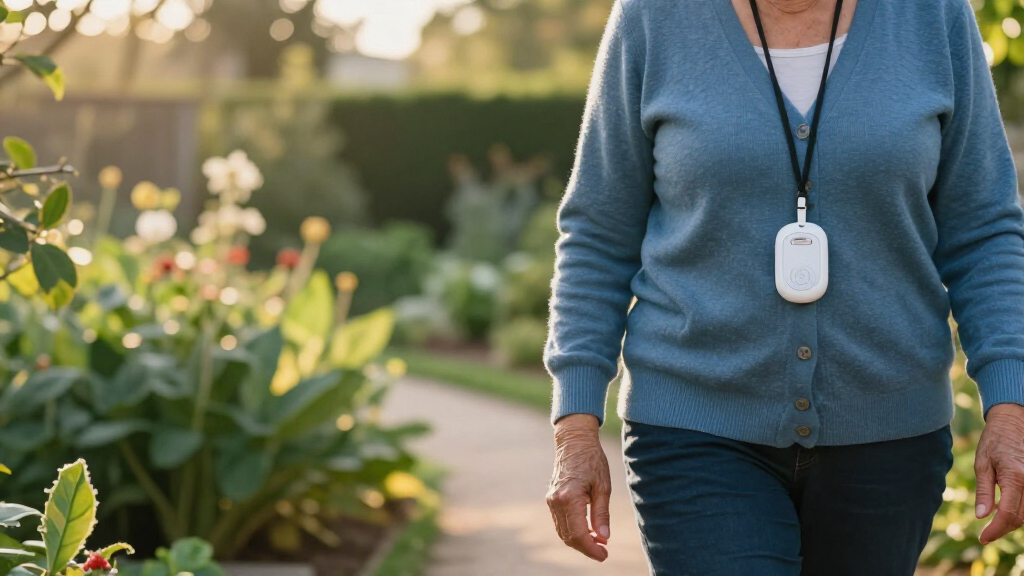
I evaluated each system through the lens that matters most for seniors on the move: emergency response quality, GPS accuracy, fall detection reliability, battery life, and day-to-day wearability. Professionally monitored systems scored higher on response speed because a trained operator — not a family member’s phone — answers the SOS call. For self-monitored devices, I prioritized fast GPS lock-on, clear two-way audio, and caregiver apps that actually get used rather than ignored. A system that a senior won’t wear consistently is worthless, so comfort, weight, and simplicity carried real weight in the rankings.
The ranking also reflects total cost of ownership, not just the sticker price. A device with no subscription but weak emergency handling ranked below a monitored service that costs more over a year. Devices landed in tier order: monitored full-service systems first, hybrid caregiver devices second, and pure trackers last — because for most seniors, an emergency-grade response is the entire point of wearing one of these.
Factors to Consider When Choosing GPS Medical Alert Systems For Seniors
Before choosing a system, it helps to understand the category’s bigger picture — the tradeoffs that don’t show up on a product page but determine whether the device actually protects anyone.Monitored vs. Self-Monitored: Who Actually Answers
This is the decision everything else flows from. A professionally monitored system connects your loved one to a certified response center that can dispatch EMS, contact family, and stay on the line — but it costs a monthly fee forever. A self-monitored device calls or texts family instead, which sounds fine until you realize it depends on a caregiver answering their phone at 2 a.m. The most common mistake families make is choosing self-monitoring to save money, then discovering the designated contact is unreachable during an actual emergency. If your senior lives alone or has serious fall risk, monitoring is worth every recurring dollar. Self-monitoring makes the most sense when a vigilant caregiver is nearby and the device is mainly for reassurance.
Fall Detection: Helpful, Not Magic
Families often treat automatic fall detection as a guarantee, and it isn’t. These sensors use accelerometers to identify sudden impacts, which means they can miss slow slides to the floor and trigger false alarms from a hard chair flop or a bumpy car ride. Wrist-worn devices generally read impacts more accurately than loose pendants, which flop independently of the body. If your senior has a condition causing gradual collapse — like syncope or certain neuropathies — fall detection may fail exactly when it’s needed, and a manual SOS button remains the primary safety net. Buy fall detection as a layer, never as the foundation.
GPS Accuracy and Coverage Networks
Every device in this category claims GPS tracking, but accuracy depends on the underlying network. Devices running on 4G LTE with assisted GPS lock onto location in seconds, while older 2G/3G-based units — still sold by some budget brands — struggle indoors and may not connect at all as legacy networks shut down. Check whether the device uses cellular triangulation as a backup for indoor use, because pure GPS fails under a roof. Also confirm the device works on a network with strong coverage at the places your senior actually goes: the grocery store, the senior center, the walking trail. A tracker that only works in open fields is not a real safety tool.
Battery Life vs. Features
There is a direct tradeoff in this category: the more a device does, the more often it needs charging. Full smartwatches with health monitoring, two-way calling, and GPS tracking often need daily charging, while simpler pendants can run for days on a charge. A dead device protects no one, so honestly assess whether your senior will remember to charge nightly. For seniors with memory decline, a longer-lasting pendant beats a feature-rich watch every time — and that’s before considering that complicated interfaces often go unworn entirely. If you do choose a feature-heavy device, build charging into an existing routine, like removing it at bedtime.
Wearability and the Dignity Factor
The best system is the one that actually gets worn, and seniors reject devices that look medical or feel heavy. Wristbands that resemble a fitness tracker tend to earn better compliance than obvious panic pendants, though pendants work better for seniors with arthritic hands who can’t fasten a clasp. Water resistance matters more than families expect — falls in the bathroom and shower are among the most common and most dangerous. Check the charging method too; magnetic cradles are far easier for shaky hands than fiddly micro-USB ports. Involve your senior in the choice; a device they helped pick gets worn.
Subscription Costs Over Time
The sticker price of the device is often the smallest cost in the equation. Monitored services run a monthly or quarterly fee indefinitely, and some charge extra for fall detection as an add-on — a cost that compounds across years of ownership. Before committing, ask whether there’s an activation fee, whether quarterly billing discounts the monthly rate, and whether a spouse can share the same account for free. Cancellation policies vary too; some services require long contracts while others are month-to-month. A slightly higher device price with flexible month-to-month monitoring is usually a better long-term deal than a cheap device locked into a year of fees.
Frequently Asked Questions
Do GPS medical alert systems work everywhere, or just at home?
Unlike traditional home-based systems that rely on a base station with a limited range, GPS-enabled devices work anywhere with cellular coverage — which is the entire reason to choose one. However, performance varies by the underlying network: a device on a strong 4G LTE network will maintain connection in most urban and suburban areas, while budget units on legacy networks may drop out indoors or in rural regions. Pure GPS also struggles under roofs, so better devices add cellular triangulation as a backup for indoor location. Check the coverage map for the specific carrier the device uses, not just your own phone’s carrier, because they’re not always the same network.
Is fall detection worth the extra monthly cost?
It depends on the fall risk profile. If your senior has a history of falls, balance issues, or takes medications that cause dizziness, automatic fall detection is worth the add-on fee because a knocked-unconscious or disoriented person cannot press a button. But the technology has real limits: it can miss slow slides and soft falls, and it can falsely trigger from everyday movements like settling into a chair. For seniors who are cognitively sharp and simply want backup for walks and errands, a manual SOS button may be sufficient and saves the monthly add-on. If you’re uncertain, some services offer fall detection as an optional upgrade later, so you can start without it and add it if needs change.
What happens if my loved one presses the SOS button by accident?
With monitored systems, the device connects to a live operator, and your senior simply tells them it was a false alarm — the operator cancels the dispatch and no emergency services are sent. This two-way voice check is actually a strength of monitored services, because it prevents unnecessary ambulance visits while still catching real emergencies. With self-monitored devices, the SOS typically calls a list of family contacts, so an accidental press means a family member gets an urgent call they should answer just in case. Some devices include a cancel window of a few seconds after pressing, which reduces false alarms. Either way, make sure your senior knows how to cancel, because fear of accidental alarms is a common reason people stop wearing their device.
Can a GPS tracker watch replace a true medical alert system?
For some seniors, yes — but the distinction matters. Devices like the AngelSense or the Senior Fall Detection Watch combine SOS calling, fall detection, and location tracking without any monthly monitoring fee, which works well when family caregivers can reliably answer alerts. The gap appears in a true emergency: a family member may miss the call, panic, or not know how to dispatch help to the GPS coordinates, while a professional monitoring center handles this daily. Tracker watches also tend to need daily charging, and a dead battery is a silent failure. If your senior lives alone or has serious health risks, a monitored service is the safer foundation; a caregiver-focused watch fits best when someone is actively supervising.
Are these devices difficult for seniors with limited tech skills to use?
Most are designed for simplicity, but the complexity lives in different places. Pendant-style systems are the easiest for the wearer — one button, nothing to learn — while the harder setup work (charging, app configuration) falls to a family member, which is often the right division of labor. Smartwatches with touchscreens and menus demand more from the senior and are a poor fit for anyone with memory decline or tremors, regardless of their features. Look for a device where the senior’s only job is wearing it and pressing a button when needed. Have the caregiver set up the app, test the SOS monthly, and handle charging; that routine keeps the system functional without burdening the person it protects.
Conclusion
The right pick depends on who is being protected and who is doing the watching. For best overall protection, the ADT On-The-Go Mobile Medical Alert System pairs reliable GPS with professional 24/7 monitoring — the strongest safety net in this lineup for seniors living alone. The Bay Alarm Medical SOS Mobile GPS system takes best value among monitored options, delivering the same response-center model with more flexible pricing. For best premium, the SecuLife SOS Wristband packs fall detection, two-way calling, and tracking into a wearable that doesn’t scream medical device, while the FONIE GPS Medical Alert System is a strong beginner-friendly choice thanks to its simple operation. For specific needs: the PAJ GPS EASY Finder suits wandering and location check-ins on a budget, the AngelSense GPS Watch fits families managing cognitive decline with active supervision, and the ResQ Shakti V2 necklace works well for seniors who refuse anything wrist-worn. Whatever you choose, test the SOS button the day it arrives — a system that’s never tested is a system you can’t trust.
Fall Picks
fall essentials
As an affiliate, we earn on qualifying purchases.