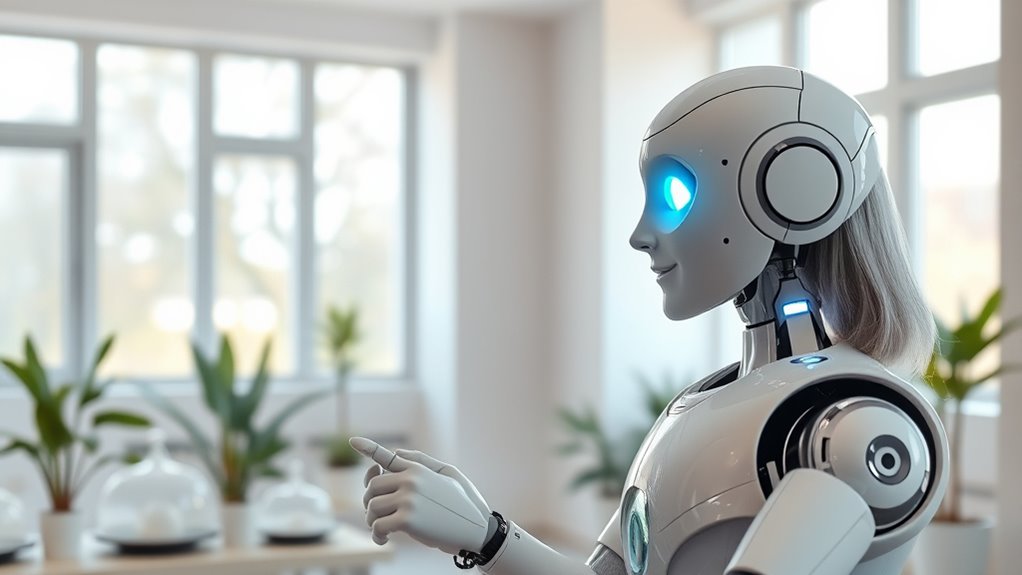

AI in caregiving offers practical solutions like virtual assistants that answer health questions and support remote guidance. Smart home devices automatically adjust lights and locks for safety, while wearables monitor essential signs and alert caregivers of issues. Predictive analytics help you identify health risks early, enabling proactive care. These tools enhance safety, independence, and emotional well-being, making caregiving more accessible and effective. Keep exploring to discover how these innovations can transform your caregiving experience.
Key Takeaways
- Virtual chatbots provide emotional support and companionship, reducing loneliness for seniors and mental health patients.
- Smart home devices and wearables monitor safety and vital signs, alerting caregivers to emergencies or health issues.
- AI-powered medication reminders improve adherence and prevent missed doses, supporting independent living.
- Remote virtual assistants offer health guidance and answer questions, expanding access to care in underserved areas.
- AI analytics predict health risks, enabling early interventions to prevent hospitalizations and promote proactive care.

Have you ever wondered how artificial intelligence is transforming caregiving? It’s revolutionizing the way we support loved ones, making care more personalized, efficient, and compassionate. One of the most impactful areas is emotional support, where AI-powered tools help bridge gaps that traditional caregiving might overlook. For example, virtual companions and chatbots can engage seniors or individuals with mental health challenges, providing a comforting presence that responds to their emotional needs. These systems use natural language processing to hold meaningful conversations, detect signs of distress, and even alert caregivers if someone’s mood shifts considerably. This continuous emotional support can reduce feelings of loneliness and isolation, which are common in aging populations or those with chronic conditions.
AI-powered virtual companions provide emotional support, reducing loneliness and detecting distress in caregiving.
Assistive technologies are also central to AI’s role in caregiving. These tools enhance mobility, safety, and independence for users. Smart home devices, equipped with AI, can automatically adjust lighting, control thermostats, or operate door locks to make daily routines easier and safer. Wearables monitor essential signs in real-time, alerting caregivers or medical services if anomalies occur, enabling swift intervention. AI-powered medication management systems remind users to take their pills on schedule and notify caregivers if doses are missed. These assistive technologies not only improve quality of life but also ease the burden on human caregivers, allowing them to focus on more complex or emotionally demanding tasks.
Furthermore, AI-driven analytics can predict potential health issues before they become urgent. By analyzing data collected from various devices and health records, AI models identify patterns that might indicate deteriorating health or risk factors. This proactive approach helps caregivers plan interventions early, potentially preventing hospitalizations or severe health complications. It’s like having a vigilant partner that continuously watches over someone’s well-being, providing peace of mind for both caregivers and their loved ones.
In addition to these practical benefits, AI enables more scalable and accessible care. For example, in remote or underserved areas, AI-powered virtual assistants can provide guidance, answer health-related questions, or even offer companionship when human resources are scarce. This democratization of caregiving resources ensures more people receive support, regardless of their location or financial situation.
Ultimately, AI in caregiving isn’t about replacing human interaction but augmenting it. It empowers caregivers with tools that foster emotional well-being, improve safety, and promote independence. As technology advances, you’ll find that AI can help create a more compassionate, responsive, and effective caregiving environment—one where human connection is enhanced rather than replaced. Additionally, the integration of home theatre projector technology highlights how technological innovation can also improve comfort and entertainment in caregiving settings, enriching the quality of life for recipients.
Top picks for "caregiv practical"
Open Amazon search results for this keyword.
As an affiliate, we earn on qualifying purchases.
Frequently Asked Questions
How Does AI Improve Emotional Support for Patients?
AI improves emotional support for patients by using emotional recognition to identify their feelings accurately. It can analyze speech, facial expressions, and body language, allowing you to respond empathetically. This technology boosts patient engagement by creating personalized interactions, making patients feel understood and cared for. As a result, you provide more compassionate support, fostering trust and comfort, which enhances overall well-being and emotional health.
What Are Privacy Concerns With AI in Caregiving?
You should be aware that privacy concerns with AI in caregiving mainly involve data privacy and consent issues. AI systems collect sensitive health information, raising risks if data isn’t securely stored or shared without proper authorization. You might worry about consent, especially when patients aren’t fully aware of how their data is used. Ensuring transparent data practices and obtaining clear consent can help protect patient privacy and build trust.
Can AI Replace Human Caregivers Entirely?
AI can’t replace human caregivers entirely because automation challenges and ethical dilemmas make it impossible. You need human empathy, judgment, and personal connection that AI can’t replicate. While AI can assist with tasks and improve efficiency, it lacks the emotional intelligence vital for caregiving. Relying solely on AI risks neglecting the human touch, which is essential for quality care and addressing complex, nuanced needs of individuals.
How Affordable Is AI Technology for Small Care Facilities?
You’ll find AI technology increasingly affordable for small care facilities, with a recent cost analysis showing prices have dropped by 30% over the past three years. This makes technology adoption more feasible, even on tight budgets. While initial investments vary, many solutions are now budget-friendly, allowing you to improve efficiency and care quality without breaking the bank. Embracing AI becomes a smarter choice for small facilities seeking growth and better service.
What Training Is Needed for Caregivers to Use AI Tools Effectively?
To use AI tools effectively, you need to understand the training requirements and focus on skill development. You should participate in hands-on training sessions that cover the basics of AI technology, data privacy, and troubleshooting. Ongoing learning is essential, so stay updated on new features and best practices. Developing these skills will help you confidently integrate AI into your caregiving routines, improving efficiency and patient care.
Conclusion
So, as you explore AI’s advancements in caregiving, you’ll find it fostering familiarity, fueling flexibility, and forging faster, safer support. By blending brilliance with bedside manners, AI empowers you to provide personalized, prompt, and practical care. Embrace these evolving innovations, and you’ll witness a world where technology tenderly transforms treatment, tending to those who need it most. Together, you and AI can create compassionate, cutting-edge care that truly cares.