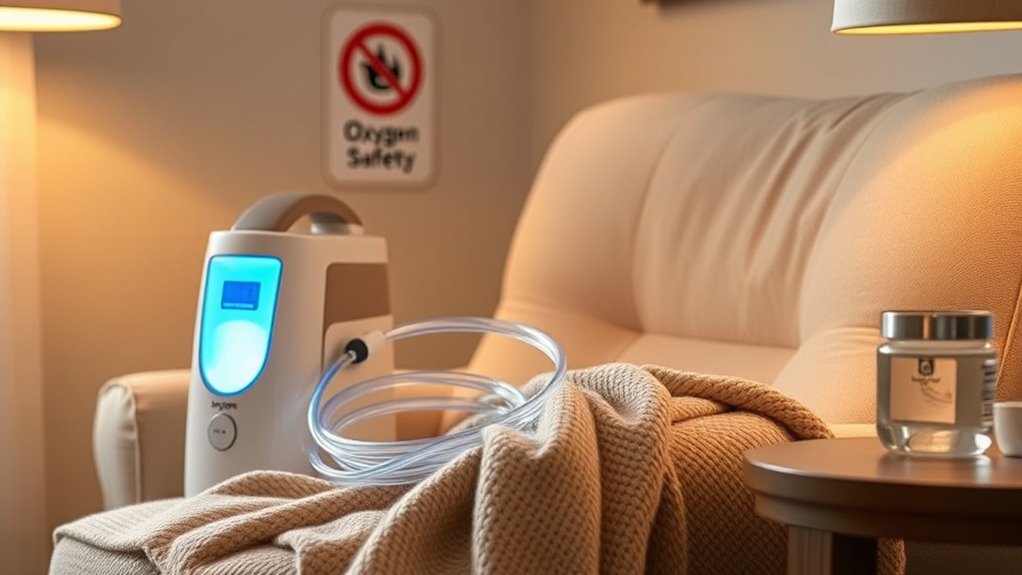

To guarantee safe oxygen use at home, follow your device’s instructions, check regularly for damage, and keep vents unobstructed. Keep the concentrator away from heat sources, open flames, and liquids to prevent fire hazards. Use grounded outlets, avoid overloading circuits, and unplug during storms. Store equipment properly and educate everyone in your home about oxygen safety. Staying vigilant helps prevent accidents—continue exploring ways to protect yourself and your loved ones.
Key Takeaways
- Follow manufacturer instructions and regularly inspect the oxygen concentrator for damage or leaks.
- Keep the device away from heat sources, open flames, and smoking to prevent fire hazards.
- Ensure proper electrical safety by avoiding overloading outlets and inspecting cords regularly.
- Place the concentrator in a well-ventilated, dry area, and keep vents unobstructed to prevent overheating.
- Educate all household members about oxygen safety rules and emergency procedures.
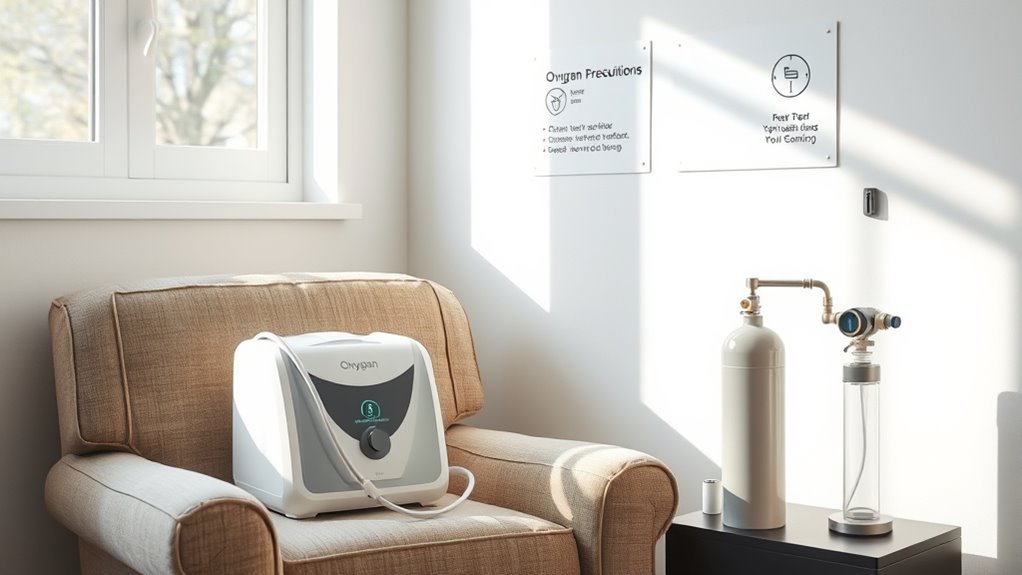
Are you aware of how to safely handle oxygen therapy at home if you have COPD? Managing oxygen therapy is crucial for maintaining your health and ensuring your safety. One of the most common devices used is an oxygen concentrator, which provides a steady supply of oxygen by removing nitrogen from the air around you. While these devices are generally safe, they do pose potential fire hazards if not used properly. Understanding how to minimize these risks is essential to protect yourself and those around you.
Proper use of oxygen concentrators is vital for safety and health at home.
First, always follow the manufacturer’s instructions for your oxygen concentrator. Regularly inspect the device for any signs of damage or malfunction, such as cracks or leaks. Keep the concentrator on a flat, stable surface and ensure it has plenty of ventilation around it so it doesn’t overheat. Never block the vents, as this can cause overheating and increase fire risks. It’s also important to keep the device away from sources of heat or open flames, including candles, fireplaces, and stoves, because oxygen supports combustion, making fires more intense and harder to extinguish.
You should also be cautious about smoking around oxygen therapy equipment. Never smoke in the same room as your concentrator or any oxygen-delivering devices. Even a small spark can ignite the concentrated oxygen, leading to dangerous fires. Inform your family members and visitors about the hazards, emphasizing that smoking is strictly prohibited wherever oxygen is in use. Installing “No Smoking” signs in your home can reinforce this rule.
Electrical safety is another critical aspect. Use outlets that are in good condition and avoid overloading circuits, which can cause sparks or short circuits. If your concentrator has a power cord, check it regularly for fraying or damage, and replace it if needed. Keep the cord out of walkways to prevent tripping, which could pull the device off surfaces or cause damage.
In addition, keep your oxygen equipment away from liquids. Water or other liquids can damage the device and pose additional safety risks. Ensure that your concentrator is placed in a dry, well-ventilated area. If you use humidification, follow the instructions precisely to prevent spills that could cause electrical hazards. Furthermore, consider proper storage of your oxygen accessories to prevent accidental spills or damage.

AMADA HOMEFURNISHING 8x10 Washable Area Rug, Low-Profile with Non-Slip Backing & Durable Edge Binding, Vintage Large Rugs for Living Room, Bedroom, Dining Room, Blue
Machine Washable: The short pile design of this washable rug is easy to maintain using an upright vacuum...
As an affiliate, we earn on qualifying purchases.
Frequently Asked Questions
Can I Smoke While Using Supplemental Oxygen at Home?
No, you should never smoke while using supplemental oxygen at home. Smoking hazards are increased because oxygen is highly flammable and not compatible with open flames or sparks. Even a small spark can cause a fire or explosion. Always make sure your smoking habits are away from oxygen equipment. For your safety, follow all instructions about oxygen compatibility and avoid smoking altogether when using supplemental oxygen.
How Do I Prevent Oxygen Leaks in My Home Setup?
You can’t afford even a tiny oxygen leak to turn your home into a safety hazard! To prevent leaks, regularly check all tubing and connections, ensuring they’re tight like a drum. Use proper fittings and avoid kinks or damage. Follow home safety measures diligently—keep cylinders upright, away from heat, and away from open flames. These simple steps keep oxygen where it belongs, safe and sound, protecting you and everyone around you.
Are There Specific Electrical Safety Tips for Oxygen Use?
To prevent electrical hazards and promote fire prevention when using oxygen at home, always use properly grounded outlets and avoid overloading circuits. Keep electrical cords away from oxygen sources to prevent sparks. Regularly inspect cords and equipment for damage, and unplug devices when not in use. Install smoke detectors and keep a fire extinguisher nearby. These precautions help guarantee safe oxygen use and reduce fire risks in your home.
Can I Use My Oxygen Concentrator Outdoors?
You can use your portable oxygen concentrator outdoors, but always follow safety guidelines. For instance, during a hike, you might carry your device with you to enjoy fresh air, but avoid exposing it to rain or excessive heat. Outdoor activity is possible with portable devices, just make certain you keep the device in a shaded area and avoid open flames or smoking nearby to stay safe with your oxygen equipment.
What Should I Do if My Oxygen Levels Suddenly Drop?
If your oxygen levels suddenly drop, you should immediately follow your emergency preparedness plan. Check your symptoms and use your pulse oximeter to monitor your oxygen saturation. If it remains low or you experience severe symptoms like chest pain or difficulty breathing, seek emergency medical help right away. Stay calm, sit upright, and inform someone nearby about your situation to make certain of quick assistance.

RELEANY Area Rugs 8'x10' Washable Non-Slip, Floral Vintage Distress Print Pattern Medallion Carpet for Living Room Bedroom Dining Room, Brick Red Rust Neutral Brown Burnt Orange Green
Machine Washable Rugs Easy to Clean: the surface is water-repellent which allows for easy cleanup when beverages are...
As an affiliate, we earn on qualifying purchases.
Conclusion
Remember, keeping your oxygen safe is like tending a fragile flame—you need to handle it with care to keep it burning brightly. Always follow safety guidelines, check your equipment regularly, and stay alert to potential hazards. By doing so, you’ll create a safe environment where your breathing can be easier, and your home remains a sanctuary of comfort and security. Your vigilance is the shield that keeps your health protected and your home a safe harbor.

8x10 Area Rugs for Living Room: Floral Washable Rug Vintage Large Soft Boho Non-Slip Carpet Indoor Floor Stain Resistant Carpets for Bedroom Dining Room Farmhouse Nursery Home Office Dark Green
Elegant Floral Rug: This 8x10 area rugs vintage-inspired botanical rug blends rich dark greens, vibrant and delicate floral...
As an affiliate, we earn on qualifying purchases.

MCombo Power Lift Recliner Chair with Extended Footrest for Elderly People, Fabric 7287/7087 (Brown, Medium)
Power Lift Assistance: Counter-balanced lift mechanism to assist the senior stand up easily, smoothly adjust to lift or...
As an affiliate, we earn on qualifying purchases.