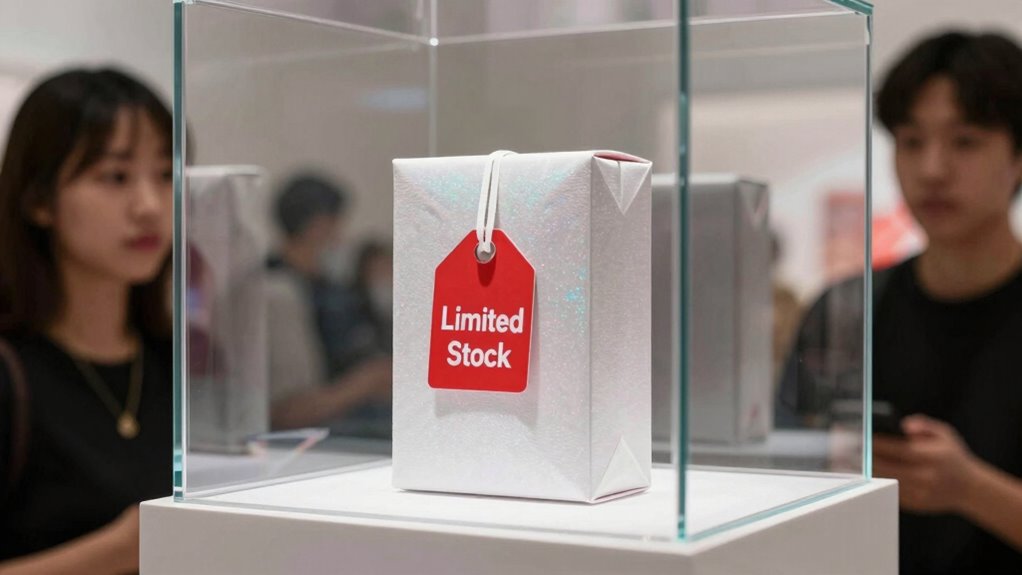

Stores use scarcity messaging to make you feel like products are limited or exclusive, pushing you to act quickly. They highlight limited editions, flash sales, or short-term discounts to create urgency. Messaging like “only a few left” or countdown timers taps into your fear of missing out and impulse buying tendencies. This encourages fast decisions and enhances perceived value. Stick around if you want to uncover more about how these tactics influence your choices.

Turn quiet afternoons into listening time
- Thousands of audiobooks, podcasts and originals
- Listen on your phone, tablet or Echo — also offline
- Cancel anytime
Key Takeaways
- Stores highlight limited editions and exclusive access to create a sense of rarity and increase product desirability.
- Flash sales with countdown timers generate urgency and encourage immediate purchasing decisions.
- Limited availability messaging makes products seem more valuable and fosters fear of missing out (FOMO).
- Retailers use short-term discounts to prompt quick actions and capitalize on impulse buying tendencies.
- Scarcity messaging leverages psychological cues like exclusivity and fear of regret to influence consumer behavior.
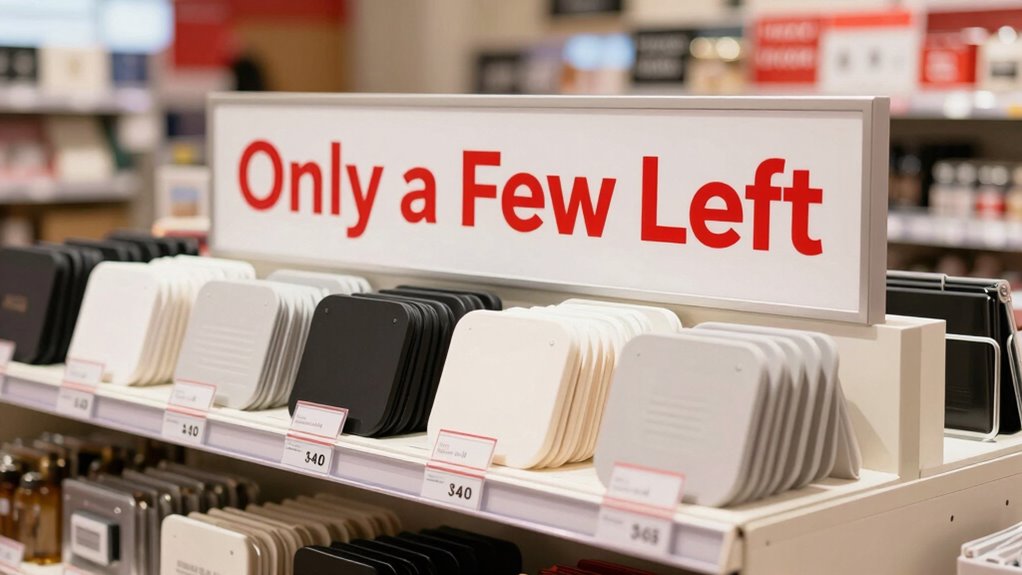
Have you ever noticed how stores create a sense of urgency by highlighting limited availability? It’s a common tactic to make you feel like you might miss out if you don’t act quickly. Stores often showcase limited editions or run flash sales to tap into your fear of missing out, encouraging you to make impulsive decisions. When you see a product labeled as a limited edition, it signals exclusivity, making it more desirable. You’re led to believe that only a select few will have access to it, which elevates its value in your eyes. This sense of scarcity pushes you to purchase before the opportunity slips away.
Stores use limited editions and flash sales to create urgency and encourage impulsive buying decisions.
Flash sales are another powerful method stores use to create urgency. These are short-term discounts or promotions that last only a few hours or days. The ticking clock compels you to act fast, fearing the deal will disappear before you get the chance. Stores often advertise these sales loudly and prominently, emphasizing the limited window of opportunity. You might find yourself checking your phone or rushing to complete a purchase because the countdown creates a sense of pressure. The combination of a limited-time offer and a reduced price can make the decision feel like a win or a miss, increasing the likelihood you’ll buy on impulse. Recognizing the psychological tactics behind these sales can help you resist the impulse to buy just because a deal seems urgent.
Both limited editions and flash sales play on your natural desire for exclusivity and fear of regret. When a product is labeled as limited edition, you might think, “This is my only chance to own something unique,” which can override rational considerations about whether you really need it. Similarly, flash sales tap into your impulse buying tendencies by making you believe that the deal is too good to pass up. The urgency they generate is designed to cut through your hesitation, making the purchase feel like an opportunity you can’t afford to miss. Recognizing these tactics can help you make more thoughtful decisions and avoid impulsive buying driven by scarcity messaging.
In essence, these scarcity messages work by shifting your focus from long-term value to immediate gratification. They create a sense of scarcity that’s hard to ignore. Whether it’s a limited edition item or a fleeting flash sale, stores aim to make you feel special—part of an exclusive group that’s getting a rare chance. That feeling of being “in the know” or “getting the deal of a lifetime” pushes you toward quick decisions, often without thorough consideration. This strategy is effective because it exploits your natural tendencies toward valuing rarity and fearing loss, making you more likely to act on impulse. Understanding how psychological tactics influence your shopping behavior can help you remain more aware of these persuasive strategies. Additionally, awareness of consumer psychology can empower you to resist these manipulative techniques and make more rational choices.
As an affiliate, we earn on qualifying purchases.
Frequently Asked Questions
How Do Stores Decide Which Items to Label as Scarce?
Stores decide which items to label as scarce based on their pricing strategies and inventory management. They target products with limited stock or high demand, creating urgency to boost sales. By analyzing sales data and inventory levels, they identify items that will benefit from scarcity messaging. This approach encourages you to act quickly, fearing missing out, while helping stores maximize profits and optimize stock levels effectively.
Are There Ethical Concerns With Using Scarcity Messaging?
You might think scarcity messaging is harmless, but it raises serious marketing ethics concerns. It can manipulate consumers into impulsive buys they wouldn’t make otherwise, exploiting their fears of missing out. This kind of consumer manipulation skews honest communication, leading to distrust and potential harm. While it can boost sales, using scarcity unethically crosses moral lines, making shoppers feel pressured rather than respected, which isn’t fair or sustainable.
How Effective Is Scarcity Messaging Across Different Product Categories?
Scarcity messaging is highly effective across various product categories because it taps into marketing psychology and influences consumer behavior. When you see limited-time offers or low stock alerts, you’re more likely to act quickly to avoid missing out. This sense of urgency boosts sales for luxury items, gadgets, and even everyday essentials. The strategy leverages human tendencies to value scarce resources, making it a versatile tool in influencing purchasing decisions.
What Psychological Principles Drive Consumer Response to Scarcity?
You’re likely influenced by psychological principles like the scarcity heuristic, where limited availability makes items seem more valuable. Research shows that 60% of consumers respond to urgency triggers, feeling compelled to act quickly. This mindset influence taps into our fear of missing out (FOMO), pushing you to prioritize instant decisions. Stores leverage these triggers to heighten your sense of urgency, increasing the likelihood you’ll make impulse purchases.
Can Scarcity Messaging Lead to Long-Term Customer Trust Issues?
Scarcity messaging can erode trust if customers feel manipulated or deceived, leading to trust erosion over time. You might notice your brand reputation suffers as customers become wary of false scarcity tactics, doubting your honesty. While these strategies can boost short-term sales, overusing them risks long-term trust issues. To maintain loyalty, you should balance scarcity messages with transparency, ensuring customers see your brand as reliable and genuine.
Conclusion
Just like the legendary tales of the Trojan Horse, scarcity messaging tricks you into thinking you’re getting something rare and valuable. It taps into your fear of missing out, urging you to act fast before the opportunity slips away. Stores know this game well, subtly whispering that now is the moment to seize. So next time you see “limited time” or “only a few left,” remember—you’re being courted by the same clever strategy that’s kept secrets and treasures elusive for ages.
Halloween Picks
halloween
As an affiliate, we earn on qualifying purchases.