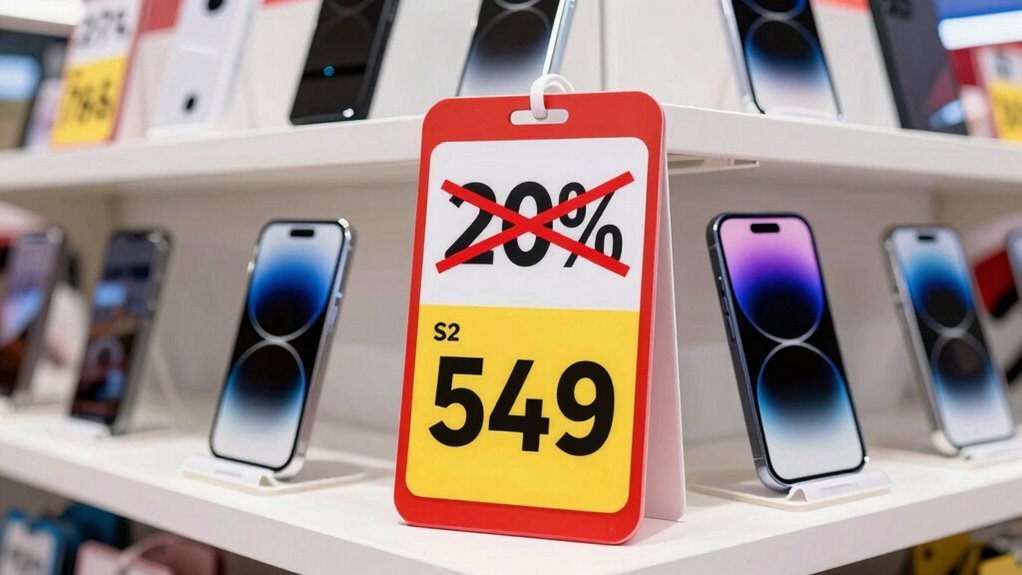

In stores, price anchoring shows up when high-priced items are placed next to mid-range products or discount signs, shaping your perception of value. You might see luxury watches or designer bags near affordable alternatives or large signage highlighting discounts. These visual cues and strategic product placements are designed to influence your buying decisions, making other items seem more reasonable. Keep exploring how these tactics affect your shopping choices and what you can do about them.

Turn quiet afternoons into listening time
- Thousands of audiobooks, podcasts and originals
- Listen on your phone, tablet or Echo — also offline
- Cancel anytime
Key Takeaways
- High-priced luxury items are displayed next to mid-range products to create a perception of affordability.
- Signage size and placement emphasize premium products, steering focus and perceived value.
- Retailers set a high reference price to make discounts or lower-priced options seem more attractive.
- Expensive items are strategically positioned near affordable alternatives to enhance contrast.
- Visual cues and product arrangement subtly influence consumer perception of value and savings.

Have you ever wondered why some prices seem more appealing than others? It’s often because stores use a clever technique called price anchoring. This strategy involves setting a reference point that influences your perception of value. For example, when you see a high-priced item labeled as “luxury pricing,” it makes other products seem more affordable by comparison. Retailers intentionally place expensive items near mid-range or lower-priced options to create a contrast that boosts the appeal of the less costly choices. This is a classic example of discount strategies working in your favor. The idea isn’t just to sell the expensive item but to make the entire pricing structure seem more reasonable and attractive.
Price anchoring influences your perception of value by creating strategic price contrasts and perceived savings.
In stores, you might notice a high-end watch or designer handbag placed next to more affordable alternatives. The luxury pricing sets a perceived standard, making the less costly items look like a great deal. When you see the premium product, your brain automatically adjusts its sense of what’s reasonable, encouraging you to consider the more moderately priced options as good deals. This is a deliberate move by retailers to steer you toward certain products, leveraging your natural tendency to compare and evaluate based on the initial reference point. By anchoring prices at a high level, they create a psychological price perception that influences your perception of value across the entire store. Additionally, visual cues like the size and placement of signs contribute significantly to how prices are perceived and can subtly influence your buying decisions. Understanding these retail strategies can help you become a more conscious shopper.
Ultimately, what price anchoring looks like in stores is a carefully orchestrated visual and psychological dance. Whether it’s luxury pricing that elevates the perceived value or discount strategies that create a sense of savings, these tactics manipulate your perceptions to influence your buying decisions. Retailers also use perception management to subtly guide consumers toward specific products and price points. Next time you’re shopping, pay attention to how prices are presented, and you’ll see how stores subtly guide you toward certain choices — all through the power of anchoring.
As an affiliate, we earn on qualifying purchases.
Frequently Asked Questions
How Do Stores Decide Which Items to Use as Anchors?
Stores decide which items to use as anchors based on product placement and pricing psychology. They typically select high-priced or popular items to set a reference point, making other products seem more affordable. By strategically positioning these anchors, they influence your perception of value. This tactic encourages you to compare and choose items that seem like better deals, guiding your purchasing decisions without you even realizing it.
Does Price Anchoring Influence Online Shopping as Much as In-Store?
Think of online shopping as a stage where price anchoring acts behind the curtains. It influences you just as much as in-store, creating a psychological impact that guides your consumer behavior. Prices displayed prominently or compared side-by-side shape your perception of value, nudging you toward a purchase or hesitation. The digital environment amplifies this effect, making price anchoring a powerful tool in guiding your buying decisions across all shopping platforms.
Are There Ethical Concerns With Using Price Anchoring Strategies?
Yes, there are ethical concerns with using price anchoring strategies. You might be tempted to manipulate consumers by obscuring true value or hiding better deals, which raises questions about price transparency. While it can influence purchasing decisions, it’s important to contemplate whether such tactics deceive or unfairly influence consumers. Ethically, businesses should aim for honest pricing practices that foster trust rather than exploit consumer psychology.
How Can Consumers Recognize Price Anchoring Tactics?
You can recognize price anchoring by paying attention to how stores display discounts or compare prices. Pricing psychology influences your perception, making the original higher price seem more reasonable or a deal more attractive. Look for the original price next to the sale price, or notice if a product’s price is placed next to more expensive options. Being aware of these tactics helps you make more informed, conscious purchasing decisions.
Does Price Anchoring Affect the Overall Perception of Store Value?
Price anchoring influences your perception of a store’s value by leveraging luxury branding and customer psychology. When you see high-priced items next to more affordable options, it makes the latter seem like a better deal, boosting your perception of overall value. Stores use this tactic to create a sense of exclusivity and quality, which can make you feel more satisfied with your purchase and more confident in their brand.
Conclusion
Next time you wander through store aisles, remember that those high-priced items are like towering peaks designed to make everything else seem more reasonable. Price anchoring guides your choices, subtly steering you toward specific products. By recognizing these tactics, you hold the map to navigate your shopping journey more wisely. Don’t let the allure of the big numbers cloud your judgment—stay sharp, and let your wallet stay grounded, like a ship steady on calm seas.
Halloween Picks
halloween
As an affiliate, we earn on qualifying purchases.