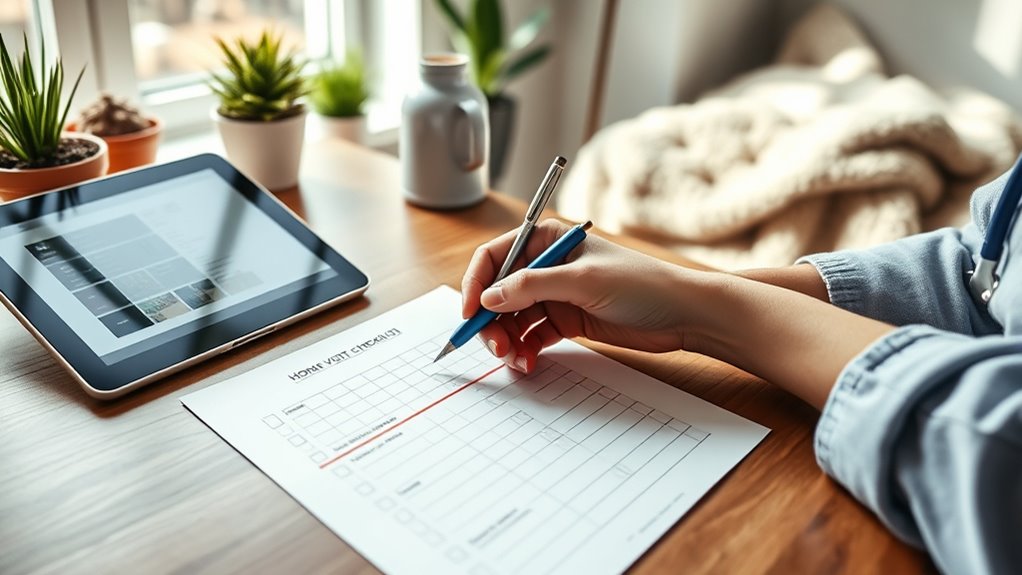

A home visit checklist that works helps you cover all essential areas like safety, child development, and family strengths while allowing flexibility for each unique situation. Focus on building trust through engaging questions and demonstrating genuine interest. Prioritize safety at every step, ensuring hazards are identified and addressed. Use the checklist as a guide, not a script, and adapt your approach as needed. Keep these strategies in mind, and you’ll discover more helpful tips ahead.
Key Takeaways
- Use a flexible, comprehensive checklist to ensure all critical areas are covered while allowing adaptations for family-specific needs.
- Incorporate family engagement prompts that foster trust, open communication, and highlight strengths and concerns.
- Prioritize early safety assessments to identify hazards and ensure a secure environment for both family and visitor.
- Focus on evaluating child health, home safety, routines, and resource access systematically for thorough understanding.
- Maintain professionalism with a prepared yet adaptable approach, emphasizing respectful interactions and safety throughout the visit.

A well-prepared home visit checklist guarantees you cover all essential areas, making the visit smooth and effective. When planning your visit, focusing on family engagement is key. You want to build trust and rapport quickly, so ensure your checklist includes prompts to ask about family strengths, concerns, and goals. Engaging families actively shows that you value their input and helps foster a collaborative environment. You might include questions about daily routines or recent challenges, which encourages open dialogue and demonstrates genuine interest. Remember, family engagement isn’t just about gathering information—it’s about creating a partnership that supports the family’s needs and aspirations. Incorporating knowledge of family dynamics can help tailor your approach for better outcomes. Safety protocols are the backbone of any successful home visit. Your checklist should remind you to review safety measures early in the visit, both for your safety and that of the family. This includes evaluating the physical environment for hazards, such as exposed wires, clutter, or unsecured furniture. Checking that exits are accessible and that the home feels secure is also essential. Additionally, ensure you have necessary safety equipment on hand, like masks or gloves if needed, and that you’re aware of emergency procedures specific to the area. Incorporating safety protocols into your checklist isn’t just about compliance; it’s about creating a safe space where families feel comfortable and protected. This proactive approach helps prevent accidents and builds confidence in your professionalism. Your checklist should also include specific areas to evaluate during the visit. These might encompass the child’s health and development, the home environment, and family routines. When evaluating safety, consider fire hazards, sanitation, and the presence of potentially harmful substances. For family engagement, include questions about their support systems and how they manage daily tasks. For example, ask if they have access to community resources or if they need additional assistance. By systematically covering these areas, your visit becomes thorough and efficient, allowing you to identify needs and strengths accurately. Finally, remember that adaptability is essential. Use your checklist as a guide, but modify based on what you observe and the family’s responses. A well-structured visit, grounded in strong family engagement and safety protocols, not only ensures you meet your objectives but also builds trust and rapport. When you prepare thoroughly, you can focus on meaningful interactions, making each home visit productive and respectful of the family’s unique circumstances.
Frequently Asked Questions
How Can Checklists Be Customized for Different Visit Types?
You can customize checklists by creating personalized templates tailored to each visit type. Incorporate visit-specific details like the purpose, client or patient needs, and location specifics to guarantee relevance. Adjust the checklist items to focus on what’s most important for that visit, removing unnecessary tasks. This approach helps you stay organized and ensures you cover all essential aspects, making each visit efficient and targeted.
What Are Common Mistakes to Avoid When Creating Checklists?
Did you know that unclear checklists can reduce efficiency by up to 30%? To avoid this, focus on checklist clarity by keeping items straightforward and easy to understand. Also, avoid redundancy, which can cause confusion and waste time. Regularly review and refine your checklists to make sure they’re concise and purposeful. By doing so, you guarantee your visits are smooth, structured, and effective, maximizing both time and quality.
How Do Checklists Improve Client Engagement During Visits?
Checklists boost client engagement by guiding you to focus on rapport building and actively listen during visits. They help you stay organized, ensuring you address clients’ needs effectively. Using checklists allows you to gather real-time feedback, showing clients you’re attentive and committed. This interaction builds trust, making clients feel valued and understood. Overall, checklists create a more meaningful, engaging visit that strengthens your relationship with clients.
What Tools Can Help Digitize Home Visit Checklists?
Think of digitizing your checklists as equipping your toolkit with a magic wand. Mobile apps like Evernote or Trello streamline your tasks, while cloud storage solutions such as Google Drive or Dropbox keep everything accessible and secure. These tools act like a trusty map, guiding you effortlessly through each visit, ensuring no detail is missed. Embrace this tech to make your home visits more efficient, organized, and impactful.
How Often Should Checklists Be Reviewed and Updated?
You should review your checklists at least every six months to guarantee they stay relevant, but the update frequency might vary depending on your specific needs. Regularly evaluating your review cycle helps identify outdated items or missing information, keeping your checklists effective. By staying proactive and updating promptly, you ensure your home visits remain thorough and efficient, ultimately providing better support and safety for everyone involved.
Conclusion
By using effective home visit checklists, you guarantee thorough and efficient visits that build trust and improve outcomes. Did you know that well-structured checklists can reduce visit times by up to 30%, giving you more time to connect with clients? Keep your checklists simple, focused, and adaptable to each visit. When you stay organized, you’ll make a bigger impact and leave a lasting positive impression every time.