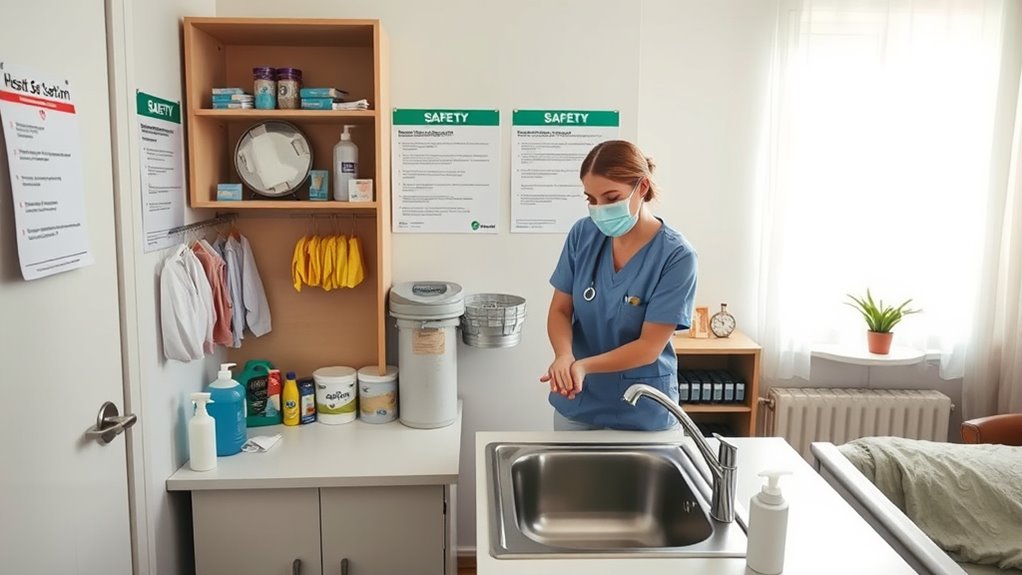

In home care settings, OSHA’s safety guidelines help you protect yourself and your clients by focusing on infection control, fall prevention, and hazard identification. You should regularly practice hand hygiene, use proper PPE, and keep the environment safe with proper lighting and removal of hazards. Making sure safety protocols are followed and equipment is available reduces risks. Staying updated on these OSHA essentials will help you guarantee a safe environment — learn more to strengthen your safety practices.
Key Takeaways
- OSHA standards protect home care workers and clients from hazards like infections and falls.
- Infection control includes hand hygiene, PPE use, and proper disposal of contaminated materials.
- Fall prevention involves hazard assessment, home modifications, and education on safe mobility practices.
- Regular safety evaluations and staff training ensure compliance and hazard mitigation in home environments.
- Proper documentation of safety protocols and ongoing education are essential for OSHA compliance.
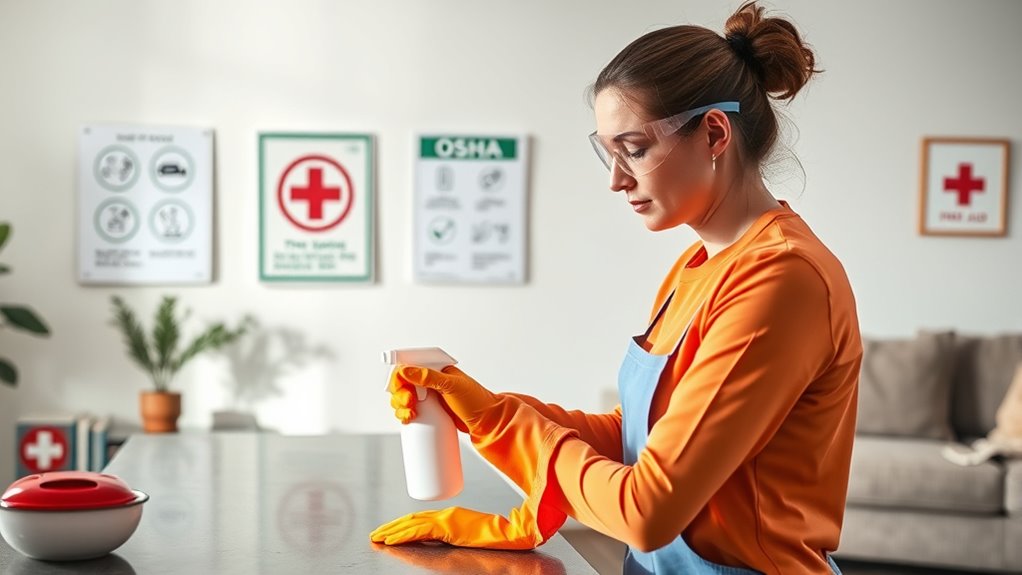
Are you aware of the OSHA requirements that apply to home care settings? If not, it’s essential to understand how OSHA standards help protect both caregivers and clients. In a home environment, maintaining safety involves more than just common sense; it requires compliance with specific regulations designed to reduce hazards. Two key areas you should focus on are infection control and falls prevention, both of which are central to OSHA’s guidelines for home care providers.
Infection control is critical because homes are not sterile environments, and infectious agents can spread easily without proper precautions. OSHA emphasizes the importance of implementing protocols such as regular hand hygiene, proper use of personal protective equipment (PPE), and safe disposal of contaminated materials. You need to guarantee that gloves, masks, and other PPE are readily available and used correctly to prevent cross-contamination. Additionally, cleaning and disinfecting surfaces and equipment after each use minimizes the risk of infection transmission. OSHA also recommends training caregivers on infection control practices, so you’re aware of how to protect yourself and your clients from illnesses like influenza, COVID-19, or other communicable diseases.
Falls prevention is another essential OSHA concern in home care settings. Falls remain one of the leading causes of injury among clients, especially the elderly or those with mobility issues. OSHA’s standards guide you to assess the home environment for hazards such as loose rugs, cluttered walkways, or uneven flooring that increase fall risk. You’re responsible for educating clients and family members about safe practices, like installing grab bars and ensuring adequate lighting in hallways and bathrooms. Proper lifting techniques and mobility assistance are necessary to prevent both client and caregiver injuries. OSHA also recommends conducting regular safety assessments, especially when new hazards are identified or when clients’ health conditions change.
Frequently Asked Questions
How Often Should Home Care Workers Receive OSHA Training?
You should receive OSHA training initially before starting your home care duties and then attend refresher courses at least annually. Training frequency is vital to keep you updated on safety procedures and hazard recognition. Regular refresher courses ensure you stay informed about any new OSHA regulations or best practices, helping you protect yourself and your clients effectively. Make sure to follow your employer’s specific training schedule to stay compliant and safe.
Are OSHA Regulations the Same for Home Care as in Clinics?
Imagine a home care worker accidentally injures themselves while helping a patient, highlighting the importance of OSHA regulations. The rules aren’t exactly the same as in clinics; they’re tailored for home safety and patient privacy. You need to adhere to OSHA standards specific to home care, addressing hazards like falls or exposure to pathogens. This ensures both your safety and your patient’s privacy are protected in every setting.
What Are the Penalties for OSHA Violations in Home Settings?
If you violate OSHA regulations in a home care setting, you could face penalty fines that vary depending on the severity of the violation. The consequences of violations may include hefty fines, citations, or even corrective actions to guarantee safety improvements. It’s essential to comply with OSHA standards to avoid these penalties and protect both your clients and yourself from potential risks and legal issues.
How Can I Report OSHA Hazards in a Home Care Environment?
You can report OSHA hazards in a home care environment by using their hazard reporting and complaint procedures. First, identify the hazard and gather details. Then, you can file a complaint online, call OSHA’s helpline, or contact your local OSHA office. Make sure to provide specific information about the hazard, including location and nature, to guarantee a prompt investigation and resolution. Your reporting helps maintain a safe care environment.
Do OSHA Rules Apply to Family Members Providing Care?
Think of OSHA rules as an invisible safety net, catching anyone in harm’s way. As a family member providing care, you’re generally not covered by OSHA’s formal regulations, but protecting family member safety is still vital. Informal caregiver rules emphasize creating a safe environment, avoiding hazards, and practicing proper procedures. While OSHA may not directly regulate you, adopting best safety practices helps safeguard everyone in the home, including yourself.
Conclusion
By understanding OSHA basics, you’re not just ticking boxes—you’re building a fortress of safety around your home care environment. Think of OSHA as the steady lighthouse guiding you through the fog of potential hazards, ensuring every step you take is on solid ground. When you prioritize safety, you’re planting seeds for a healthier, happier space where both caregivers and clients can thrive. Embrace these principles, and let safety’s gentle hand steer your home care journey.