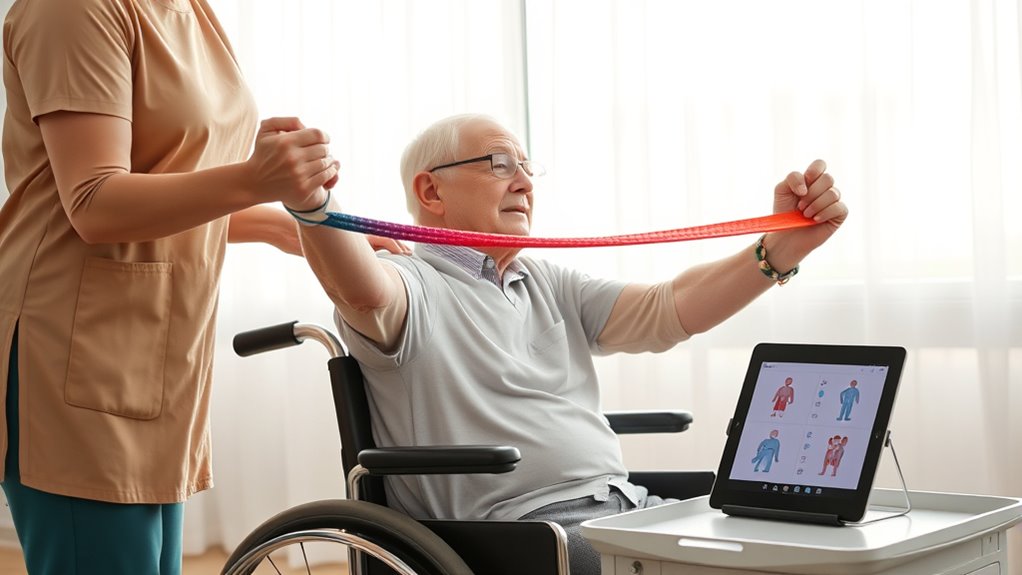

To prevent deconditioning during illness, stay active with gentle bed exercises like ankle circles and arm movements to keep your muscles engaged and blood flowing. Make sure to eat a balanced, nutrient-rich diet with plenty of protein to support muscle and tissue repair. Proper hydration and, if needed, supplements can also help. Keeping up even small efforts can make a big difference, and you’ll discover more ways to stay strong as you continue exploring.
Key Takeaways
- Implement gentle bed exercises like ankle circles and leg squeezes to maintain muscle tone and circulation.
- Prioritize a balanced, protein-rich diet to support muscle preservation and immune function.
- Gradually increase activity levels within medical guidance to reduce muscle atrophy and stamina loss.
- Use nutritional supplements if oral intake is limited to ensure adequate nutrient intake.
- Access resources and practical tips to incorporate consistent movement and proper nutrition during illness.

Have you ever wondered how illness can weaken your body even further? When you’re sick, your muscles can start to atrophy, your stamina diminishes, and your overall strength declines faster than you might expect. That’s why it’s essential to actively work against deconditioning, even when you’re confined to bed. One effective way to do this is through simple bed exercises. These exercises are designed to keep your muscles engaged without requiring much movement or energy, helping you maintain some muscle tone and circulation. For example, gently moving your legs and arms, performing ankle circles, or squeezing your thigh muscles can make a significant difference. These movements stimulate blood flow, reduce stiffness, and prevent the muscle wasting that often accompanies prolonged bed rest.
Alongside bed exercises, nutritional support plays an important role in preventing deconditioning. When you’re ill, your body needs extra nutrients to repair tissues, fight infection, and maintain muscle mass. Consuming a balanced diet rich in protein, vitamins, and minerals can help preserve your strength. Protein, in particular, is essential because it provides the building blocks your muscles need to stay healthy. If you’re unable to eat normally, talk to your healthcare provider about nutritional supplements or specialized feeds that can supply the necessary nutrients. Proper nutrition not only supports physical recovery but also boosts your immune system, helping you bounce back more quickly. Additionally, understanding resources and tools available for support can empower you to make informed decisions during your recovery.
It’s important to recognize that even small efforts can make a difference. Incorporate bed exercises into your daily routine as much as possible, gradually increasing the intensity under your doctor’s guidance. Staying active in this limited way signals your body to retain muscle and bone strength, preventing the decline that often comes with immobility. Meanwhile, prioritize nutritional support by eating nutrient-dense foods and staying hydrated. This combined approach helps your body sustain itself through the illness and recover more efficiently once you’re feeling better.
bed exercise equipment for seniors
As an affiliate, we earn on qualifying purchases.
As an affiliate, we earn on qualifying purchases.
Frequently Asked Questions
How Quickly Can Deconditioning Occur During Illness?
Deconditioning can start within days of inactivity during illness, leading to muscle atrophy and reduced strength. The longer you stay inactive, the faster these effects develop. To minimize this, you should practice activity pacing, balancing rest and gentle movement. Staying as active as possible, even with mild exercises, helps slow deconditioning and preserves muscle function. Remember, early movement is key to preventing rapid decline.
Are There Specific Exercises Suitable for All Illnesses?
You might wonder if there’s a one-size-fits-all exercise for every illness. The truth is, tailored exercise and illness-specific activities are essential. While some gentle movements can help, you must consider your condition’s severity and type. Always consult your healthcare provider to craft a safe plan. Without proper guidance, even well-intentioned activities could do more harm than good, so proceed cautiously and listen to your body’s signals.
Can Nutrition Impact Prevention of Deconditioning?
Yes, nutrition plays a key role in preventing deconditioning. Nutritional strategies that include adequate protein, vitamins, and minerals support muscle maintenance and immune support. When you focus on balanced meals, you help your body recover faster and maintain strength during illness. Proper nutrition boosts your immune system, reduces fatigue, and promotes overall resilience, making it easier to stay active and prevent deconditioning even when you’re not feeling your best.
What Role Does Mental Health Play in Recovery?
Your mental health plays a essential role in your recovery by strengthening your mental resilience and providing emotional support. When you stay positive and manage stress effectively, you boost your body’s ability to heal and regain strength. Seeking emotional support from loved ones or professionals helps you stay motivated and focused on your recovery goals. Prioritizing mental health ensures you stay resilient, which accelerates your overall recovery process.
When Should I Consult a Healthcare Professional About Activity?
You should consult a healthcare professional about activity if you notice worsening symptoms or new issues like chest pain, dizziness, or extreme fatigue. Don’t assume you can push through—exercise safety and symptom monitoring are key. If you’re unsure about your limits or experience any concerns, it’s better to get professional guidance. They can help you develop a safe plan to stay active without risking your health.
Conclusion
Staying active during illness helps you maintain strength and resilience. Even if you’re feeling unwell, gentle movements can make a big difference. Don’t let illness lead to unnecessary deconditioning—your body needs care and movement to bounce back faster. So, next time you’re sick, ask yourself: are you doing enough to keep your muscles engaged? Remember, small efforts now can prevent bigger setbacks later. Keep moving, and you’ll recover stronger and quicker.