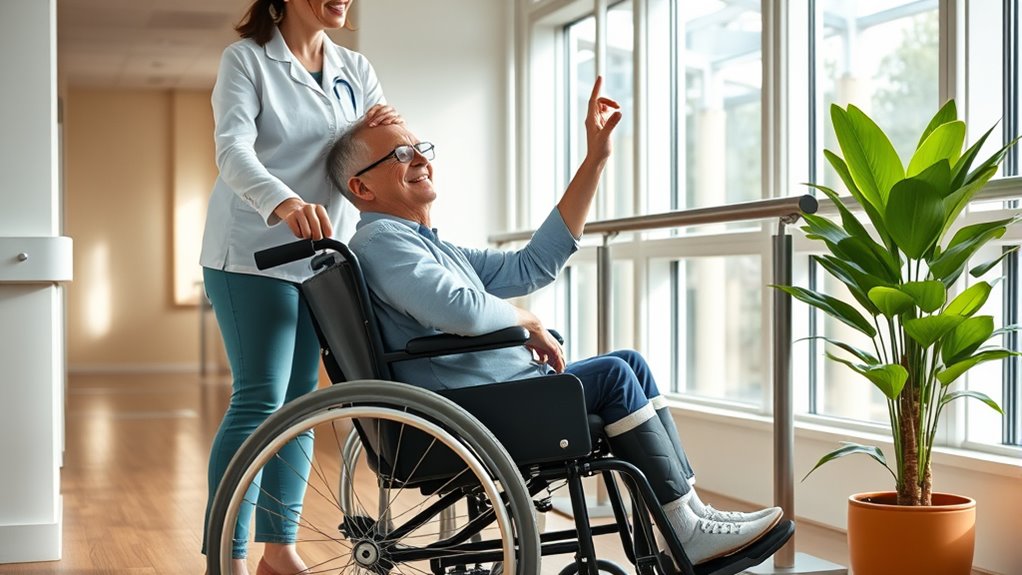

After surgery, your mobility progresses through key milestones. You’ll start with gentle movements and gradually use assistive devices like crutches or walkers. Soon, you’ll notice improvements in strength and confidence, allowing small steps without aid. Within weeks, you’ll shift to unassisted walking and even climb stairs or bend comfortably. Each stage marks progress toward full recovery. Keep moving forward; there’s more to learn about optimizing each phase and reaching your mobility goals.
Key Takeaways
- Early recovery emphasizes gentle movement and tailored exercises to prevent complications.
- Initial gains include small steps and increased strength, marking progress toward independence.
- Walking without assistance typically occurs within weeks, indicating recovery is on track.
- Transition to unassisted walking reflects regained confidence and strength, reducing reliance on devices.
- Returning to normal activities like stairs and bending signifies significant functional recovery.

Recovering your mobility after surgery is a critical part of your healing process, and understanding the typical milestones can help you stay motivated and on track. In the early days, your focus will be on gentle movement and avoiding complications. Your healthcare team will likely recommend specific rehabilitation exercises designed to restore strength, flexibility, and coordination. These exercises are tailored to your procedure and condition, gradually increasing in intensity as your body heals. Consistency is key; performing your rehabilitation exercises regularly guarantees steady progress and prevents setbacks.
Initially, you might rely heavily on assistive devices such as crutches, walkers, or canes. These tools provide stability and support, allowing you to move safely while protecting your surgical site. As you follow your rehabilitation plan, you’ll notice your strength improving and your confidence growing. You may start to take small steps without assistance, marking an important milestone. This progress often signals that your muscles and joints are regaining function, and you’re beginning to restore your independence.
Rely on assistive devices initially; regain strength, confidence, and independence with steady progress.
Within a few weeks, many patients achieve the ability to walk short distances without assistance. This milestone varies depending on the surgery and individual health, but it’s a clear sign that your recovery is on track. During this phase, you’ll continue to incorporate rehabilitation exercises that emphasize balance, coordination, and gradual resistance. Your physical therapist will guide you through exercises that challenge your stability and promote proper gait patterns, helping you move more naturally and efficiently.
As your mobility improves, you’ll likely shift from assistive devices to walking unaided. This change indicates that your strength and confidence are returning. However, it’s important to listen to your body and avoid pushing too hard too soon. Overexertion can lead to setbacks or injury. Your healthcare provider will advise when you’re ready to reduce reliance on assistive devices and take on more advanced rehabilitation exercises aimed at restoring full function.
Rehabilitation guidelines in Louisiana Civil Code and similar legal frameworks emphasize the importance of a tailored approach, which can include physical therapy and gradual progression. Eventually, most patients reach the milestone of returning to normal daily activities, including climbing stairs, bending, and participating in light physical activity. This phase signifies significant progress in your recovery journey. Keep in mind that recovery timelines differ, and patience is essential. Celebrate each small victory along the way and stay committed to your rehabilitation exercises. With consistent effort and proper support, you’ll gradually regain your mobility and return to your routine, feeling stronger and more confident each day.

Crutch Knee Rest Pad, Adjustable Leg Support for Post-Op Knee Recovery, Injury Relief & Fracture Support, Comfort Knee Cushion for Crutches, Mobility Aid for Elderly & Disabled
The knee rest promotes even weight distribution and provides stable support for your injured or weakened leg, helping…
As an affiliate, we earn on qualifying purchases.
As an affiliate, we earn on qualifying purchases.
Frequently Asked Questions
How Can I Speed up My Post-Op Mobility Recovery?
To speed up your post-op mobility recovery, follow your rehabilitation protocols diligently and stay consistent with your exercises. Focus on effective pain management strategies to stay comfortable and motivated. Make sure to communicate with your healthcare team about any discomfort or setbacks. Staying active within your limits and gradually increasing activity levels will help you regain mobility faster and prevent complications. Remember, patience and persistence are key.
Are There Specific Exercises to Avoid During Recovery?
Think of your recovery as a delicate dance—you need to avoid certain steps. During recovery, you should steer clear of exercises that strain your healing tissues, like heavy lifting or high-impact activities. Follow your doctor’s activity restrictions and exercise precautions carefully. Ignoring these can set you back. Always consult your healthcare team before trying new movements, and stick to gentle, approved exercises to keep your progress on the right rhythm.
When Should I Start Driving After Surgery?
You should wait until your healthcare provider confirms you’re ready to start driving, which typically depends on your recovery timeline and the type of surgery you had. Generally, you can consider driving again once you can comfortably operate the vehicle, perform quick emergency stops, and have enough strength and alertness. Usually, this is around two to six weeks post-surgery, but always follow your doctor’s specific advice for safety.
What Signs Indicate Delayed Mobility Progress?
You should be alert to signs of delayed mobility progress, such as persistent pain, limited range of motion, or inability to perform basic movements during your mobility assessment. If you find yourself struggling more than expected or experiencing increased swelling or weakness, these could indicate rehabilitation challenges. Such signs suggest your recovery isn’t progressing as planned, and you should consult your healthcare provider promptly to adjust your rehabilitation plan.
How Do Age and Health Affect Mobility Milestones?
Think of recovery as climbing a mountain; age considerations and health impacts are your gear and weather. Older adults or those with health issues often face steeper climbs and tougher terrain, slowing progress. For example, someone in their 70s with diabetes might take longer to walk independently. Your age and health directly influence how quickly you reach mobility milestones, but with patience and support, each step forward counts.

VOCIC Walkers for Seniors, Z21 Rollator Walker with Seat Supports 350lb, 8" Big Wheels for All Terrain, Ergonomic Arc Seat & 6" Ultra Backrest Foldable Walker, Dual Height Adjustment, Lightweight 2025
【Stable & Strong】 Z21 Walkers for seniors weigh only 19.4lb, designed for easy carrying by seniors. The aluminum…
As an affiliate, we earn on qualifying purchases.
As an affiliate, we earn on qualifying purchases.
Conclusion
As you reach each milestone, you’ll feel more confident and stronger. But the journey isn’t over yet—there’s always another step to take, another challenge to conquer. Stay patient and focused, because what’s ahead could surprise you. Keep pushing forward, and you might just discover a strength you never knew you had. The next phase of your recovery holds endless possibilities—are you ready to see what’s next? The best is yet to come.

Medline Aluminum-Bronze Offset Walking Cane, Adjusts 29–38” & Supports Up to 300 Lbs. — Mobility Aid Provides Balance for Seniors & Adults
ADJUSTABLE cane expands from 29"–38", using a pushbutton lock to secure the perfect fit. Its lightweight aluminum design…
As an affiliate, we earn on qualifying purchases.
As an affiliate, we earn on qualifying purchases.

Resistance Bands for Working Out Women and Men, Physical Therapy Bands, Latex Free Elastic and Exercise Bands Set for Stretching, Suitable for Rehab, Yoga, Pilates, Gym, Home Exercise (Five Colors)
Good Quality Exercise Bands – Made of TPE material, TPE is environmentally friendly, non-toxic and safe, has a…
As an affiliate, we earn on qualifying purchases.
As an affiliate, we earn on qualifying purchases.