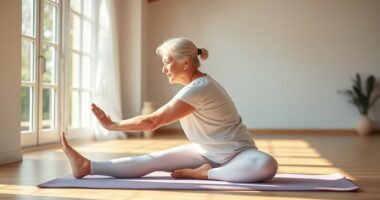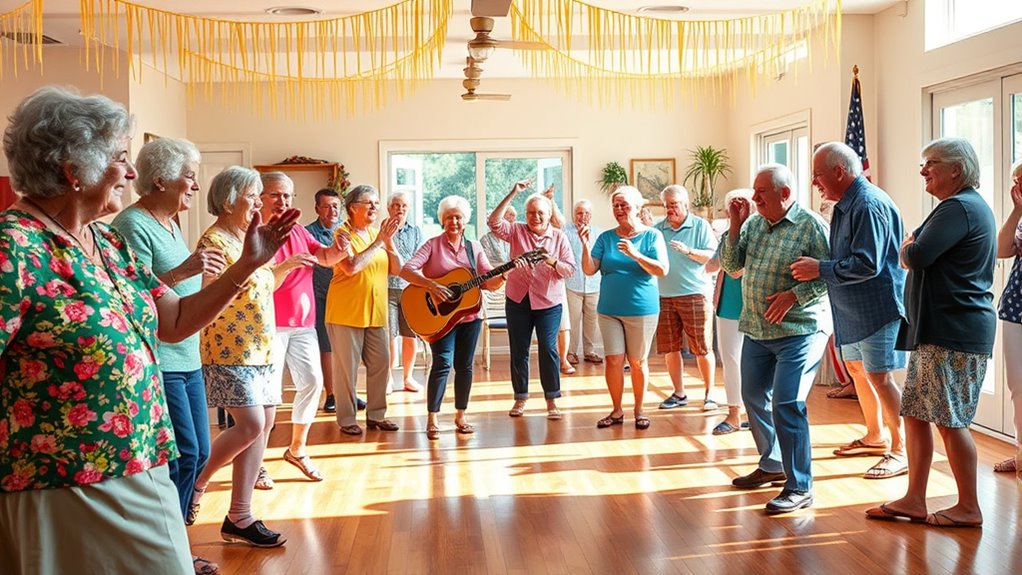

Using music and dance is a great way to motivate seniors to move. It boosts mood, improves physical health, and promotes social connections. Carefully chosen music that resonates with participants can encourage movement, whether sitting or standing, while dance exercises help improve balance and strength. Incorporating group activities creates a supportive, uplifting environment. Keep exploring how these enjoyable activities can enhance your loved ones’ well-being and find out how to incorporate them effectively.
Key Takeaways
- Select familiar, upbeat music to motivate seniors and evoke positive emotional responses.
- Incorporate simple, low-impact dance movements adaptable to various mobility levels.
- Use rhythm exercises and singing to stimulate cognitive functions and coordination.
- Create group activities to foster social connections and encourage collective movement.
- Ensure a supportive environment that emphasizes enjoyment and individual comfort to boost participation.

Music and dance can considerably enhance seniors’ well-being by boosting their mood, improving physical health, and fostering social connections. Incorporating music therapy and dance exercises into daily routines offers a simple yet powerful way to encourage movement and overall vigor. When you introduce music therapy, you’re tapping into a proven method that uses music intentionally to address physical, emotional, and cognitive needs. Through carefully selected tunes, you can help seniors engage their muscles, improve coordination, and increase flexibility. Music therapy isn’t just about listening; it often involves movement, singing, and rhythm exercises that stimulate both mind and body, making it an enjoyable way to stay active. Additionally, selecting appropriate music can significantly influence the effectiveness of these activities and enhance emotional responses.
Dance exercises, on the other hand, serve as an excellent form of low-impact physical activity tailored to seniors’ abilities. These exercises can be adapted to different mobility levels, from seated movements to full-body routines. The key is to choose music that resonates with them—whether it’s upbeat tunes to energize or softer melodies for relaxation. As you guide seniors through dance exercises, you’re not only helping them improve balance and strength but also giving them a joyful, expressive outlet. When they move to the rhythm, they activate muscles they might not use regularly, which can contribute to better posture and reduced fall risk.
You should also recognize that both music therapy and dance exercises promote social interaction. Participating in group activities fosters a sense of community, reduces feelings of loneliness, and enhances motivation. When seniors share a dance or sing along to familiar songs, they often feel more connected and uplifted. As you facilitate these activities, encourage a supportive environment where everyone feels comfortable moving at their own pace. Incorporating familiar tunes can evoke memories and positive emotions, further reinforcing engagement and emotional well-being.
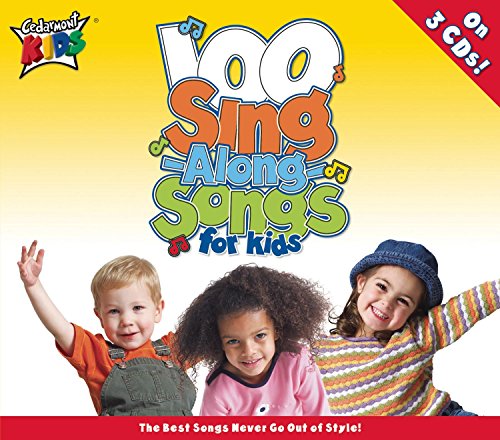
100 Singalong Songs For Kids
084418053520
As an affiliate, we earn on qualifying purchases.
As an affiliate, we earn on qualifying purchases.
Frequently Asked Questions
How Can Music and Dance Improve Seniors’ Mental Health?
Music and dance boost your mental health by encouraging emotional expression and enhancing memory recall. When you listen to familiar tunes or dance to lively rhythms, you can feel more connected and uplifted. These activities stimulate your brain, reducing feelings of loneliness and depression. Plus, sharing music and dance with others creates social bonds, making you feel happier and more engaged in life.
What Safety Precautions Should Be Taken During Dance Activities?
Like a knight preparing for battle, you should assess the space to prevent falls and guarantee it’s free of obstacles. Use sturdy footwear, and supervise dance activities closely to enhance mobility safely. Keep sessions at a gentle pace, encouraging seniors to listen to their bodies, and provide support when needed. Regularly check equipment and flooring to maintain a safe environment, helping seniors enjoy movement without risking injury.
How Do Different Music Genres Affect Seniors’ Motivation?
Different music genres markedly influence seniors’ motivation by aligning with their genre preferences and evoking emotional responses. Upbeat genres like jazz or pop boost energy and encourage movement, while softer genres like classical or ballads foster relaxation. When you select music that resonates emotionally and matches their preferences, seniors feel more engaged and motivated to participate. Tailoring genres to individual tastes enhances their enjoyment and promotes sustained activity.
Can Music and Dance Help With Seniors’ Balance and Coordination?
Yes, music and dance can improve your balance and coordination through rhythmic movement. When you move to a beat, it helps strengthen neural pathways and enhances your motor skills. Additionally, musical memory plays a role, as familiar tunes encourage you to engage more confidently in movement. Regularly participating in such activities can boost your stability and agility, making daily tasks easier and reducing fall risk.
What Are the Best Times of Day for Seniors to Engage in These Activities?
Think of your energy levels like a gentle river flowing, strongest during peak energy, usually in the morning or early afternoon. You should plan music and dance sessions then, when your current flows smoothly and easily. Save quieter evenings for relaxing activities, letting your body unwind. Engaging during peak times boosts your mood and movement, while evenings help you wind down comfortably. Timing truly makes your movement journey more joyful and sustainable.

And 5678 Sit & Party Chair Dance Fitness DVD for Seniors | Low Impact Seated Workout
Stay Active & Have Fun Gentle, seated dance workouts designed specifically for seniors. Perfect for beginners, caregivers, or…
As an affiliate, we earn on qualifying purchases.
As an affiliate, we earn on qualifying purchases.
Conclusion
Incorporating music and dance into seniors’ routines isn’t just fun—it markedly boosts their physical activity. Did you know that seniors who engage in musical activities are 30% more likely to stay active and improve their balance? By encouraging movement through rhythm and melody, you can help seniors stay healthier, happier, and more engaged. So, why not introduce a dance session or a sing-along today? It’s a simple way to make a big difference in their lives.

Vive Patient Turner – Turn Transfer Aid for Elderly – Mobility Sit to Stand Device for Transferring from Bed, Seat & Wheelchair – Pivot Disc 360 Degree Rotation w/Handle – Standing Aids & Supports
REQUIRES STANDING STRENGTH: Best suited for those who can pull themselves up and stand with caregiver assistance, or…
As an affiliate, we earn on qualifying purchases.
As an affiliate, we earn on qualifying purchases.

VigorKeeper Simple Music Player for Dementia Alzheimer's Seniors, Easy to Use Music Box for Elderly Parents, Large On/Off Button, Plug-and-Play, One-Touch Play, Loud Sound, 32GB TF Card
Simple Design Music Player: Our dementia music player is super easy to use—designed to take the frustration out…
As an affiliate, we earn on qualifying purchases.
As an affiliate, we earn on qualifying purchases.