Hospital beds for home use feature adjustable positions to enhance comfort and aid mobility, with motorized or manual controls. Safety is key, so they include side rails and alarm systems to prevent falls. A pressure-relieving mattress improves comfort and skin health, while durable, easy-to-clean frames ensure safety and hygiene. User-friendly controls simplify adjustments, and additional features support recovery and peace of mind. Keep exploring to discover more about selecting the right bed for your needs.
Key Takeaways
- Adjustable components allow easy positioning of head, foot, or entire bed for comfort and mobility.
- Side rails and safety features prevent falls and enhance patient security.
- Pressure-relieving mattresses and alarms improve comfort and monitor patient safety.
- Durable, easy-to-clean frames ensure long-term safety and hygiene.
- User-friendly controls and thoughtful features support independence and ease of use at home.
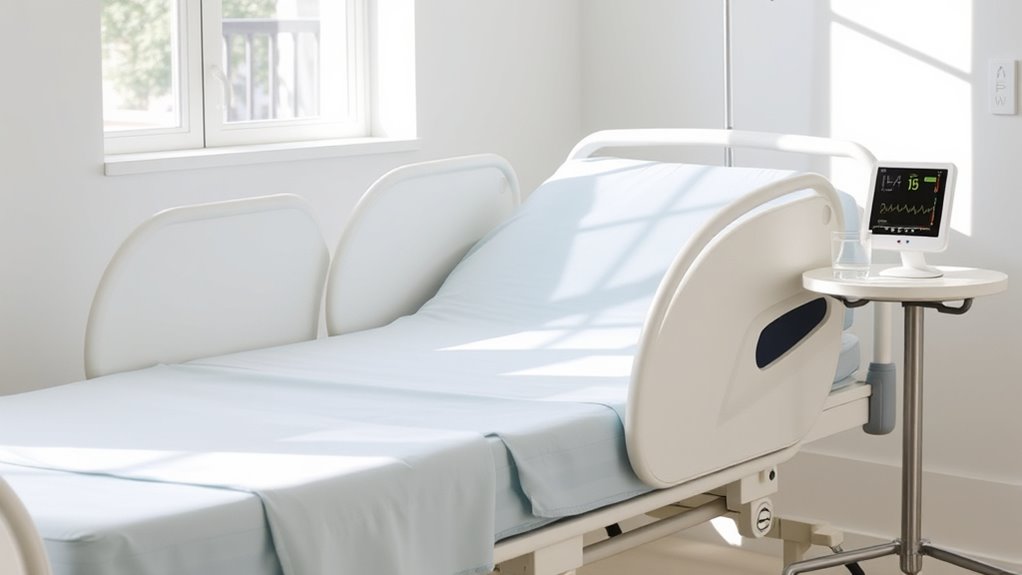
A hospital bed is a specialized piece of medical equipment designed to support patient comfort and care during recovery. When bringing a hospital bed into your home, understanding its essential features helps guarantee both safety and functionality. Patient safety should always be your top priority, so choosing a bed with the right bed features can make a significant difference. These features are designed to prevent accidents, improve comfort, and facilitate care, making recovery smoother for your loved one.
Start by examining the bed’s adjustable components. Many hospital beds come with motorized or manual controls that allow you to raise or lower the head, foot, or entire bed. This flexibility helps in positioning the patient comfortably and can reduce pressure points, decreasing the risk of bedsores. Adjustable beds can also assist with activities like eating, reading, or getting in and out of bed, which promotes independence and safety.
Another important bed feature to think about is the side rails. These rails provide added safety by preventing falls, especially for those who are unsteady or prone to rolling out of bed. Look for rails that are easy to operate but secure enough to serve their purpose effectively. Some models come with lockable or removable rails, giving you control over when they’re used, which is essential for patient mobility and safety.
The mattress type also plays an indispensable role in safety and comfort. Pressure-relieving mattresses, such as foam or gel overlays, help prevent pressure ulcers and improve overall comfort. Ensure the mattress fits snugly within the bed frame to prevent gaps that could cause tripping or entrapment. For added safety, some beds feature built-in alarms or sensors that alert caregivers if the patient tries to leave the bed unexpectedly, reducing the risk of falls.
Durability and stability are additional bed features that shouldn’t be overlooked. A sturdy frame made of durable materials ensures the bed can support the patient safely over time. Look for a bed with a weight capacity that exceeds the patient’s weight for added security. Easy-to-clean surfaces and smooth edges are also beneficial, helping maintain hygiene and preventing injuries from sharp corners.
Additionally, incorporating mindfulness techniques such as deep breathing exercises or visualization can help patients relax and feel more at ease in their environment, contributing to overall comfort and recovery.
Finally, consider the overall design and ease of use. A user-friendly control panel or remote can make adjustments quick and effortless, especially for caregivers. When you choose a hospital bed with these thoughtful features, you’re not just investing in a piece of equipment—you’re creating a safer, more comfortable environment that supports recovery and peace of mind for both patient and caregiver.

MCombo Power Lift Recliner Chair with Extended Footrest for Elderly People, Fabric 7287/7087 (Brown, Medium)
Power Lift Assistance: Counter-balanced lift mechanism to assist the senior stand up easily, smoothly adjust to lift or...
As an affiliate, we earn on qualifying purchases.
Frequently Asked Questions
How Do I Choose the Right Size Hospital Bed for My Home?
You should choose a hospital bed size based on your space and comfort needs. Measure your room to guarantee it fits comfortably, considering mattress options like foam or air mattresses for added comfort. Look at different bed frame styles, such as semi or fully adjustable, to find one that best supports mobility and care. Don’t forget to select a size that provides enough space for movement and daily activities.
What Safety Features Should I Look for in a Home Hospital Bed?
Did you know that falls account for 30% of home injuries? To keep safe, look for features like adjustable bed rails to prevent patient falls, especially during transfer. Confirm the bed has sturdy, lockable wheels for stability. Check that the controls are easy to operate, and the bed surface is smooth and secure. Prioritize safety features that support secure patient transfer and prevent accidental falls.
Can a Hospital Bed Be Used Outdoors or in Different Rooms?
You can use a hospital bed outdoors or in different rooms, but it’s not ideal. Outdoor use isn’t recommended because of weather exposure, which can damage the bed and compromise safety. For room versatility, choose a bed with adjustable height and flexible positioning to fit various spaces. Always guarantee the area is level, dry, and protected from elements if you consider outdoor use, and check manufacturer guidelines for safety and durability.
Are There Weight Limits I Should Be Aware of for Home Hospital Beds?
Think of your home hospital bed as a sturdy bridge designed to support you. Most beds have a weight capacity ranging from 350 to 600 pounds, depending on the model. Always check the material durability to guarantee it can handle daily use. Staying within the weight limit keeps your bed reliable and safe, preventing unnecessary stress on its structure and ensuring it remains a dependable support for your recovery journey.
How Do I Maintain and Clean a Hospital Bed Properly?
To maintain and clean your hospital bed properly, regularly wipe down surfaces with a damp cloth and mild soap, avoiding harsh chemicals. Check that bed rail safety features are secure and functioning correctly to prevent accidents. Keep the mattress in good condition by inspecting for wear and replacing it when necessary. Proper mattress maintenance and ensuring bed rails are safe help prolong the bed’s lifespan and keep you secure.

Westinghouse 50 Inch Electric Fireplace Heater, Compatible with Alexa & Google Home, Wall Mount or in-Wall Recessed Fireplace Insert, 24 Hour Timer, Color Changing Flames, 750W/1500W Indoor Heater
CUSTOMIZE APPEARANCE: Up to 144 total color combinations for flames and embers, 5 independent brightness levels, and 5...
As an affiliate, we earn on qualifying purchases.
Conclusion
Now that you know the essentials of hospital beds for home, you’re better prepared to make an informed choice. Did you know that nearly 70% of patients feel more comfortable and recover faster when they have a hospital bed at home? With the right bed, you can create a safe, supportive environment that promotes healing. Remember, choosing the right features can make all the difference in your comfort and care journey.

EUHOMY 50 Inch Electric Fireplace Wall Recessed and Wall Mounted with Adjustable Flame Color, Fireplace Heater with Remote Control, Linear Fireplace with Timer, Touch Screen, Log & Crystal, 750/1500W
Package Inclusions & 2-Year Technical Support: : The EUHOMY electric fireplace is equipped with 1* carbon log, 1*...
As an affiliate, we earn on qualifying purchases.

DUMOS 42" Freestanding Electric Fireplace, 1500W/750W Wall Mounted or Recessed Insert Fireplaces Heater with Remote Control,13 Adjustable Flame Color, 12H Timer, Touch Screen, Inky
Sleep&Recreation Mode: Both modes are controlled by remote. Sleep Mode offers slow flames and dim light for relaxation,...
As an affiliate, we earn on qualifying purchases.