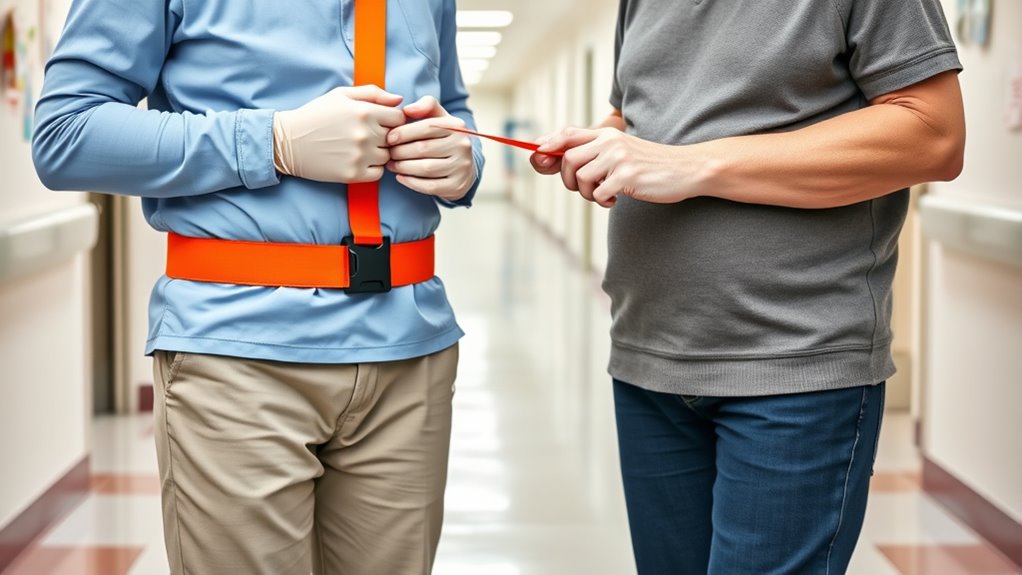

Use a gait belt whenever you need to assist someone with walking, sitting, or standing, especially if they have balance issues or weakness. Make sure the belt fits snugly but comfortably around their waist, positioned level and not twisted. Communicate clearly, support gently, and maintain good body mechanics. Proper application and technique are key to ensuring safety for both of you. For detailed steps and safety tips, keep exploring this helpful guide.
Key Takeaways
- Use a gait belt during sitting, standing, or walking for patients with balance issues or post-surgery recovery.
- Ensure the belt fits snugly and is properly positioned over clothing or skin, avoiding twists or bulky garments.
- Apply the belt securely, fastening the buckle with a finger’s width for comfort and control.
- Communicate clearly with the patient, informing them of movements to promote cooperation and safety.
- Maintain a firm but gentle grip, supporting the patient through transfers to prevent falls and injuries.
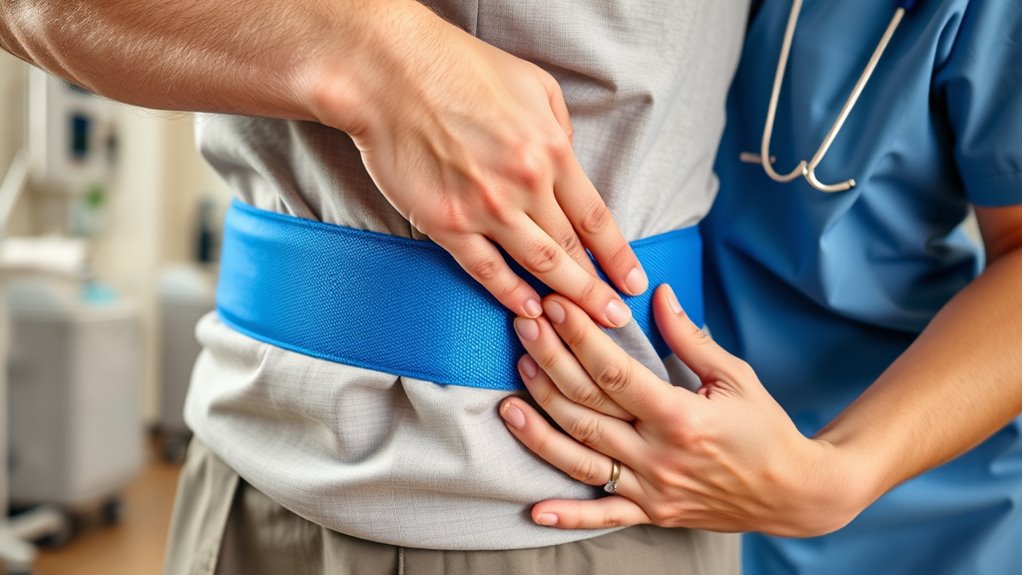
Have you ever wondered how healthcare providers guarantee patient safety during transfers and mobility? One essential tool they rely on is the gait belt. When used correctly, a gait belt can substantially reduce the risk of falls and injuries for both patients and caregivers. But the key to its effectiveness lies in understanding when to use it and, more importantly, how to do so with proper technique. Knowing these details guarantees that patient safety remains the top priority during mobility activities.
You should use a gait belt whenever a patient needs assistance to sit, stand, or walk, especially if they have balance issues, weakness, or are recovering from surgery. It’s not a one-size-fits-all solution, so evaluating each patient’s individual needs is crucial. When the decision is made to use a gait belt, it’s essential to check that the belt fits snugly but comfortably around the patient’s waist. A proper fit allows you to maintain control without causing discomfort or restricting breathing. Always position the belt over sturdy clothing or directly on the skin if appropriate, and avoid placing it over thick or bulky garments that could interfere with a secure grip.
Applying the gait belt with proper technique is fundamental for patient safety. Start by standing close to the patient, with your feet shoulder-width apart for stability. Wrap the belt around their waist, ensuring it’s level and not twisted. Fasten the buckle securely, but don’t tighten it too much—there should be enough room to slip a finger between the belt and their body. This balance prevents discomfort while still providing a firm hold. When you’re ready to assist, always inform the patient of what you’re about to do to promote trust and cooperation. Use a gentle, controlled grip on the belt, avoiding jerky movements that could cause panic or injury. Support the patient through the movement, maintaining good body mechanics to protect your own back and guarantee smooth, safe transfers.

Vive Gait Belt (300lbs) Transfer Belt with Handles – Medical Nursing Safety Patient Assist – Bariatric, Elderly, Handicap, Physical Therapy – PT Gate Strap Quick Release Metal Buckle, Grabbing Teeth
EASY MOVEMENT & TRANSFERS FROM A TRUSTED BRAND: Safely assist patients or loved ones with ease using our…
As an affiliate, we earn on qualifying purchases.
As an affiliate, we earn on qualifying purchases.
Frequently Asked Questions
Are Gait Belts Suitable for Pediatric Patients?
Yes, gait belts can be suitable for pediatric patients when used correctly to support pediatric mobility and guarantee child safety. You should select a gait belt designed for children’s smaller frames and handle it gently. Always secure it snugly without causing discomfort, and supervise the child closely during transfers or ambulation. Proper use helps prevent falls and promotes safe, independent movement for pediatric patients.
Can Gait Belts Be Reused Safely?
Yes, you can reuse gait belts safely if you follow proper disinfection protocols and storage guidelines. After each use, thoroughly clean the belt with appropriate disinfectants to prevent cross-contamination. Store it in a clean, dry place away from moisture and contaminants. Regularly inspect for signs of wear or damage, replacing it as needed. By adhering to these steps, you guarantee safety and hygiene for every patient.
What Materials Are Gait Belts Typically Made From?
You’ll find gait belts are typically made from durable materials like nylon or polyester, which guarantee strength and longevity. These materials also offer good comfort, reducing skin irritation during use. When choosing a gait belt, consider durability to withstand repeated use, and opt for soft, flexible fabrics for comfort. Proper maintenance and inspection help ensure the material remains effective and safe for patient transfers.
How Do I Choose the Correct Gait Belt Size?
To choose the correct gait belt size, you need to focus on proper belt adjustment and size selection. Measure the patient’s waist accurately, usually at the narrowest part, and select a belt that fits snugly but comfortably. A well-fitting belt allows for secure grip and easy movement, reducing the risk of slipping or discomfort. Always make certain the belt can be adjusted easily to maintain a safe and effective transfer.
Are There Specific Training Requirements for Staff Using Gait Belts?
Yes, staff should receive proper training before using gait belts. You need to understand safety protocols, including how to secure the belt correctly and support the patient safely. Proper training helps prevent injuries and ensures effective transfers. Make sure your training covers patient assessment, proper technique, and emergency procedures. Regular refreshers are also essential to stay updated on best practices and maintain safety for both staff and patients.

KkaFFe Gate Belt for Elderly with 7 Handles,Gait Belts Transfer Belt for Seniors, Adjustable Lift Belts for Elderly (27-45 inches) Quick Release Gait Belt,Patient Transfer Belt for Disabled
【Safe Movement and Transporittion】KkaFFe Gait belt is designed for the elderly, behaviorally challenged, and paralyzed patients, making it…
As an affiliate, we earn on qualifying purchases.
As an affiliate, we earn on qualifying purchases.
Conclusion
Using a gait belt properly can considerably reduce fall risks and improve patient safety. Remember, about 30% of hospital falls involve patients with mobility challenges, highlighting the importance of correct usage. When you use gait belts confidently and correctly, you not only protect your patients but also enhance their confidence. Always ensure proper fit and technique, and you’ll make a meaningful difference in their mobility and your care outcomes.

AliMed Pediatric Walker Belt
Fits children with waists from 17 in. to 28 in
As an affiliate, we earn on qualifying purchases.
As an affiliate, we earn on qualifying purchases.
Vive Gait Belt (300lbs) Transfer Belt with Handles – Medical Nursing Safety Patient Assist – Bariatric, Elderly, Handicap, Physical Therapy – PT Gate Strap Quick Release Metal Buckle, Grabbing Teeth
EASY MOVEMENT & TRANSFERS FROM A TRUSTED BRAND: Safely assist patients or loved ones with ease using our…
As an affiliate, we earn on qualifying purchases.
As an affiliate, we earn on qualifying purchases.