
To use a cane safely, ensure it’s adjusted to your proper height—generally, the handle should be level with your wrist when your arm is hanging naturally. Hold the cane firm but comfortably, with a slightly bent elbow for better control. When maneuvering stairs, position the cane on the lower or comfortable side, step carefully, and lean slightly forward. Keeping good posture and technique reduces risks—continue exploring for more tips on staying safe.

Turn quiet afternoons into listening time
- Thousands of audiobooks, podcasts and originals
- Listen on your phone, tablet or Echo — also offline
- Cancel anytime
Key Takeaways
- Adjust the cane to match your height, ensuring the handle aligns with your wrist when standing upright.
- Hold the cane with a firm but comfortable grip, keeping your elbow slightly bent at 15-20°.
- Position the cane on the stronger side, on the lower step or comfortable side, for stability.
- When climbing stairs, place the cane on the step below, supporting your weight evenly.
- Maintain proper posture and lean slightly forward when walking or descending stairs for better control.
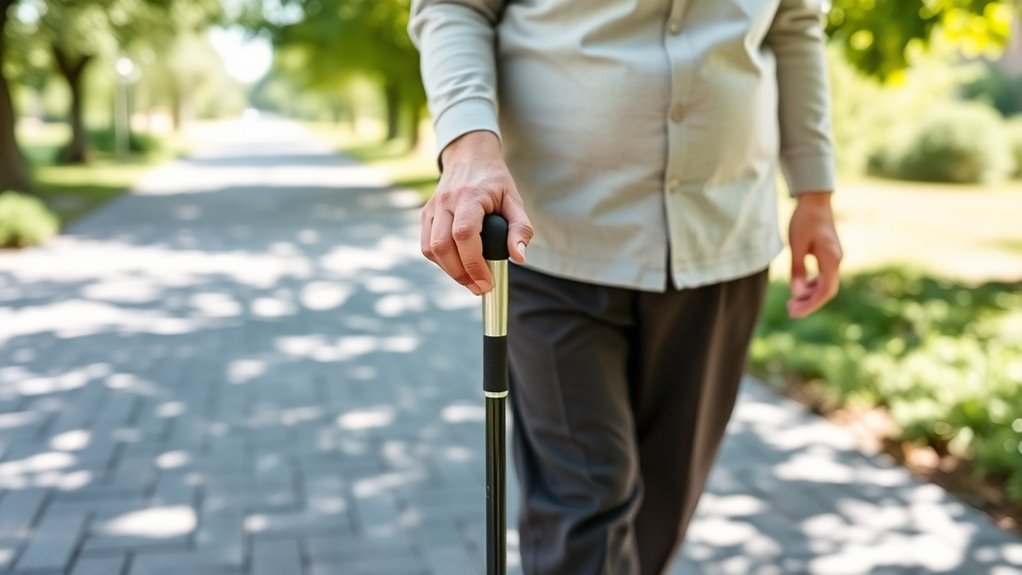
Using a cane safely is essential to prevent falls and maintain your independence. One of the most important aspects of safe cane use is ensuring that you adjust your grip properly. When holding your cane, your grip should be firm but comfortable. You don’t want to hold it too tightly, which can cause fatigue, or too loosely, which can lead to losing control. Position the handle so that your elbow is slightly bent at about a 15-20 degree angle. This allows for natural movement and better stability. An improperly adjusted grip can compromise your balance, especially when steering through uneven surfaces or tricky terrain. Make sure the cane’s handle aligns with your wrist, and if your cane has an adjustable height, set it to match your height for optimal support. Properly maintaining cane accessories like rubber tips can also enhance safety by preventing slips.
Navigating stairs is another critical aspect of using a cane safely. When approaching stairs, position your cane on the lower step or the side of your body that feels most comfortable and secure. If you’re going upstairs, place the cane on the step below, then step up with your stronger leg first. Follow with your weaker leg, then bring the cane up to the same level. When descending, place the cane on the lower step first, then carefully step down with your weaker leg, followed by your stronger leg. This method provides stability and reduces the risk of slipping or losing your balance. Keep your gaze focused on the stairs, and move slowly and deliberately. Using the cane to steady yourself on each step ensures you have extra support and can prevent falls.
Adjusting your grip appropriately when navigating stairs is critical because it helps you maintain control and stability. A proper grip allows you to support your weight more evenly and reduces strain on your hands and wrists. As you ascend or descend, ensure your grip remains secure but not tight, and keep your hand close to the handle for quick adjustments if needed. If your cane has a rubber tip, check it regularly for wear and tear to prevent slipping. When you’re dealing with uneven terrain or stairs, always maintain a firm, consistent grip and be mindful of your posture. Lean slightly forward when climbing or descending, and use your arm and core muscles to support your movements. Practicing these techniques will help you navigate stairs safely, giving you confidence and control while minimizing your risk of falls. Properly adjusting your grip and mastering stair navigation are simple but vital steps to using your cane effectively and safely.
adjustable walking cane with rubber tip
As an affiliate, we earn on qualifying purchases.
As an affiliate, we earn on qualifying purchases.
Frequently Asked Questions
How Do I Know if My Cane Is the Correct Height?
You can tell if your cane is the correct height by checking your proper grip. When you stand upright, your elbow should bend slightly at about a 15-degree angle, and your hand should rest comfortably on the cane handle. Adjust the cane height as needed by loosening the cane adjustments and setting it so your wrist aligns naturally with your hip. This guarantees stability and proper support during use.
Can I Use a Cane on Stairs Safely?
Yes, you can use a cane on stairs safely if you follow proper cane grip ergonomics. Keep your grip firm and steady, and position the cane on the stair’s lower side for support. Store your cane properly by keeping it within reach when not in use, and avoid leaning on it heavily. Always take your time, and use the handrail if available for extra stability.
What Type of Cane Is Best for Outdoor Use?
Looking for the best outdoor cane? Ever wondered which type withstands the elements? You should choose a cane made from durable materials like aluminum or rubberized tips for better grip. Ergonomic cane designs with comfortable grips and adjustable heights also make outdoor walking safer and easier. These features help you stay stable on uneven surfaces and resist weather damage. So, pick a sturdy, ergonomic cane to boost your confidence outside!
How Often Should I Replace My Cane?
You should replace your cane when it shows signs of wear or damage, typically every 6 to 12 months, depending on usage. Regular cane maintenance, like checking the rubber tips and joints, helps guarantee safety. Follow a consistent replacement schedule to prevent accidents. If your cane becomes loose, cracked, or uncomfortable, don’t wait—replace it promptly to maintain stability and support during your daily activities.
Are There Special Techniques for Using a Cane With a Injury?
Yes, there are special techniques for using a cane with an injury. Focus on maintaining a proper grip to prevent strain and support your injury effectively. Gait training helps you walk correctly, reducing pain and preventing further damage. Make certain your cane’s height is appropriate, and use it consistently on your unaffected side. These techniques promote stability and safety, helping you recover more comfortably and confidently.
Conclusion
Now that you know how to choose the proper cane height and use it correctly, you’re all set to navigate safely. Remember, a well-fitting cane is your trusty sidekick, helping you stay steady as you go—no need to be a knight in shining armor, just a savvy adventurer. With a little practice, you’ll be moving with confidence, even if you feel like you’re stepping into the future. Stay safe and keep walking strong!
Columbus Day / Indigenous Peoples' Day Picks
long weekend sales
As an affiliate, we earn on qualifying purchases.