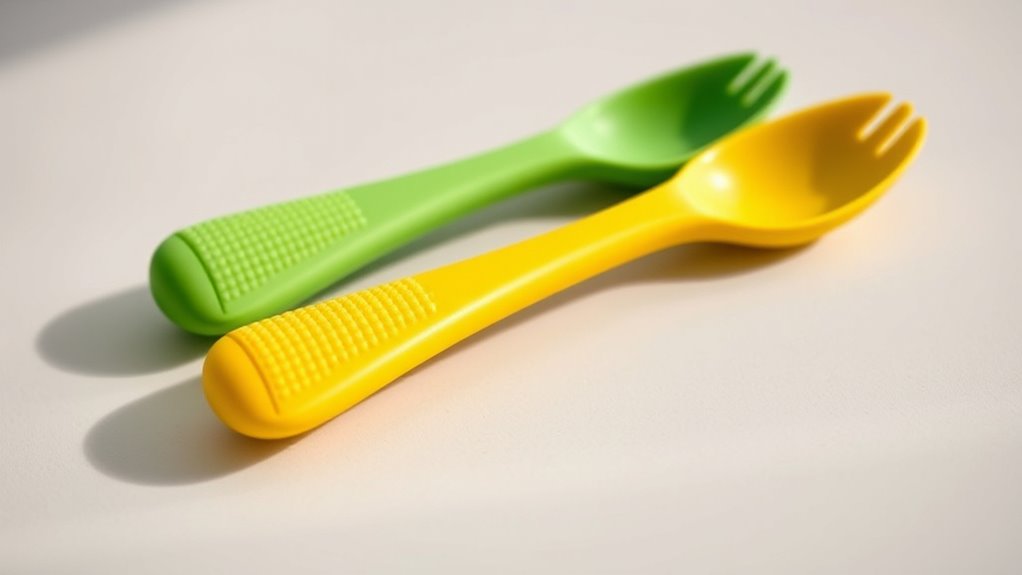
Feeding utensils with adaptive grips are designed to help you eat more independently and comfortably. They feature ergonomic handles that fit naturally in your hand, providing better control and reducing fatigue. Safety features like rounded edges and textured grips prevent slips and accidents. These lightweight, durable tools are easy to clean and built to last. If you want to discover how these features can make mealtime safer and more confident, keep exploring for more details.
Key Takeaways
- Ergonomic designs with contoured, thicker handles promote comfortable, confident self-feeding and reduce hand strain.
- Safety features like rounded edges, soft grips, and built-in guards prevent choking and enhance security.
- Lightweight and textured handles improve control and stability, even for limited hand strength or tremors.
- Durable, dishwasher-safe materials ensure easy cleaning and long-term hygiene.
- Overall, these utensils support independence, safety, and confidence during mealtime.
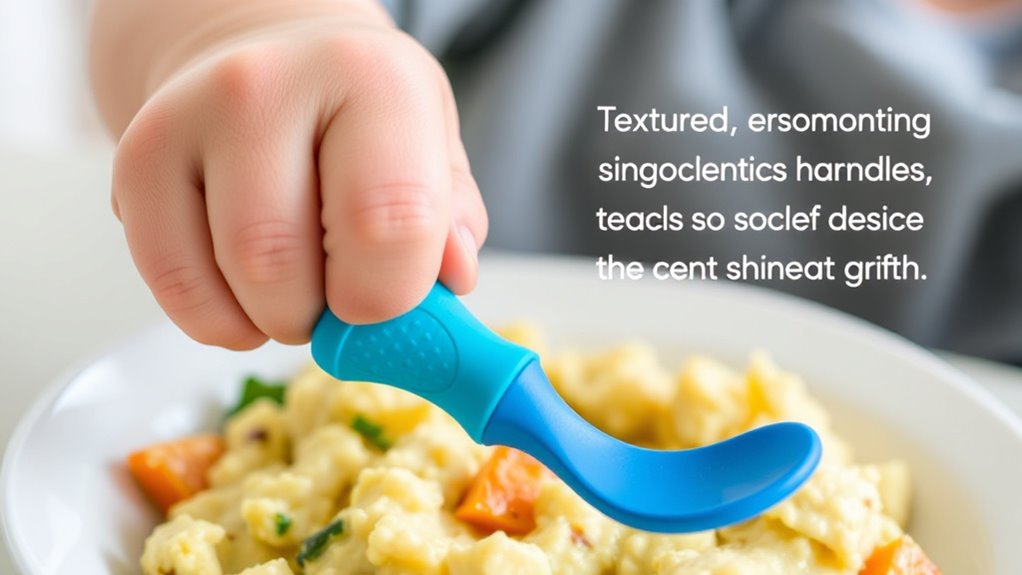
Feeding utensils and adaptive grips play a essential role in helping individuals with fine motor challenges develop independence during mealtime. These tools are designed with thoughtful features that make eating easier and more comfortable. One of the most important aspects of these utensils is their ergonomic design. When a utensil has an ergonomic shape, it fits naturally into your hand, reducing strain and improving grip stability. The handles are often thicker or contoured to accommodate smaller hands or those with limited strength, allowing you to hold them securely without slipping. This design encourages confidence in self-feeding and minimizes frustration caused by difficulty gripping standard utensils.
Ergonomic, contoured handles boost grip stability and confidence during self-feeding.
Safety features are equally essential when selecting feeding tools. Many adaptive utensils are made from non-toxic, BPA-free materials that are safe for daily use. Some incorporate rounded edges or soft-touch grips to prevent injuries and ensure comfortable handling. For example, textured handles not only improve grip but also help prevent accidental slips, which could lead to spills or injuries. Additionally, utensils with built-in guards or stops can prevent you from inserting the utensil too far into your mouth, reducing the risk of gagging or choking. Such safety features provide peace of mind for both users and caregivers, knowing that the tools are designed to minimize hazards and promote secure, independent feeding.
Another key aspect of these utensils is their lightweight construction, which makes them easier to maneuver for individuals with limited hand strength or coordination. The combination of ergonomic design and safety features ensures that you can focus on the act of eating rather than struggling with the tools. Adaptive grips, such as those with textured surfaces or cushioned handles, further enhance control, allowing you to maintain a firm hold even if your hands tire or tremble. In addition, durable materials used in manufacturing ensure that these utensils can withstand frequent cleaning and regular use without degrading over time.
Manufacturers also pay attention to durability and ease of cleaning. High-quality materials withstand frequent washing without degrading, which is essential for maintaining hygiene. Dishwasher-safe options make cleanup straightforward, ensuring that the utensils remain safe and functional over time. All these features—ergonomic design, safety considerations, lightweight construction, and durability—work together to support your journey toward greater independence during mealtime.
Frequently Asked Questions
Are Adaptive Grips Suitable for All Age Groups?
Adaptive grips are generally suitable for most age groups, but their age appropriateness depends on individual needs and developmental suitability. Younger children may benefit from smaller, easier-to-hold grips as they develop fine motor skills, while older kids and adults might use more advanced designs. It’s essential to take into account the user’s specific abilities and growth stage to select an adaptive grip that promotes independence and comfort effectively.
How Do I Clean and Maintain Adaptive Feeding Utensils?
You should clean adaptive feeding utensils regularly with warm, soapy water to remove food residues and prevent bacteria buildup. Use gentle cleaning techniques, avoiding abrasive scrubbers that could damage material durability. Most utensils are dishwasher safe, but always check manufacturer instructions. Rinse thoroughly and dry completely before storing. Proper maintenance guarantees longevity and safety, keeping the utensils in good condition for everyday use.
Can Adaptive Grips Be Customized for Individual Needs?
Did you know that over 60% of users find personalized grip design improves comfort and function? Yes, adaptive grips can be customized for individual needs through ergonomic customization, ensuring a perfect fit. You can work with specialists to tailor the grip’s shape, size, and texture, making eating easier and more comfortable. This personalized approach enhances independence and confidence during meals, adapting to your unique hand movements and preferences.
Do Adaptive Feeding Utensils Affect the Natural Development of Fine Motor Skills?
Adaptive feeding utensils generally support your child’s development without hindering their fine motor skills. They can positively influence skill progression by encouraging independence and proper technique. While some worry about developmental impact, these tools are designed to complement natural growth, helping children refine their movements. As your child practices with adaptive utensils, they build confidence and coordination, ultimately fostering healthy fine motor development alongside their overall skill progression.
Are There Any Safety Concerns With Using Adaptive Feeding Utensils?
Did you know that 30% of choking incidents in children involve improper utensil use? Using adaptive feeding utensils can pose safety concerns if they aren’t designed with food safety in mind. You should always check for choking hazards, such as small parts or sharp edges, and supervise your child during meals. Properly selected utensils help reduce risks, ensuring your child’s safety while supporting their independence.
Conclusion
Using the right feeding utensils and adaptive grips can transform mealtime into a more confident, independent experience. With the proper tools, you can improve coordination, enhance comfort, and promote self-sufficiency. Embrace these adaptations to foster independence, encourage growth, and create a positive mealtime routine. By choosing the right utensils, you empower yourself to dine with dignity, to eat with ease, and to enjoy every bite with confidence.