
TL;DR

Turn quiet afternoons into listening time
- Thousands of audiobooks, podcasts and originals
- Listen on your phone, tablet or Echo — also offline
- Cancel anytime
A Northumbria University-led team developed and tested a five-factor dementia risk score using data from more than 11,000 older adults across seven countries. The conversation-based tool is intended to help research studies and trials identify people at higher risk, not to serve as a routine screening test; validation in additional regions is still needed.
A Northumbria University-led international team has developed and tested a five-factor score to identify older adults at elevated dementia risk in low- and middle-income countries, using information gathered in a conversation rather than scans or blood tests. Published in the American Journal of Epidemiology, the tool is intended to support research recruitment and trials, not routine screening of the general public.
The researchers built and tested the score using data from more than 11,000 older adults at seven study sites in China, Cuba, the Dominican Republic, Puerto Rico, Venezuela, Mexico and Peru. The study reports an accuracy score of 0.75, above the 0.70 level the report describes as generally regarded as clinically useful. That measure does not mean the score diagnoses dementia or predicts an individual’s future with certainty.
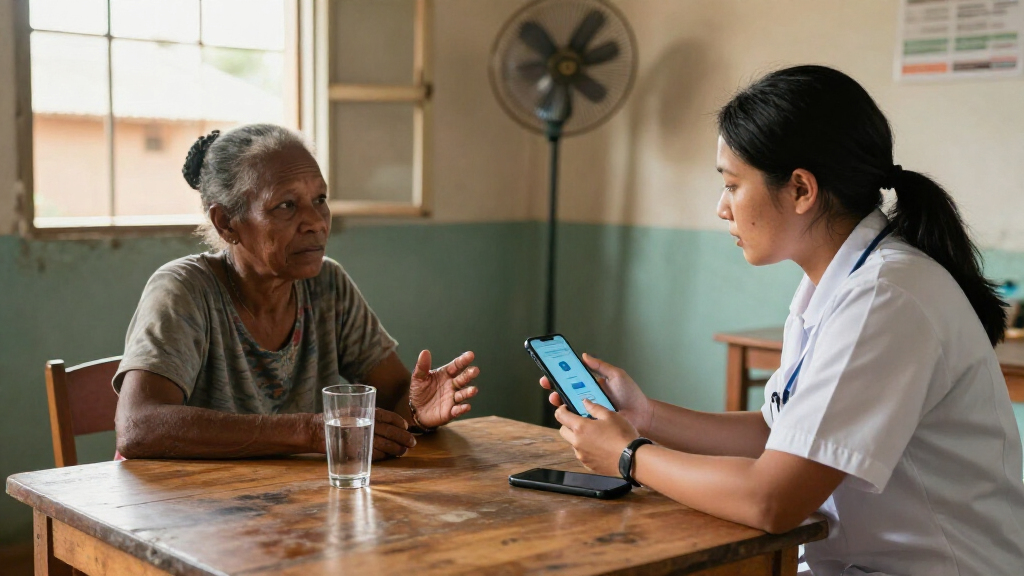
The five factors are age, social engagement, physical activity, high blood pressure and difficulty managing money. Questions about social contact and daily activity can include whether a person lives with others, sees family or friends, joins community or religious groups, and does activities such as walking, farming or household work. A family member or carer may be asked about a noticeable change in handling finances.
Each factor contributes points to a total from 0 to 9. In the report’s estimates, a score of 0 corresponds to about a 1% chance of developing dementia within three years, while a score of 9 corresponds to nearly 19%. These are risk estimates from the model, not a diagnosis. The researchers say the score’s primary role is to help studies and clinical trials find people who may be at higher risk in settings where suitable prediction tools have been lacking.
A Research Tool for Underrepresented Settings
The tool addresses a gap between where much dementia research has been designed and where many people with dementia live. The report says dementia affects more than 57 million people worldwide, with around 60% living in low- and middle-income countries. Yet many existing risk models were developed using data from high-income countries and have transferred poorly to other settings, according to the research team.
A score based on a short conversation could offer researchers a lower-cost way to identify potential participants where access to specialist equipment may be limited. Better identification could help prevention studies and trials include populations that have been less represented in research. The study does not establish that using the score itself prevents dementia or improves health outcomes.
One factor, high blood pressure, is included because it can damage blood vessels supplying the brain over time and is often undiagnosed in lower-income settings, according to the source report. But the score is not a substitute for medical assessment or blood-pressure care. Its stated purpose is research, and decisions about an individual’s health should be discussed with a qualified health professional.
Products Worth Considering

Withings BPM Connect Wi-Fi and Bluetooth Blood Pressure Monitor

Oral-B iO Series 3 Rechargeable Electric Toothbrush for Adults, Black

LEVOIT Vital 200S-P Smart Air Purifier for Large Rooms
As an affiliate, we earn on qualifying purchases.
Why Existing Risk Models Fell Short
The researchers say many dementia prediction tools were built from data in high-income countries, limiting how reliably they apply to different populations and health systems. The new score was developed around factors that can be gathered through a conversation with an older adult and, where relevant, a family member or carer. It does not require a brain scan, blood test or specialist equipment.
The project was funded by the National Institute for Health and Care Research using UK government international development funding, with additional support from Dementia Australia. Professor Dame Louise Robinson of Newcastle University led the NIHR-funded programme behind the study, and the work involved colleagues across the 10/66 Dementia Research Group network.
“This model is a step towards changing that. It is simple, it is built for the settings where it is needed most, and it gives researchers a practical way to find the people who should be the focus of future studies and trials.”
— Dr. Eduwin Pakpahan, Northumbria University’s Applied Statistics and Data Science Research Group
Regions Still Awaiting Validation
The study covered seven sites in Latin America and the Caribbean, and China; it did not test the model in every low- and middle-income region. The researchers specifically called for validation in South Asia, the Middle East and North Africa, and Sub-Saharan Africa. Performance may differ in populations and settings not represented in the study.
The report does not establish how the score would perform as routine screening, whether it changes clinical decisions, or whether using it improves outcomes. The researchers describe it as a tool for research and trial recruitment, rather than a general-population screening test. The reported accuracy score and risk estimates should not be read as proof that a particular person will or will not develop dementia.
Further Testing Across Regions
The next step identified by the research team is validation in additional regions, especially those not included in the seven-site study. Researchers will need to assess whether the factors and risk estimates work consistently across different communities and local conditions before broader use can be judged.
For now, the reported use is to help dementia studies and clinical trials identify older adults who may be at elevated risk. The source material does not specify a timetable for further validation or any plan to adopt the score as a routine clinical screening tool.
Key Questions
What does the dementia risk score ask about?
It uses five factors: age, social engagement, physical activity, high blood pressure and difficulty managing money. Some information, such as a change in handling finances, may come from a family member or carer.
Does the score diagnose dementia?
No. It estimates a person’s risk based on the model and is intended to help research studies and trials identify potential participants. It is not described as a diagnostic test or routine screening tool.
Where was the score tested?
The study used data from more than 11,000 older adults across seven sites in China, Cuba, the Dominican Republic, Puerto Rico, Venezuela, Mexico and Peru.
How accurate was the model?
The study reported an accuracy score of 0.75, above the 0.70 threshold the report describes as generally regarded as clinically useful. That result does not guarantee an accurate prediction for every individual or establish performance in regions not studied.
What testing is still needed?
The researchers called for validation in South Asia, the Middle East and North Africa, and Sub-Saharan Africa. The score’s performance and usefulness in those regions remain unconfirmed.
Source: news-medical.net