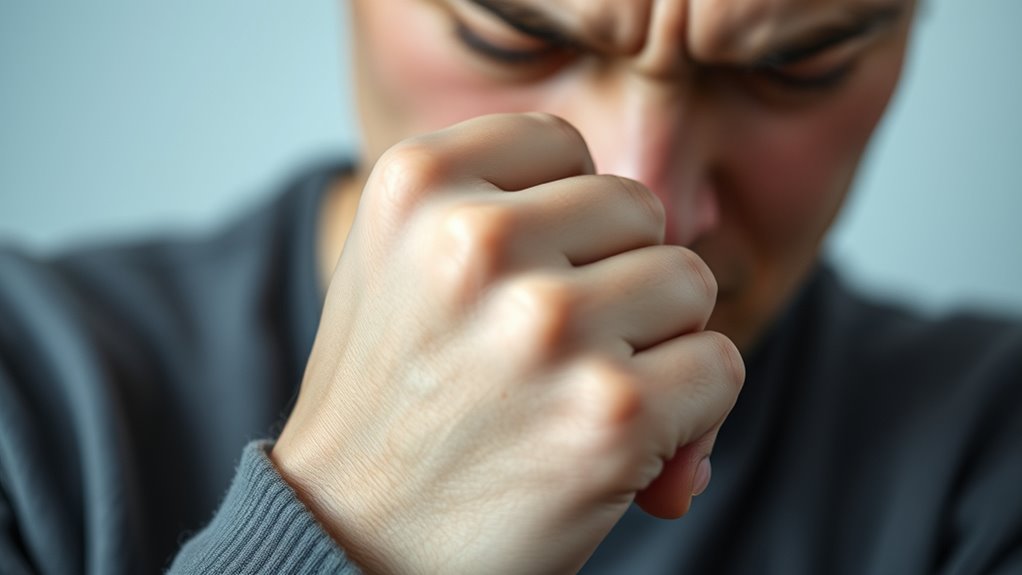

To recognize nonverbal signs of pain, focus on facial cues like grimacing, clenched jaws, or furrowed brows, which often signal discomfort. Observe body language such as shifting position, guarding an area, or tense muscles, even if the person isn’t speaking. Keep in mind that cultural and personal differences affect how pain shows, so look for consistent patterns within the individual’s normal behavior. Continuing to explore can help you master these subtle but essential signals.
Key Takeaways
- Observe facial expressions such as grimacing, clenched jaws, or furrowed brows as indicators of pain.
- Look for body language cues like guarding, tense muscles, or avoiding movement to identify discomfort.
- Recognize patterns in nonverbal cues over time, considering individual baseline behaviors for accurate assessment.
- Be aware of cultural and personal differences that influence how pain is expressed nonverbally.
- Respond promptly to combined facial and body language signals to provide appropriate care and support.
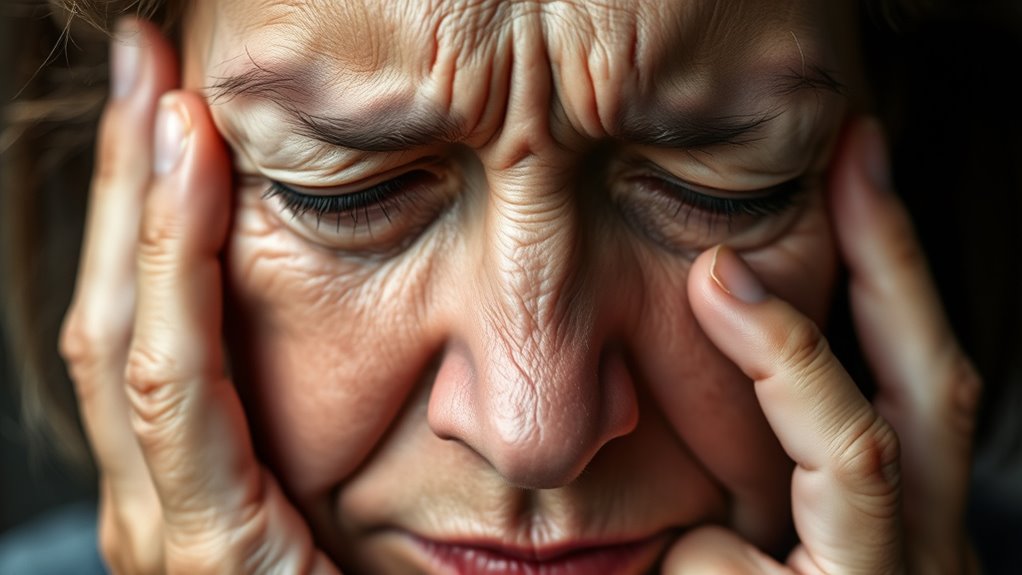
Pain isn’t always easy to identify, especially when someone can’t express it with words. You need to pay close attention to their facial expressions and body language, as these nonverbal cues often reveal more than they realize. When someone is in pain, their face may tighten, grimace, or show signs of distress that aren’t immediately obvious. You might notice clenched jaws, furrowed brows, or pulled-back lips—each signaling discomfort or suffering. These facial expressions can be quick, subtle, or sustained, but they serve as essential clues to what the person is feeling. Recognizing these signals requires you to observe carefully, as people often mask their pain or try to appear stoic, making it necessary to look for consistent patterns rather than isolated movements. Paying attention to nonverbal cues can help you better understand their condition without relying solely on words. Body language offers additional insights into someone’s pain levels. You might see them shifting position frequently, avoiding certain movements, or guarding a specific area of their body. For example, if they clutch their side or hold their abdomen, it suggests localized pain. Their posture might change—leaning away from or stiffening when touched or moved—indicating discomfort. You may notice tense muscles, clenched fists, or a hunched stance, all of which point to inner distress. Even subtle gestures like fidgeting, avoiding eye contact, or crossing their arms tightly can be signs that they’re struggling with pain. These cues often go unnoticed if you’re not actively looking for them, so being attentive and responsive is key. It’s important to remember that body language and facial expressions are not universal indicators of pain; cultural differences and personal habits influence how people display discomfort. Some individuals may mask their pain well, while others might show it more openly. Your role is to interpret these nonverbal signals within context, considering the person’s baseline behavior and any previous patterns. Don’t rely solely on a single cue—look for a combination of facial expressions and body language that consistently suggests discomfort. When you notice these signs, it’s essential to approach with empathy and care, as nonverbal cues often communicate more than words could say. Recognizing and understanding these signals helps you respond appropriately, ensuring the person receives the comfort or medical attention they need.
Frequently Asked Questions
How Can Caregivers Differentiate Pain From Other Emotional States?
You can differentiate pain from other emotional states by observing facial expressions and body language. Look for grimacing, frowning, or tense muscles, which often signal discomfort. Pay attention to restlessness, guarding, or withdrawal, indicating pain. While emotions may cause crying or agitation, consistent physical cues like facial tension and specific body movements help you identify pain more accurately. Stay attentive to subtle signs to provide timely and appropriate care.
Are There Cultural Differences in Nonverbal Pain Expressions?
Yes, there are cultural differences in nonverbal pain expressions. You’ll notice that cultural norms influence how people express discomfort—some may openly show pain through facial grimaces or vocalizations, while others might suppress their reactions due to social expectations. Recognizing this expression variability is vital; it helps you avoid misinterpreting pain levels and guarantees culturally sensitive care. Always consider individual and cultural context when evaluating nonverbal pain cues.
What Are the Limitations of Nonverbal Pain Assessment?
Like trying to read a shifting shadow, nonverbal pain assessment faces subjectivity challenges that can obscure true feelings. You might rely too much on your interpretation, risking observer bias that skews understanding. This method isn’t foolproof; it can miss subtle cues or be influenced by cultural differences. Hence, it’s essential to complement nonverbal signs with direct communication to get a clearer, more accurate picture of a person’s pain.
How Does Age Affect Nonverbal Pain Signs?
You notice that age influences nonverbal pain signs, as facial expressions and body language differ across age groups. Younger individuals may display pain through grimacing or tense posture, while older adults might show more subtle signs like decreased facial expressiveness or changes in body movements. Recognizing these age-related variations helps you accurately assess pain, ensuring you respond appropriately and provide better care tailored to each person’s unique nonverbal cues.
Can Nonverbal Cues Indicate Pain in Non-Human Animals?
Yes, nonverbal cues like facial expressions and posture changes can indicate pain in non-human animals. You’ll notice grimacing, ear flattening, or narrowed eyes, along with tense or hunched postures. These signs help you recognize discomfort even if the animal can’t verbally express it. By observing these cues closely, you can better assess their pain levels and provide appropriate care or intervention promptly.
Conclusion
Recognizing nonverbal signs of pain is essential, especially when words aren’t enough. Did you know that up to 70% of pain expressions are nonverbal? By paying close attention to cues like facial grimaces, body tension, or restlessness, you can better understand someone’s discomfort and respond appropriately. Your awareness can make a real difference in their comfort and care, so stay attentive and trust those subtle signals—they speak volumes.