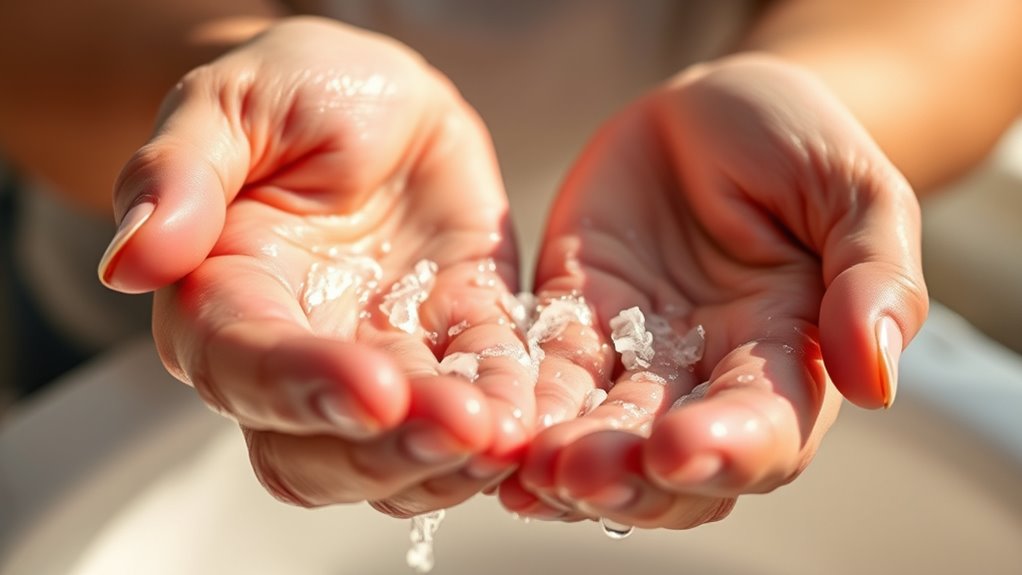

To control infections at home, focus on good hand hygiene by washing your hands with soap and water for at least 20 seconds, especially after touching shared surfaces or using the bathroom. When soap isn’t available, use a hand sanitizer containing at least 60% alcohol. Regularly disinfect high-touch items and surfaces like counters and devices. Consistent habits and proper cleaning help prevent germs from spreading, so keep exploring ways to keep your home safer.
Key Takeaways
- Wash hands with soap and water for at least 20 seconds, especially after touching shared surfaces or using the restroom.
- Use hand sanitizer with at least 60% alcohol when soap and water aren’t available.
- Regularly disinfect high-touch surfaces like doorknobs, light switches, and countertops.
- Keep hand sanitizer and disinfectant wipes accessible in common areas for quick cleaning.
- Teach family members proper hand hygiene habits to reduce germ spread within the home.
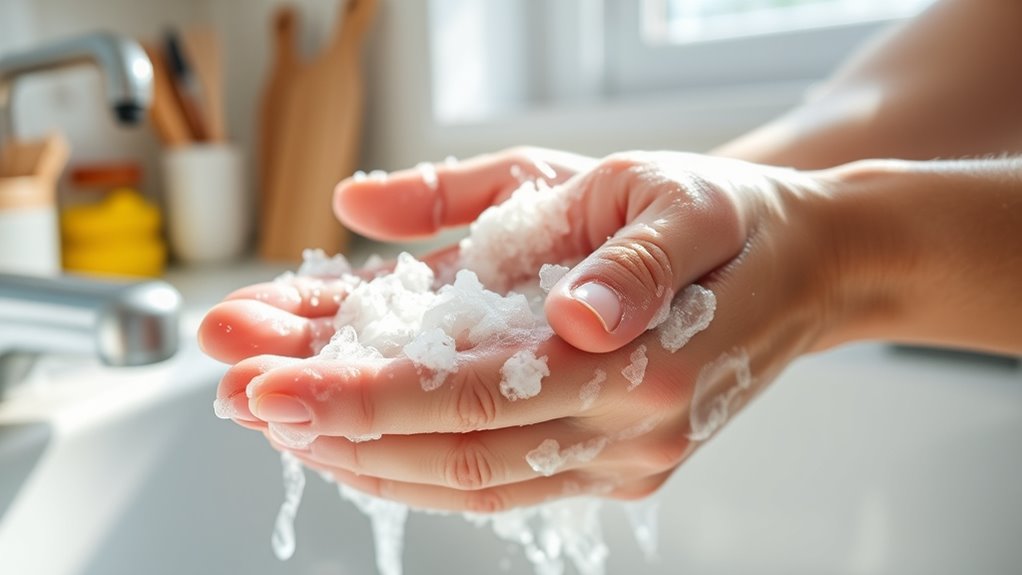
Keeping your home disinfected and clean is fundamental for preventing the spread of germs and infections. One of the simplest and most effective ways to do this is through good hand hygiene. Using hand sanitizer regularly, especially when soap and water aren’t available, helps eliminate germs that you might have picked up from common surfaces or contact with others. When choosing a hand sanitizer, ensure it contains at least 60% alcohol, which is proven to kill many types of bacteria and viruses. Keep a bottle handy near your front door, kitchen, and bathroom, so you can quickly sanitize your hands after touching door handles, light switches, or other frequently touched objects.
Keeping your home safe with regular hand sanitizer use and surface disinfection.
In addition to using hand sanitizer, it’s essential to focus on cleaning and disinfecting surfaces around your home. Surface disinfectants are specially formulated to kill germs on various household surfaces, reducing the risk of transmission. Regularly wiping down high-touch areas like kitchen counters, bathroom fixtures, remote controls, and mobile devices with effective surface disinfectants can greatly lower the presence of harmful microbes. When using disinfectants, follow the manufacturer’s instructions carefully, making sure you allow the product enough contact time to work effectively. This practice is especially important during cold and flu seasons or if someone in your household is sick.
You should also make hand hygiene a routine part of your daily activities. Wash your hands thoroughly with soap and water for at least 20 seconds, especially after using the bathroom, before eating, or after coughing or sneezing. When soap and water aren’t accessible, hand sanitizer becomes your quick alternative. It’s important to remember that hand sanitizers don’t eliminate all types of germs, particularly certain bacteria and spores, so washing with soap and water remains the best option when possible.
In your everyday routine, emphasize the importance of sanitizing shared items and surfaces. Frequent disinfection can prevent the buildup of germs and reduce the likelihood of infection spreading between family members. Encourage everyone in your household to practice good hand hygiene, especially children, by teaching them how to properly wash their hands and use hand sanitizer effectively. Keep disinfectant wipes or sprays within reach for quick clean-ups after activities like playing outside or handling pets.
Maintaining these habits consistently creates a safer environment. By integrating hand sanitizer use into your routine and regularly disinfecting surfaces, you’re actively reducing the risk of infections at home. Good hand hygiene isn’t just a personal habit; it’s a fundamental part of infection control that protects you and your loved ones daily. Incorporating proper cleaning techniques with effective disinfectants can further enhance your home’s safety against germs.

AMADA HOMEFURNISHING 8x10 Washable Area Rug, Low-Profile with Non-Slip Backing & Durable Edge Binding, Vintage Large Rugs for Living Room, Bedroom, Dining Room, Blue
Machine Washable: The short pile design of this washable rug is easy to maintain using an upright vacuum...
As an affiliate, we earn on qualifying purchases.
Frequently Asked Questions
How Often Should I Wash My Hands Daily?
You should wash your hands regularly, ideally before eating, after using the bathroom, and when they’re visibly dirty. Aim for at least 5-7 times a day, depending on your activities. Follow proper hand washing routines with soap selection that includes antibacterial or regular soap. Make sure to scrub for at least 20 seconds, covering all surfaces, to effectively remove germs and prevent infections.
What Hand Sanitizer Is Most Effective?
You should choose an alcohol-based gel sanitizer with at least 60% alcohol for the most effective disinfection. Look for gel sanitizers containing ethanol or isopropyl alcohol, as these are proven to kill germs efficiently. When soap and water aren’t available, using an effective alcohol-based disinfectant gel guarantees you protect yourself and others from harmful pathogens. Always follow the product instructions for proper use and coverage.
Can Hand Hygiene Prevent All Infections?
You might think hand hygiene prevents all infections, but it doesn’t cover everything. While it’s essential for surface decontamination and reducing the spread of many germs, it doesn’t stop airborne pathogens. To stay truly protected, combine handwashing with other measures like cleaning surfaces regularly and ensuring proper ventilation. Hand hygiene is a crucial step, but it’s just one part of a thorough infection prevention strategy.
Are There Specific Techniques for Children?
Yes, there are specific techniques for children. Use child-friendly methods like making handwashing fun with songs or colorful soap. Teach handwashing by showing how to scrub all parts of their hands for at least 20 seconds, including between fingers and under nails. Encourage them to wash hands before eating, after bathroom use, and when they’re dirty. Keep the routine simple and positive to help children develop good hygiene habits.
How Can I Encourage Family Members to Practice Hand Hygiene?
You can encourage your family to practice hand hygiene by using motivational strategies like praise and rewards to make it fun. Set a routine to support habit formation, such as washing hands before meals or after outdoor play. Lead by example, showing them it’s important. Keep hand sanitizer accessible and remind everyone gently. Consistent encouragement and positive reinforcement will help make hand hygiene a natural part of daily life.

5x7 Area Rug Living Room Rug: Washable Modern Abstract Soft Thin Rug Indoor Floor No Slip Stain Resistant Carpet for Bedroom Dining Room Farmhouse Nursery Home Office - Black
Beautiful Design Abstract Rug:The 5x7 rug design is unique and trendy, the colors blend with nature, the abstract...
As an affiliate, we earn on qualifying purchases.
Conclusion
By brushing up on basic hand hygiene, you build a barrier against bacteria and viruses, turning your home into a fortress of freshness. Remember, washing your hands with warm water and soap swiftly stops sickness in its tracks. Keep your hands clean, control contagions, and create a clean, calm corner where germs don’t grow. Stay steadfast, stay sanitized, and safeguard yourself and your loved ones with simple, steady hand hygiene habits.

RELEANY Area Rugs 8'x10' Washable Non-Slip, Floral Vintage Distress Print Pattern Medallion Carpet for Living Room Bedroom Dining Room, Brick Red Rust Neutral Brown Burnt Orange Green
Machine Washable Rugs Easy to Clean: the surface is water-repellent which allows for easy cleanup when beverages are...
As an affiliate, we earn on qualifying purchases.

2x6 Hallway Washable Runner Rug : Vintage Soft Kitchen Laundry Runner with Non Slip Backing Farmhouse Entryway Living Room Floor Mat Stain Resistant Carpet for Bedroom Bathroom Distressed Beside Rug
Great Value & Chic Style: This hallway runner rug adds a vibrant touch to your living room with...
As an affiliate, we earn on qualifying purchases.