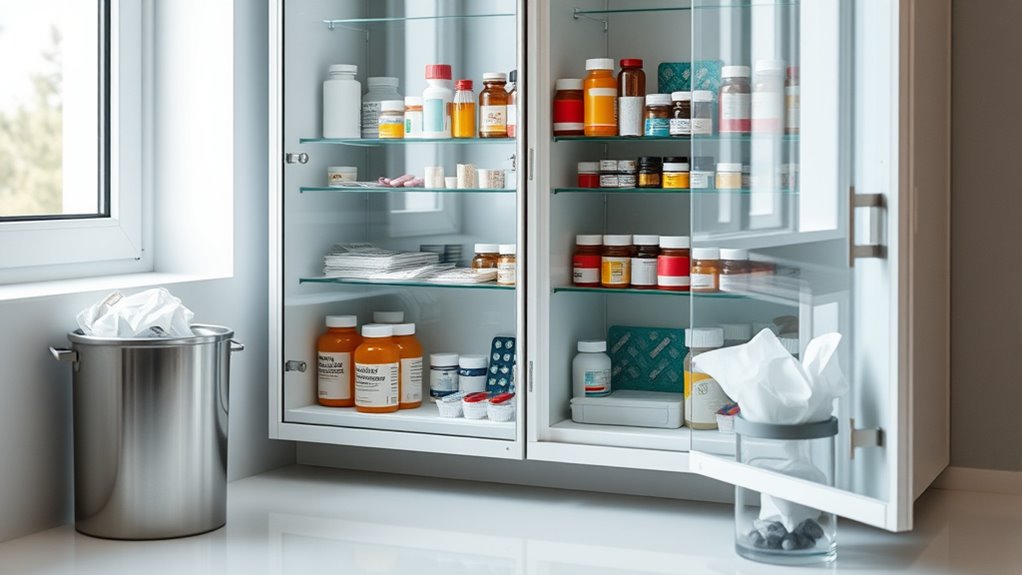

To keep your medications safe, store them in original containers with tight caps in a cool, dry place away from sunlight and moisture, especially out of children’s reach. Use child-proof containers and organize your supplies to prevent mix-ups. For disposal, never flush pills unless instructed and consider taking advantage of medication take-back programs or mixing unused pills with unappealing substances before trashing. Continuing will help you learn more tips for safe medication management.
Key Takeaways
- Store medications in original, child-proof containers in a cool, dry, and designated location away from children and pets.
- Regularly check expiration dates and organize prescriptions separately to prevent mix-ups.
- Use medication take-back programs or community collection sites for safe disposal of unused or expired pills.
- Never flush medications unless instructed; mix with unappealing substances and seal before trashing.
- Remove personal information from containers and dispose of medications responsibly to protect health and the environment.
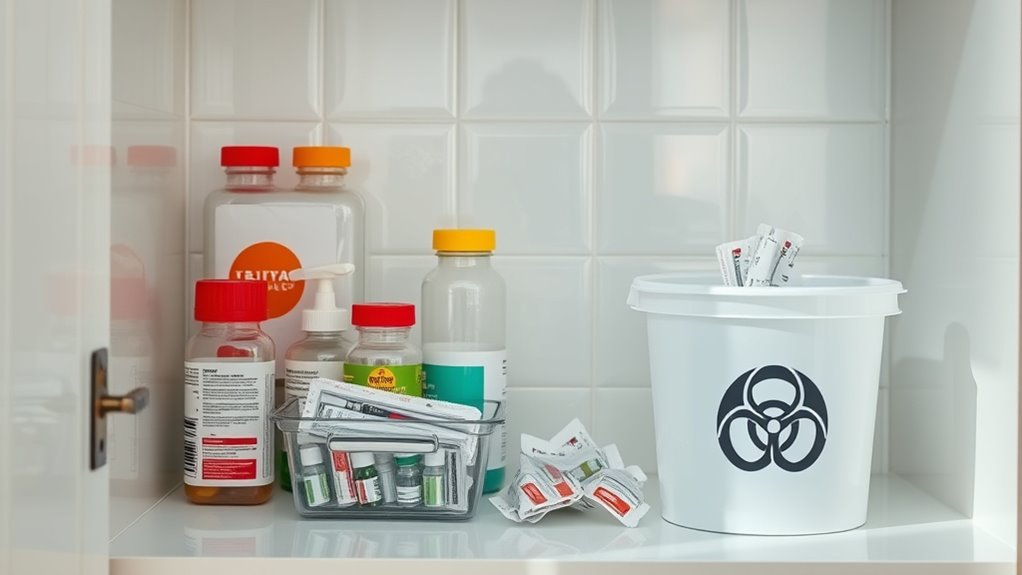
Proper medication storage and disposal are essential for ensuring safety and effectiveness. When it comes to pill safety, how you store your medications can prevent accidental ingestion, misuse, or harm, especially around children and pets. Keeping pills in their original containers with tightly sealed caps is a smart way to preserve their integrity and prevent mix-ups. Store medications in a cool, dry place away from direct sunlight, heat, and moisture, as these factors can degrade the drugs, reducing their effectiveness. Avoid storing pills in the bathroom or kitchen cabinets near sinks or stoves, where humidity and temperature fluctuations are common. Instead, opt for a designated cabinet or drawer that’s out of reach of children, and consider using child-proof containers for added safety. Utilizing medication tracking apps can help you stay organized and monitor your prescriptions more effectively.
Disposal methods are equally important to prevent medication misuse and environmental contamination. Never flush pills down the toilet or sink unless the label explicitly states that it’s safe to do so, as this can introduce pharmaceuticals into water sources. Instead, look for medication take-back programs or designated collection sites in your community. Many pharmacies and law enforcement agencies hold drug disposal events that provide a safe environment for discarding unused or expired pills. If no such programs are available, follow the instructions on the medication label or patient leaflet; some medications can be mixed with unappealing substances like dirt, cat litter, or used coffee grounds, then placed in a sealed bag before disposal in the trash. This method helps prevent accidental ingestion and reduces the risk of drug diversion.
It’s vital to routinely check your medication supplies and dispose of expired or unused pills promptly. Proper disposal not only protects your loved ones from accidental poisoning but also safeguards the environment from pharmaceutical pollution. Remember to remove any personal information from prescription bottles before disposal to protect your privacy. If you’re unsure about how to dispose of a specific medication, consult your pharmacist or healthcare provider for guidance. They can advise you on the safest and most environmentally friendly disposal options. By following these practices, you contribute to your safety, the safety of others, and the health of the planet. Effective pill safety and disposal methods are straightforward steps that make a significant difference in maintaining a safe home environment and preventing medication misuse.
Frequently Asked Questions
How Do I Dispose of Expired Medication Safely at Home?
To dispose of expired medication safely at home, you should follow proper disposal methods to guarantee medication safety. Check if your local pharmacy or community take-back programs accept expired drugs. If not, mix the medication with unappealing substances like dirt or used coffee grounds, then place it in a sealed bag before discarding in the trash. Never flush medications unless instructed, as this can harm the environment. Proper disposal helps protect your loved ones and the environment.
Are There Specific Storage Guidelines for Liquid Medicines?
A stitch in time saves nine, so follow proper storage guidelines for liquid medication. Keep your liquid medicines in their original containers, tightly closed, and stored upright to prevent leaks. Store them in a cool, dry place away from direct sunlight and out of reach of children and pets. Always check expiration dates and avoid freezing unless directed. Proper storage guarantees your medication stays effective and safe to use.
Can Medications Be Stored in the Bathroom? Why or Why Not?
You shouldn’t store medications in the bathroom because bathroom hazards like humidity and moisture effects can degrade them quickly. Moisture from showers and sinks creates an environment where medicines can become less effective or even unsafe to use. Plus, temperature fluctuations and humidity increase the risk of contamination. Instead, find a cool, dry place such as a cabinet or drawer away from moisture, heat, and sunlight to keep your medications safe.
What Should I Do if My Medication Is Accidentally Ingested?
If your medication is accidentally ingested, you should immediately call emergency response or poison control for guidance. Don’t try to induce vomiting or wait to see what happens. Stay calm and provide details about the medication taken, the amount, and the person’s age. Following their instructions promptly can prevent serious health complications. Always keep emergency contacts handy in case of accidental ingestion.
Are There Special Disposal Methods for Controlled Substances?
Think of controlled substances like rare gems needing careful handling. You should follow specific disposal regulations for controlled substance disposal to prevent misuse. Never flush them down the toilet unless instructed, as it can harm the environment. Instead, use authorized take-back programs or disposal kiosks. These methods guarantee safe disposal, protecting both your community and the planet from potential harm and unauthorized use. Always check local guidelines for proper disposal procedures.
Conclusion
By storing medications properly and disposing of them safely, you’re like a guardian protecting your home from hidden dangers. Think of your medicine cabinet as a treasure chest—you want only safe treasures inside. When you dispose of unused or expired meds correctly, you’re clearing out the shadows that could cause harm. Your careful actions keep your family safe and your home peaceful, turning chaos into calm. Stay vigilant, and keep your environment secure.