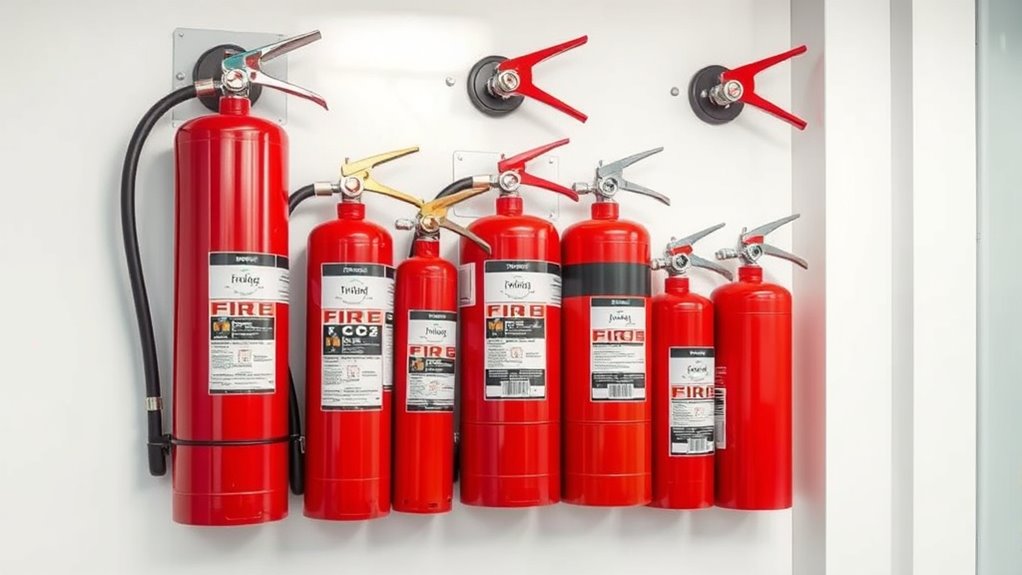

Fire extinguishers come in different types designed for specific fires: Class A for solids like wood and paper, Class B for liquids like gasoline, Class C for electrical fires, and Class D for metals. To use them properly, remember the PASS method: Pull, Aim, Squeeze, and Sweep. Regular maintenance guarantees they work when needed. If you want to understand how to choose the right extinguisher and use it effectively, keep exploring this essential safety topic.
Key Takeaways
- Fire extinguishers are classified into types A, B, C, D, and multi-class, each suited for specific fire hazards.
- Proper use follows the PASS method: Pull, Aim, Squeeze, Sweep, to effectively extinguish fires.
- Regular maintenance, including pressure checks and inspections, ensures extinguishers are functional when needed.
- Class A extinguishers handle common combustibles like wood and paper, while Class B targets flammable liquids.
- Electrical fires require Class C extinguishers, and special metal fires need Class D extinguishers for safety.
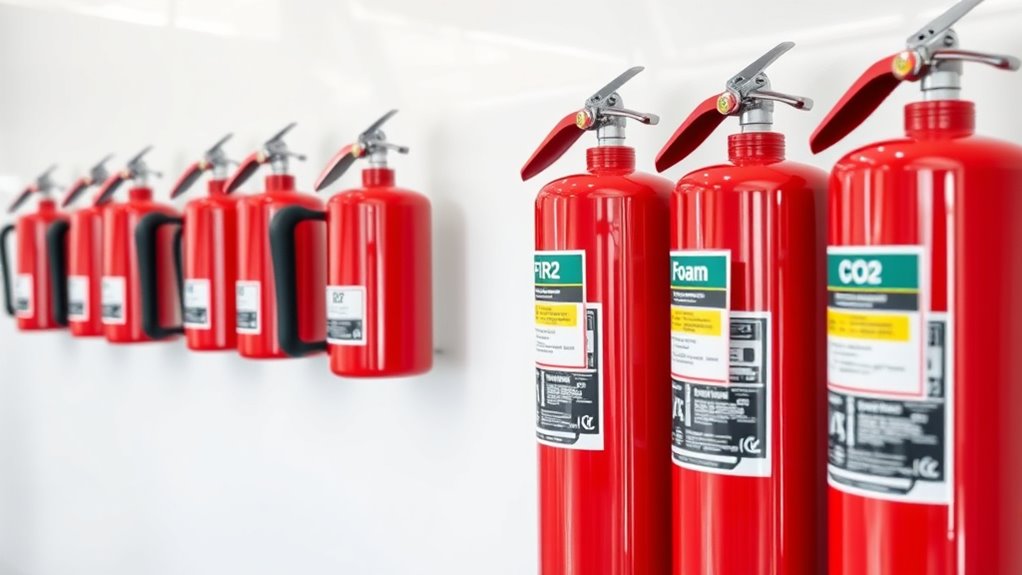
Have you ever wondered what you should do if a fire suddenly breaks out? The first step is to stay calm and act quickly. Knowing how to properly use a fire extinguisher can make all the difference in controlling a small fire before it gets out of hand. Portable fire extinguishers are essential safety devices found in homes, offices, and public spaces. They’re designed to be easy to handle and quickly deploy when needed. However, to guarantee they work effectively, fire extinguisher maintenance is vital. Regular inspections, pressure checks, and timely recharges keep these devices in prime condition. A well-maintained portable fire extinguisher can be your first line of defense during an emergency. Understanding projector technology also highlights the importance of proper equipment maintenance to ensure optimal performance.
Stay calm and act quickly; proper fire extinguisher maintenance ensures safety and readiness in emergencies.
When it comes to choosing the right fire extinguisher, understanding the different types is critical. There are several classes, each suited for specific fire types. For instance, Class A extinguishers handle common combustibles like wood, paper, and cloth. Class B is designed for flammable liquids like gasoline or oil fires. Class C extinguishers are used for electrical fires, and Class D targets combustible metals. Some extinguishers combine these classes to cover multiple fire types, providing versatile protection. Familiarizing yourself with these options helps you select the most appropriate device for your environment, guaranteeing quick and effective action when needed.
Using a fire extinguisher correctly is simple if you remember the acronym PASS: Pull, Aim, Squeeze, and Sweep. First, pull the pin to release the extinguisher. Then, aim the nozzle at the base of the fire, not the flames, to extinguish the source. Squeeze the handle firmly to release the extinguishing agent, and sweep the nozzle from side to side until the fire is out. Always keep a safe distance and move closer as the fire diminishes. Never turn your back on the fire or attempt to fight it if it’s too large or spreading rapidly. In such cases, evacuation and calling emergency services are the best actions.
Maintaining fire extinguishers involves more than just knowing how to use them. You must regularly check for visible damage, guarantee the pressure gauge is in the operable range, and confirm the safety pin and tamper seal are intact. If your portable fire extinguishers are overdue for inspection or maintenance, don’t delay having them serviced by professionals. Proper fire extinguisher maintenance not only guarantees safety but also prolongs the lifespan of these critical devices. Remember, a fire extinguisher is only effective if it’s in good working condition when you need it most.

VINGLI Fireplace TV Stand for up to 70 inch TVs, Farmhouse Entertainment Center with Electric Fireplace Heater & Adjustable Shelves, Fireplace Media Console Table for Living Room, Gray Oak
Perfect Fit for Large TVs & Living Room Storage: Designed for modern homes, this sturdy TV stand supports...
As an affiliate, we earn on qualifying purchases.
Frequently Asked Questions
How Often Should Fire Extinguishers Be Inspected?
You should inspect fire extinguishers monthly to make certain they’re in proper working condition. Follow the inspection schedule by checking for visible damage, pressure gauge readings, and accessibility. Regular maintenance procedures include verifying the pin and tamper seal, and ensuring the extinguisher’s label is legible. Additionally, have professional inspections annually or as recommended by the manufacturer to keep your fire safety equipment reliable and ready whenever needed.
Can Fire Extinguishers Be Reused After Activation?
Did you know that about 80% of fire extinguishers are rechargeable? After activation, fire extinguishers can often be reused if they’re rechargeable, but they require proper maintenance and recharging. You should never attempt to reuse a non-rechargeable extinguisher; it must be replaced. For rechargeable ones, schedule maintenance and recharge promptly to guarantee they’re ready for future emergencies, keeping you safe and compliant with safety standards.
What Is the Shelf Life of a Typical Fire Extinguisher?
Your fire extinguisher typically has a shelf life of 5 to 15 years, depending on the type. To guarantee it functions properly, you need to perform regular extinguisher maintenance, including inspections and hydrostatic testing. Shelf life considerations are vital because, over time, the pressure and propellant may degrade. Always check the manufacturer’s guidelines and replace or service your extinguisher before the expiration date to keep it ready when needed.
Are There Fire Extinguishers Suitable for Electrical Fires?
Imagine sparks flying from a faulty wire—that’s when electrical fire extinguishers come in handy. Yes, you can use Class C extinguishers, designed specifically for electrical fires. These electrical fire extinguishers contain non-conductive agents like carbon dioxide or dry chemical powders that safely smother the flames without risking electrocution. Keep one nearby, so you’re prepared to douse electrical fires quickly and safely.
How Do I Properly Dispose of an Expired Fire Extinguisher?
When your fire extinguisher expires, you should follow proper disposal procedures. First, check if it’s rechargeable; if so, take it to a certified service center for refilling. If it’s a disposable type, contact your local waste management or recycling options to see if they accept fire extinguishers. Never throw it in the trash, as the contents can be hazardous. Proper disposal guarantees safety and environmental responsibility.

OneBlis 70" Fireplace TV Stand with 36" Electric Fireplace, LED Light Entertainment Center for TVs Up to 80", High-Gloss Door, Modern TV Console for Living Room with Storage Cabinet, Black+Black
Elegant TV Stand with Fireplace: This stylish 70" TV stand includes a 36" electric fireplace, designed for TVs...
As an affiliate, we earn on qualifying purchases.
Conclusion
Now that you know the different types and how to use fire extinguishers, you’re better prepared to act quickly in an emergency. Think of a fire extinguisher as your trusty shield, ready to protect you when danger strikes. Remember, staying calm and using the right extinguisher can make all the difference. Keep one nearby, and you’ll be like a hero in your own story, ready to face any fiery challenge that comes your way.

oneinmil Fireplace TV Stand with 36" Electric Fireplace, LED Light Entertainment Center, Modern Wood Texture Entertainment Stand with Highlight Storage Cabinet for TVs Up to 80", 70 inches, Black
2-IN-1 TV Stand & Fireplace: 70" stand with 36" electric fireplace for TVs up to 80", offering stable...
As an affiliate, we earn on qualifying purchases.

Lemberi Fireplace TV Stand with 36" Electric Fireplace, Fits TVs Up to 80", 70" LED Lit Entertainment Center, Modern High Gloss Wood with Spacious Storage Cabinet for Living Room, White
Fireplace TV Stand with Attractive Flame: This 2-in-1 TV stand integrates a 36" electric fireplace with vivid 3D...
As an affiliate, we earn on qualifying purchases.