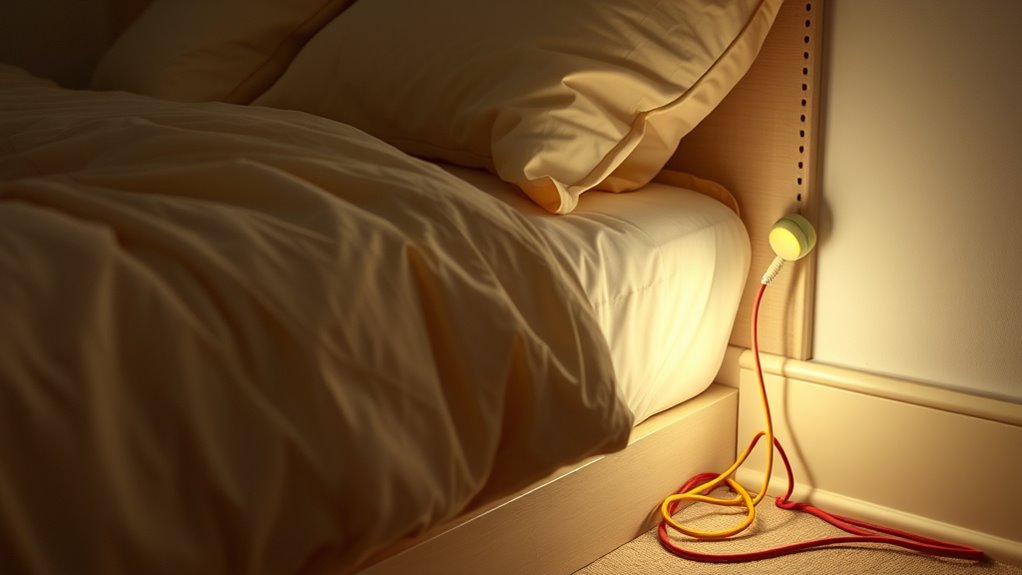

To keep your bedroom safe, choose nightlights with automatic sensors or dimming features and place them near pathways or the bathroom. Secure cords along the wall to prevent tripping and avoid placing them where they can be knocked over. Regularly inspect cords for damage and make sure outlets are not overloaded. Proper lighting and cord management reduce hazards and help everyone move safely during the night. Keep exploring for more tips to further enhance your bedroom safety.
Key Takeaways
- Position nightlights away from walkways and ensure cords are secured along walls to prevent tripping hazards.
- Use nightlights with automatic sensors or dimmable features for gentle illumination.
- Keep cords in good condition, secured, and out of reach of children to avoid electrical hazards.
- Avoid overloading outlets powering nightlights and cords to prevent overheating.
- Regularly inspect cords and nightlights for damage or wear, replacing faulty components promptly.
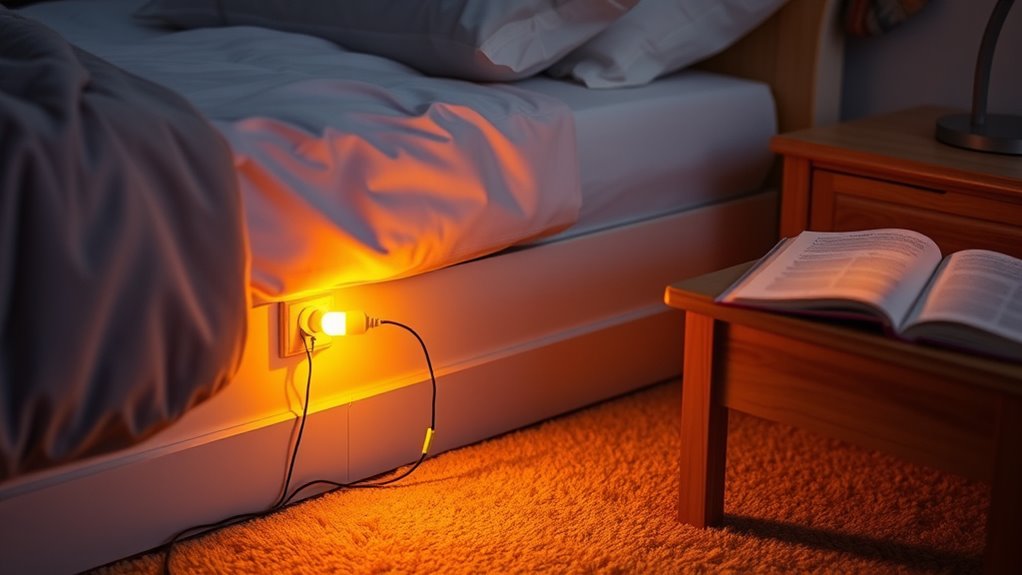
Have you ever considered how safe your bedroom really is? It’s easy to overlook potential hazards when you’re more focused on relaxation and comfort. However, paying attention to outlet safety and furniture stability can considerably reduce the risk of accidents, especially at night. Outlets are common sources of electrical hazards if not properly managed. Make sure all cords are plugged into grounded outlets, and avoid overloading them, which can lead to overheating or sparks. Use outlet covers or safety plugs, particularly if you have young children, to prevent accidental shocks. Regularly inspect your outlets for signs of damage or looseness, and replace any faulty ones promptly. Keeping cords organized and out of walkways also minimizes tripping hazards and reduces strain on outlets, which can cause wear and potential electrical issues over time. Incorporating safety features like Ground Fault Circuit Interrupters (GFCIs) can further enhance electrical safety in your bedroom environment. Furniture stability is another essential aspect of bedroom safety. Unstable or wobbly furniture can tip over, especially if you lean on or bump into it. Ensure that your dressers, bookshelves, and nightstands are securely anchored to the wall, preventing accidental falls. Check that furniture legs are sturdy and in good condition, and avoid placing heavy objects on top of unstable pieces. This is particularly important during nighttime when you might need to grab something quickly or get out of bed in a hurry. Well-secured furniture not only prevents injuries but also creates a safer environment overall. Remember, a cluttered or crowded room increases the risk of tripping or knocking items over, so keep pathways clear and organize your belongings efficiently.
Nightlights play a critical role in maintaining safety during nighttime hours, providing enough illumination to prevent trips and falls without disturbing your sleep. Opt for nightlights with automatic sensors or dimmable features to ensure gentle lighting that’s not too bright. Position them strategically near the bathroom, doorway, or along the path to your bed, so you can see clearly without fumbling in the dark. Avoid placing nightlights where they could be knocked over or where their cords might create additional hazards. If your nightlight requires a cord, make sure it’s in good condition, and secure it along the wall so it doesn’t become a tripping hazard. Combining proper outlet safety, furniture stability, and thoughtful lighting creates a safer bedroom environment, giving you peace of mind and a better night’s sleep.

AUVON Plug-in LED Backlit Night Light with Motion Sensor & Dusk to Dawn Sensor, Dimmable Warm White Nightlight with 1-50 lm Adjustable Brightness for Bedroom, Bathroom, Stairs, Hallway (4 Pack)
Diffuse Backlit Design: AUVON backlit night light features 16 LED bulbs with uniform luminescence and produces diffuse backlight…
As an affiliate, we earn on qualifying purchases.
As an affiliate, we earn on qualifying purchases.
Frequently Asked Questions
Are LED Nightlights Safer Than Incandescent Ones?
LED nightlights are safer than incandescent ones because LED safety features reduce fire risk and energy consumption. They don’t get as hot, lowering the chance of burns or fires, unlike incandescent bulbs which generate more heat. The incandescent comparison shows LEDs are more durable and efficient, making them a better choice for bedroom safety. You’ll enjoy a brighter, safer nightlight that’s energy-efficient and less likely to cause accidents.
How Should I Store Extension Cords to Prevent Hazards?
You should store extension cords properly to prevent hazards by using cord management techniques and appropriate storage solutions. Coil cords neatly and avoid tight bends to prevent damage. Keep cords out of walkways and away from heat sources. Use hooks or cord clips to secure them when not in use. Storing cords in a dry, cool place, preferably on a dedicated shelf or storage bin, helps maintain safety and prolongs their lifespan.
Can Nightlights Cause Sleep Disruptions?
Nightlights can indeed cause sleep disruptions, and it’s no exaggeration to say they might turn your sleep quality into a rollercoaster. The light from nightlights can interfere with your circadian rhythm, making it harder to fall asleep or wake feeling refreshed. To minimize this, choose dim, warm-colored nightlights or use timers. This helps preserve your sleep cycle and keeps your rest peaceful, undisturbed, and truly restorative.
What Are the Best Cord Covers for Child-Proofing?
You should choose sturdy cord covers for child-proofing, like flexible plastic or silicone options, which are easy to install. Proper cord cover installation involves wrapping cords securely and hiding them along walls or baseboards. Pair these with childproof outlet covers to prevent accidental shocks. Look for covers that are tamper-resistant, durable, and fit snugly, ensuring your child’s safety while keeping cords organized and out of reach.
Are Smart Nightlights More Energy-Efficient?
Yes, smart nightlights are more energy-efficient because they use smart technology to adapt brightness levels based on ambient light or motion. This reduces unnecessary energy consumption, saving you money and helping the environment. Unlike traditional nightlights, smart ones turn on only when needed and automatically dim or turn off when the room is well-lit. So, investing in smart nightlights can give you efficient lighting that conserves energy.
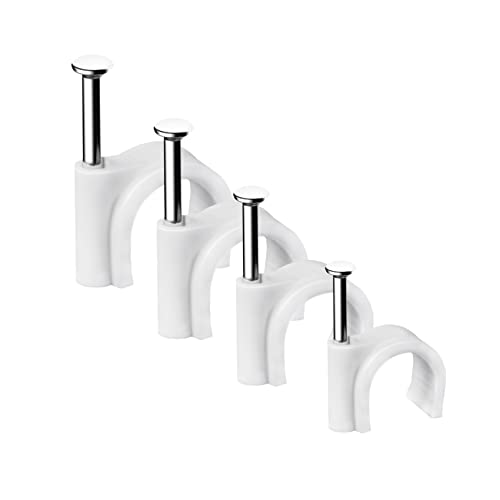
Abnii Cable Clips, 400 Pcs, 4mm 6mm 8mm 10mm, Wire Wall Clips with Steel Nails, Ethernet Cable Clips, Cable Tacks Coax Cable Clips, RG6 RG59 CAT6 RJ45 Cable Cord Clips, White…
[ 4 Size ] Pack of 400, includes 4mm x 100 Pcs, 6mm x 100 Pcs, 8mm x…
As an affiliate, we earn on qualifying purchases.
As an affiliate, we earn on qualifying purchases.
Conclusion
Remember, a cozy bedroom should feel safe and inviting, but small hazards like nightlights and cords can turn that comfort into danger. Just as a gentle glow guides you through the night, secure cords keep hazards out of sight. By balancing warmth with caution, you create a space that’s both restful and safe. After all, peace of mind in your bedroom is the best kind of comfort — brighter and safer when you’re aware of potential risks.

Safety 1st Electrical Outlet Baby Proof Covers, Secure Outlet Plugs, Baby Proofing, 36 Count
CHILD PROOF YOUR HOME: Keep sharp objects and curious fingers from electrical outlets with Safety 1st's baby-proofing outlet…
As an affiliate, we earn on qualifying purchases.
As an affiliate, we earn on qualifying purchases.

Booda Brand Furniture Anchors (10 Pack) Anti Tip Furniture Straps for Baby Proofing, 400lbs Tension Earthquake Resistant Metal Straps, Furniture Wall Anchor Prevent Baby Pet from Falling Furniture
Peace Of Mind With Furniture Wall Anchors: This metal furniture straps are designed to withstand earthquakes,windstorms and also…
As an affiliate, we earn on qualifying purchases.
As an affiliate, we earn on qualifying purchases.