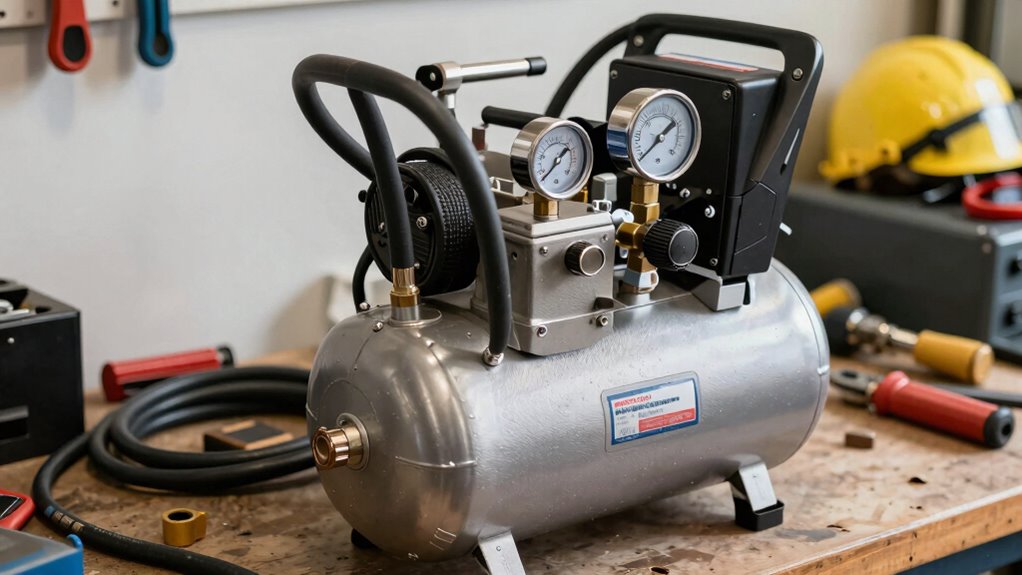

To use your air compressor effectively, understand it converts power into compressed air for household tasks likeInflating tires and powering tools. Always monitor and adjust the pressure with the regulator and gauge to match your project needs, using lower pressure for delicate work. Regular maintenance, such as checking hoses, draining moisture, and cleaning filters, helps it run smoothly and lasts longer. Proper safety practices and capacity awareness prevent accidents. Keep exploring to learn how to operate and maintain your compressor confidently.

Turn quiet afternoons into listening time
- Thousands of audiobooks, podcasts and originals
- Listen on your phone, tablet or Echo — also offline
- Cancel anytime
Key Takeaways
- Understand the purpose of an air compressor in powering tools and inflating tires at home.
- Learn how to regulate and monitor pressure to match specific DIY project requirements.
- Perform regular maintenance like inspecting hoses, draining moisture, and cleaning filters to ensure efficiency.
- Follow safety guidelines, including proper pressure settings and checking relief valves, during operation and maintenance.
- Store the compressor properly and stay attentive to capacity and safety features for reliable, long-term use.
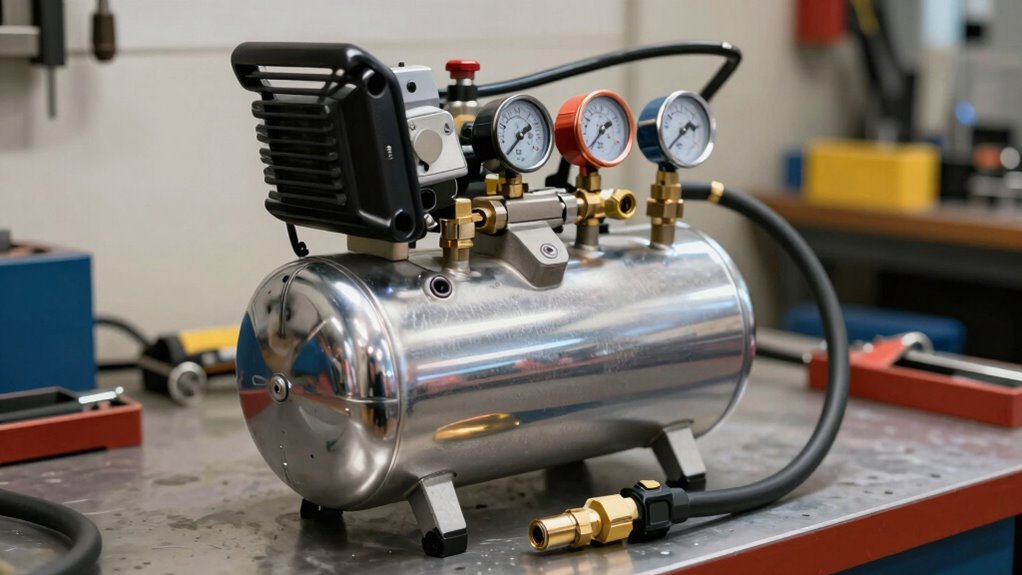
An air compressor is a versatile tool that transforms power into compressed air, enabling a wide range of applications from inflating tires to powering industrial machinery. As a DIY homeowner, understanding how to operate and maintain your compressor is key to getting the most out of it. One essential aspect to master is pressure regulation. You want to guarantee that your compressor delivers the right amount of pressure for each task. Most compressors have a pressure regulator, which allows you to adjust the pressure output. Proper regulation prevents over-pressurizing tools or projects, reducing the risk of damage or accidents. Before starting work, check the pressure gauge and set it according to the specifications of your tool or task. For delicate projects, lower pressure settings are often ideal, while more demanding tasks may require higher pressure. Always monitor the gauge during operation to avoid exceeding recommended levels.
Maintenance tips are equally important to keep your compressor running smoothly and extend its lifespan. Regularly inspecting hoses and connections for leaks or damage can prevent pressure drops and promote efficient operation. Drain the tank periodically to remove accumulated moisture, which can cause rust and internal damage over time. Many compressors have a drain valve at the bottom—use it after each use or at least once a month if you’re a frequent user. Keep the air filter clean and replace it when dirty; a clogged filter reduces airflow and can strain the motor. Lubrication also plays a critical role; check your compressor’s manual for oil levels and change or top-up oil as recommended. A well-lubricated compressor operates more efficiently and experiences fewer mechanical issues. Additionally, pressure regulation is vital for safe and effective operation, so understanding how to adjust and monitor it is crucial. Properly adjusting pressure settings also helps in conserving energy and reducing wear on your equipment.
To further ensure safety and efficiency, consider familiarizing yourself with compressor safety guidelines, which provide important protocols to follow during operation and maintenance. Properly adjusting pressure ensures you’re not overworking the compressor, while maintenance keeps it in prime condition. It’s also helpful to understand the compressor’s capacity, as selecting the right size for your projects can improve performance and longevity. Always turn off and unplug your compressor before performing any maintenance tasks to avoid accidents. Store it in a clean, dry place to prevent rust and corrosion, especially if you live in a humid climate. Additionally, periodically inspect safety relief valves to make sure they function correctly—these valves release excess pressure, providing an essential safety mechanism. Staying attentive to these details helps you prevent costly repairs and keeps your compressor working reliably for years. With a little knowledge about pressure regulation and consistent maintenance, you’ll keep your air compressor operating efficiently, making your DIY projects safer and more effective.
air compressor pressure regulator
As an affiliate, we earn on qualifying purchases.
As an affiliate, we earn on qualifying purchases.
Frequently Asked Questions
How Loud Are Air Compressors During Operation?
Air compressors can be quite loud during operation, with noise levels often ranging from 70 to 90 decibels, which can be comparable to a vacuum or noisy traffic. To reduce noise, you might consider sound insulation or placing your compressor in a separate, insulated area. Proper maintenance and choosing models designed for quieter operation can also help minimize sound levels, making your workspace more comfortable.
Can I Use an Air Compressor With My Existing Tools?
Yes, you can use an air compressor with your existing tools, but first check the power source and compressor size. Make sure the compressor matches the tool’s air requirements, typically listed in CFM and PSI. Also, confirm your power outlet can handle the compressor’s power needs. If the compressor is too small or incompatible, it won’t provide enough air or might cause electrical issues.
What Safety Precautions Should I Take When Using an Air Compressor?
You should always wear safety gear like goggles and ear protection when using an air compressor. Make certain proper ventilation to prevent dust and fumes from accumulating. Check hoses and connections for leaks before starting, and never point the nozzle at yourself or others. Keep the work area clean and free of clutter. Following these precautions helps protect you from injury and ensures safe, effective use of your air compressor.
How Often Should I Perform Maintenance on My Air Compressor?
You should perform maintenance on your air compressor regularly to keep it in top shape and extend its lifespan. Follow a consistent maintenance schedule, checking oil levels, filters, and safety valves every few months or after a set number of hours of use. Don’t wait for trouble to brew; staying proactive guarantees your compressor runs smoothly and lasts longer, proving that a stitch in time really does save nine.
Are There Eco-Friendly or Energy-Efficient Air Compressors Available?
Yes, eco-friendly compressors and energy-efficient models are available, helping you reduce your carbon footprint and save on energy costs. These compressors use advanced technology, like variable speed drives and improved insulation, to minimize power consumption. When shopping, look for units with high Energy Star ratings or specific eco-friendly features. Selecting an energy-efficient model not only benefits the environment but also guarantees your DIY projects run smoothly and cost-effectively.
Conclusion
Now that you understand the basics of air compressors, you’ll see how they can transform your DIY projects. Sure, it might seem like an extra tool to learn, but imagine the pride you’ll feel when you complete a project with confidence. Don’t let hesitation hold you back—every expert started somewhere. With a little practice, you’ll be using your air compressor effortlessly, saving time and money, and creating things you never thought possible.
Cold & flu season Picks
humidifiers
As an affiliate, we earn on qualifying purchases.