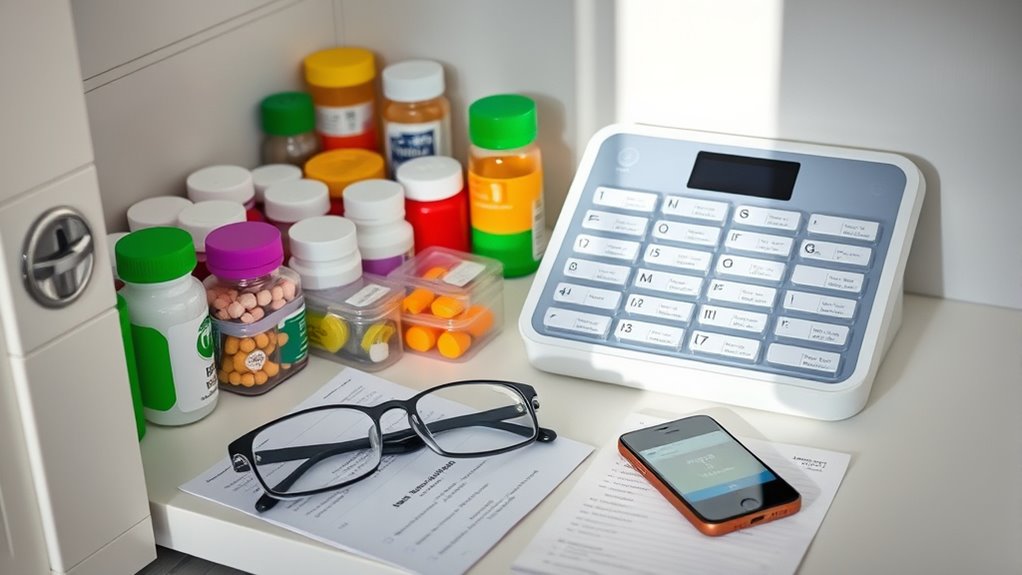

To manage your medications effectively, stay informed about their purpose, proper use, and possible side effects by consulting healthcare professionals regularly. Keep a detailed list of all your medicines, including OTCs and supplements, and update it with any changes. Use pill organizers, reminders, and storage tips to keep doses consistent and safe. Maintain open communication with pharmacists and doctors to clarify questions and prevent errors. Continue exploring to learn more ways to guarantee your medication safety and adherence.
Key Takeaways
- Maintain a detailed, up-to-date medication list including OTC and supplements for easy reference.
- Use pill organizers and digital reminders to ensure consistent and correct medication intake.
- Store medications properly in a cool, dry place, following specific storage instructions for safety and efficacy.
- Regularly consult healthcare professionals and pharmacists to clarify instructions and discuss medication concerns.
- Link medication times to daily routines and set alarms to promote adherence and prevent missed doses.

Have you ever wondered how to keep track of your medications effectively? Managing multiple prescriptions can be overwhelming, but with the right strategies, you can stay organized and safe. The first step is prioritizing medication safety. This means understanding what each medication is for, how to take it properly, and being aware of potential side effects. One of the best ways to ensure you’re on the right track is by regularly consulting your pharmacist. Pharmacist consultations provide personalized guidance, helping you clarify instructions and answer questions about your medications. They can also alert you to possible drug interactions, ensuring you don’t accidentally combine medicines that shouldn’t be used together. Making a habit of discussing your medications with your pharmacist can prevent mistakes and improve your overall safety.
Keeping a detailed medication list is another essential tip. Write down every medication you take, including over-the-counter drugs, supplements, and herbal remedies. Note the prescribed dosage, frequency, and the reason you’re taking each one. Carry this list with you, especially when visiting healthcare providers, so they have an accurate picture of your medication regimen. Using a medication management app or digital reminder can also help you keep track of dosing times and refill dates. These tools reduce the chance of missed doses and ensure you stay consistent with your treatment plan.
Organizing your medications is equally important. Use a pill organizer with compartments for different days and times. This simple tool helps prevent missed doses and keeps everything neatly in one place. Store your medications in a cool, dry place away from direct sunlight, and always follow storage instructions provided by your pharmacist or on the medication label. Proper storage not only preserves the effectiveness of your medicines but also reduces the risk of accidental ingestion or misuse. Incorporating Proper storage techniques based on medication guidelines can further enhance safety and efficacy.
Additionally, establishing a routine makes managing medications easier. Take your medicines at the same times each day—linking doses to daily activities like brushing your teeth or eating meals helps reinforce consistency. Always double-check your medication labels before taking each dose, and don’t hesitate to ask your pharmacist if you’re unsure about any instructions. Remember, medication safety isn’t just about following directions; it’s about actively engaging with your healthcare team. Pharmacist consultations are an invaluable resource—they can help you understand your medications better, discuss any concerns, and adjust your regimen if needed. By combining these tips with open communication and organized routines, you’ll be better equipped to manage your medications safely and effectively.

Odaro Weekly Pill Organizer 4 Times a Day, BPA Free Daily Pill Box 7 Day, Large Travel Pill Case with 28 Compartment to Hold Medicine, Vitamin and Supplement
Effortless to Open & Close: The medicine organizer is designed for ease of use. This daily pill box…
As an affiliate, we earn on qualifying purchases.
As an affiliate, we earn on qualifying purchases.
Frequently Asked Questions
How Can I Organize Medications for Multiple Family Members?
You can organize medications for multiple family members by establishing clear family medication routines. Use pill organizer options like separate compartments or daily trays labeled with each person’s name to keep everything tidy. Keep a schedule or chart accessible to remind everyone when to take their meds. Regularly review and refill the organizers, and consider digital reminders or apps for added support. This approach promotes safety and consistency for the whole family.
What Should I Do if I Miss a Dose?
If you miss a dose, don’t panic. Take it as soon as you remember unless it’s close to your next dose. If it’s almost time for your next dose, skip the missed one and continue your schedule. For missed doses that could cause issues, follow your doctor’s emergency protocols. Always consult your healthcare provider for personalized advice, especially if you miss multiple doses or experience symptoms.
Are There Apps to Track Medication Schedules Automatically?
Sure, there are plenty of medication reminder apps and automatic pill trackers that practically do the remembering for you. These apps send notifications, track your doses, and even remind you when it’s time for a refill. It’s almost like having a personal nurse in your pocket. So, if you’re tired of forgetting, give these tools a try—they make managing your meds effortless and a little less forgettable.
How Can I Store Medications Safely at Home?
You can store medications safely at home by keeping them in a secure, dry, and cool place away from children and pets. Use a locked cabinet or container to enhance storage safety. Regularly check for expired medications and dispose of them appropriately through medication disposal programs. This helps prevent accidental ingestion and ensures your medications remain effective and safe for future use.
What Are the Signs of Medication Interactions to Watch For?
Watch for unusual drug side effects like dizziness, nausea, or rash, which could signal interactions. You might also notice allergy symptoms such as swelling, difficulty breathing, or hives. These signs often appear unexpectedly, like a sudden storm after calm skies. Staying alert helps you catch these reactions early, ensuring you seek medical advice promptly. Always tell your doctor about any new or worsening symptoms to prevent serious complications.

TabTime Pill Reminder with 8 Alarms per Day, Pill Tracker, Pill Timer, Medication Reminder Devices, Medication Tracker, Essential Parkinson's Patient Gadget
"Eight independently set alarms: Enjoy the convenience of an alarm clock with multiple alarms that go off at…
As an affiliate, we earn on qualifying purchases.
As an affiliate, we earn on qualifying purchases.
Conclusion
Think of managing your medications like tending a garden—you need to stay organized, attentive, and consistent. With the right tools and habits, you’ll keep everything in bloom and avoid chaos. Remember, even the most beautiful garden needs daily care to thrive. By staying vigilant and using helpful tips, you can guarantee your health stays in balance, much like a well-tended landscape that flourishes under your watchful eye.

VEXA VitaPal 7 APP Update LAUNCHED! Bluetooth Smart Pill Dispenser with App Alerts, Portable Travel Organizer Programmable Sound Reminders for Tablets, Capsules, Vitamins & Medication Management
【VEXA ENHANCED BLUETOOTH APP EXPERIENCE】Simplify your wellness routine with the VEXA-customized App. While generic organizers rely on basic…
As an affiliate, we earn on qualifying purchases.
As an affiliate, we earn on qualifying purchases.
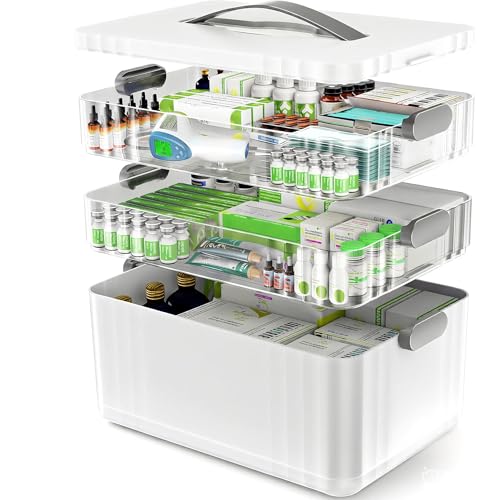
ARSTPEOE 3-Tier Medicine Organizer – Portable Medicine Cabinet with Plastic Handle, Multipurpose Medical Box, Pill Organizer, Empty First Aid Kit for Home
【3-Layer Transparent Tray Design】The art box organizer has 3 layers of transparent detachable trays, with a total of…
As an affiliate, we earn on qualifying purchases.
As an affiliate, we earn on qualifying purchases.