To reduce noise and sensory overload, start by sealing gaps around windows and doors and adding heavy curtains or acoustic panels to absorb sound. Keep your space clutter-free and use soft, warm lighting to minimize visual and lighting stimuli. Incorporate calming activities like listening to gentle music or doing deep breathing exercises. Creating a quiet, sensory-friendly environment can markedly boost your comfort and resilience; explore more strategies to tailor your space to your needs.
Key Takeaways
- Seal gaps around doors and windows to prevent noise infiltration and reduce environmental stimuli.
- Use acoustic panels, soundproof drywall, or heavy curtains to absorb and block unwanted noise.
- Incorporate calming sensory activities like deep breathing, textured objects, or relaxing music to soothe the nervous system.
- Minimize clutter and use soft lighting to create a visually calming environment that limits sensory overload.
- Design a dedicated quiet space with soundproofing and soothing elements to promote mental clarity and reduce stress.
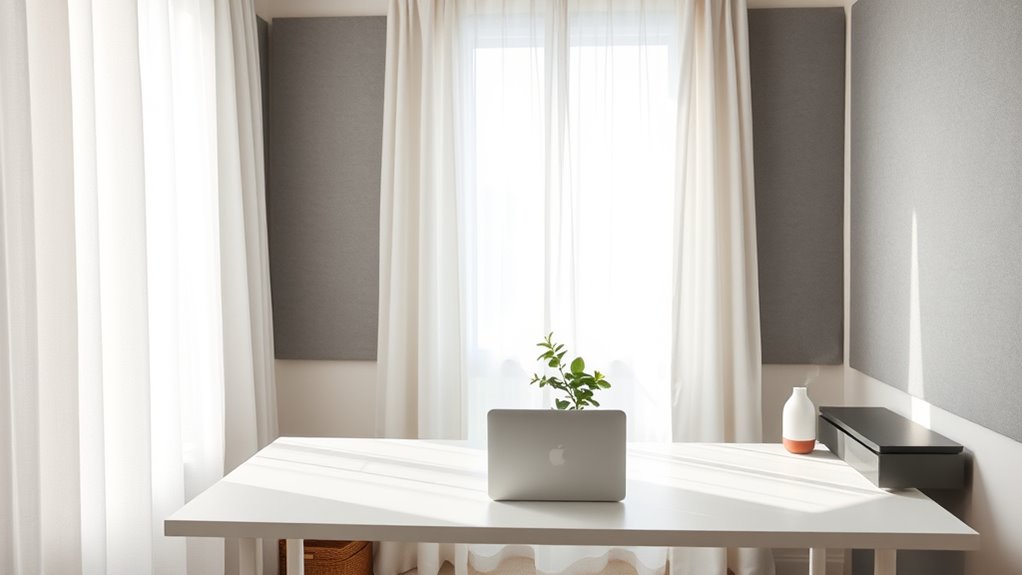
Noise and sensory overload can quickly become overwhelming, especially in busy environments. When you’re surrounded by constant sounds, bright lights, and busy activity, it’s easy to feel anxious or exhausted. Fortunately, there are effective ways to minimize these stimuli and create a more peaceful space. One of the most practical approaches is implementing soundproofing techniques. These methods can substantially reduce unwanted noise, allowing you to regain control over your environment. Simple measures like sealing gaps around doors and windows, adding heavy curtains, or installing acoustic panels can make a noticeable difference. For more intensive soundproofing, consider adding soundproof drywall or acoustic foam, especially in areas where noise is most disruptive. These techniques help absorb sound waves and block noise from entering or escaping, making your space quieter and more comfortable. Incorporating soundproofing methods into your environment can significantly boost your sense of tranquility and help prevent sensory overload.
Alongside soundproofing, engaging in calming sensory activities can help you manage sensory overload. These activities focus on grounding you in the present moment and soothing your nerves. For example, deep breathing exercises, gentle stretching, or using a fidget toy can help calm your nervous system. Incorporating calming sensory activities into your daily routine provides a mental break from overwhelming stimuli. You might also consider listening to soft, relaxing music or nature sounds through noise-canceling headphones, which can drown out background noise and create a peaceful auditory environment. Additionally, incorporating tactile experiences such as holding a textured object or using a weighted blanket can provide comforting sensory input. These activities work by calming your mind and body, helping you regain focus and reduce feelings of stress.
Creating a sensory-friendly environment also involves thoughtful space management. Keeping clutter to a minimum reduces visual stimuli that can contribute to overload. Soft lighting, such as warm lamps or dimmable lights, can help avoid harsh brightness that may trigger sensory sensitivities. Introducing elements like plants or calming artwork can add a sense of serenity. When you control your environment with soundproofing techniques and calming sensory activities, you create a sanctuary that supports your mental health and well-being. It’s about designing a space that feels safe and soothing, where you can retreat when sensory overload strikes. By combining these strategies, you empower yourself to navigate busy environments more effectively, minimizing stress and fostering a sense of calm amid chaos. Ultimately, taking proactive steps to reduce noise and sensory overload helps you maintain balance and resilience in everyday life.
Frequently Asked Questions
How Can I Identify My Sensory Triggers Effectively?
You can identify your sensory triggers effectively through sensory awareness and trigger identification. Pay close attention to how different environments or situations make you feel, noting any overwhelming sensations. Keep a journal to track times when you experience sensory overload, noting what was happening. Over time, you’ll notice patterns, helping you pinpoint specific triggers. This proactive approach empowers you to manage your environment and reduce sensory overload.
Are There Specific Tools Best for Noise Reduction at Work?
You should try noise canceling headphones and sound masking tools for effective noise reduction at work. Noise canceling headphones block out background sounds, helping you stay focused, while sound masking uses ambient noise to cover disruptive noises. Both tools are portable and easy to use, making them ideal for busy work environments. Incorporate them into your routine to create a calmer space and improve your concentration.
How Does Sensory Overload Affect Mental Health Long-Term?
Sensory overload can drain your mental health faster than you realize, leading to chronic sensory fatigue and diminishing your emotional resilience. Over time, this constant barrage of stimuli can cause anxiety, depression, and burnout, making it harder for you to cope with everyday stress. If ignored, it can turn small irritations into overwhelming mental health struggles, leaving you feeling helpless and exhausted. Protecting your senses is essential for long-term emotional stability.
Can Dietary Changes Help Manage Sensory Sensitivities?
Yes, dietary adjustments can help manage sensory sensitivities. You might consider a sensory diet, which includes specific foods that support your nervous system. Eating balanced, nutrient-rich meals can improve your body’s ability to process sensory input, reducing overload. Avoid processed foods and added sugars, as they can worsen sensitivities. Incorporate foods high in omega-3s, magnesium, and B vitamins to help regulate your sensory responses and promote overall mental well-being.
What Are Quick Strategies for Calming Sensory Overload in Public?
When feeling overwhelmed in public, try calming techniques like deep breathing or counting silently to yourself. Use sensory tools such as noise-canceling headphones or a stress ball to help regain control. Find a quiet spot if possible, and focus on a calming activity like listening to soft music or squeezing your sensory tool. These strategies quickly reduce overload, helping you feel more centered and comfortable in busy environments.
Conclusion
Think of your mind as a garden; too much noise is like weeds choking your blossoms. When you reduce sensory overload, you give your inner garden space to flourish, allowing clarity and calm to grow. By tending to this garden daily, you create a peaceful sanctuary amid chaos. Remember, you hold the tools—patience and mindfulness—to weed out distractions and let your true self bloom, thriving in serenity and balance.