To boost your yard and entryway safety, guarantee good lighting with motion-activated or solar lights along pathways and entrances. Keep outdoor fixtures well-maintained and replace burnt bulbs promptly. Manage wildlife by securing trash cans, removing attractants, and installing sturdy fencing or natural deterrents. Regular inspections help spot hazards early, reducing the risk of trips, falls, or unwanted animal visits. Following these tips can create a safer, more inviting outdoor space, and discovering more tips can help you improve your yard even further.
Key Takeaways
- Install motion-activated, solar-powered lighting along pathways, entrances, and dark corners to improve visibility and deter intruders.
- Secure trash cans and remove attractants like fallen fruit or birdseed to prevent wildlife from entering your yard.
- Regularly inspect outdoor fixtures for damage, replace burnt-out bulbs, and maintain fencing to ensure safety and security.
- Use natural deterrents such as ultrasonic devices or pest-repelling plants to keep wildlife away from your outdoor space.
- Keep walkways clear of debris and hazards, especially after weather events, to reduce the risk of trips and falls.
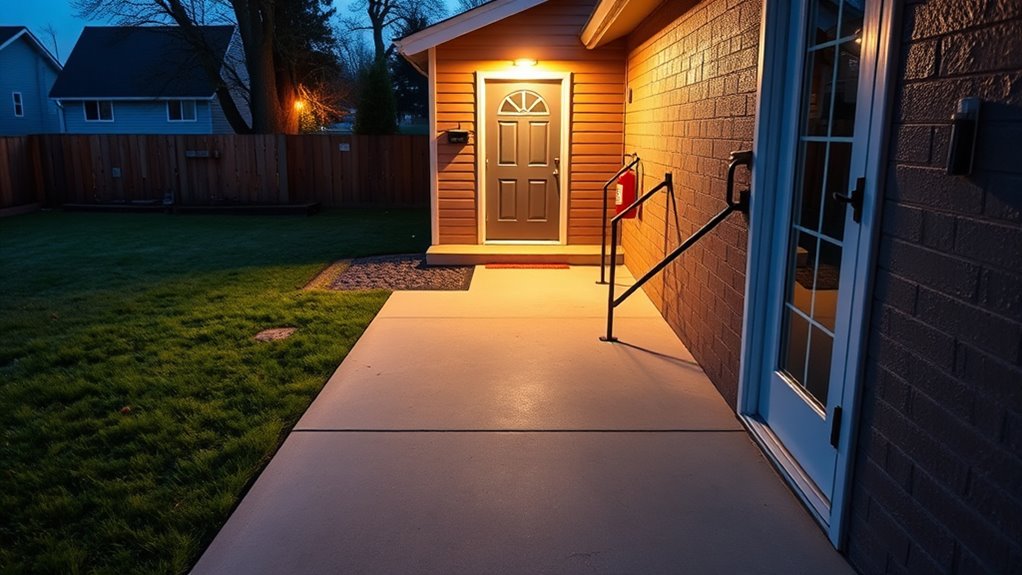
Enjoying the outdoors can be invigorating and fun, but it’s essential to prioritize safety every time you head outside. Whether you’re relaxing on your porch, tending to your garden, or just enjoying a stroll around your yard, being aware of potential hazards ensures your time outside remains enjoyable and safe. One of the simplest yet most overlooked safety concerns involves lighting hazards. Poor lighting can cause trips, falls, or accidents after sunset, so it’s vital to ensure your yard and entryway are well-lit. Use motion-activated lights along pathways, entrances, and dark corners to provide illumination only when needed, which helps save energy and reduces light pollution. Regularly check your outdoor fixtures for damage or burnt-out bulbs to prevent dim lighting that could cause falls or other mishaps. Additionally, consider installing solar-powered lights that are easy to maintain and environmentally friendly, ensuring your yard stays safely illuminated at night.
Alongside good lighting, managing wildlife deterrents is key to maintaining a safe outdoor space. Many animals, including raccoons, deer, or stray cats, are attracted to yards with accessible food sources or clutter. These animals can pose safety risks, especially if they feel threatened. To keep wildlife at a safe distance, secure trash cans with tight-fitting lids and avoid leaving pet food outside overnight. Remove fallen fruit, birdseed, or other attractants that could lure animals in. Fencing can be an effective wildlife deterrent, especially if it’s tall enough to prevent deer from jumping over or sturdy enough to keep out smaller creatures. For added protection, consider natural deterrents like motion-activated sprinklers, ultrasonic devices, or plants known to repel pests. These measures help reduce unwanted animal encounters, making your yard safer and more enjoyable. Incorporating local wildlife patterns into your safety plan can further enhance your yard’s protection.
Paying attention to lighting hazards and wildlife deterrents doesn’t have to be complicated. With a few simple adjustments, you can create a safer environment that minimizes accidents and unwanted animal visits. Proper outdoor lighting not only improves visibility but also deters potential intruders, while effective wildlife deterrents prevent animals from becoming a nuisance or safety threat. Regularly inspecting your lighting fixtures and maintaining your barriers ensures ongoing safety. Remember, safety isn’t just about avoiding accidents; it’s about creating a welcoming space where you can relax and enjoy the outdoors without worry. Taking these proactive steps will help you enjoy your yard and entryway more, knowing you’ve reduced risks and created a secure outdoor environment.
Frequently Asked Questions
How Often Should Outdoor Lighting Be Checked for Safety?
You should check your outdoor lighting, including solar lighting and motion sensors, at least once a month to guarantee safety. Regular inspections help you spot any damage, loose connections, or malfunctioning sensors. If you notice dimming or flickering, clean solar panels or replace batteries. Checking frequently keeps your yard well-lit, reduces tripping hazards, and ensures motion sensors activate correctly for added security.
What Are the Best Materials for Slip-Resistant Entryway Surfaces?
Picture stepping onto a textured, rugged path that grips your shoes with confidence, even when wet. For slip-resistant entryways, materials like textured concrete, rubber mats, or stamped concrete with a gritty surface are your best bets. They offer superior durability and a rough surface texture, preventing slips and falls. These surfaces stand up to weather and foot traffic, ensuring safety and longevity at your doorstep.
How Can I Prevent Pests From Entering My Yard?
To prevent pests from entering your yard, install pest barriers like mesh screens around entry points and garden beds. Keep your yard clean by removing debris, fallen leaves, and standing water, which attract pests. Trim bushes and trees away from your home to eliminate easy access. Regularly inspect for signs of pests, and consider natural repellents or professional treatment if needed. A tidy yard and effective pest barriers make a big difference.
What Maintenance Is Needed for Outdoor Stairs and Handrails?
Think of your outdoor stairs as the backbone of your porch—strong and steady. You should regularly conduct staircase inspections to catch loose steps or cracks early. Don’t forget to check your handrails for stability; if they wobble, do handrail repairs promptly. These simple maintenance steps keep your stairs safe and inviting, ensuring you and your guests can enjoy your outdoor space without worry.
How to Secure Outdoor Furniture From Weather Damage?
To secure outdoor furniture from weather damage, start by using weather-resistant cushions to prevent moisture buildup and fading. Always cover your furniture with protective covers when not in use, especially during rain or snow. You can also apply sealants to wooden pieces to guard against moisture and check for any damage regularly. These steps help extend the life of your furniture and keep your yard looking great year-round.
Conclusion
Remember, a little extra effort keeps your yard safe—because nothing says “welcome” like a hidden trip hazard or a loose railing. Ironically, by paying attention to details, you’re actually protecting your loved ones from the unexpected. So, take those extra minutes to secure your entryway; it’s the small steps that prevent big accidents. After all, safety isn’t just about avoiding trouble—sometimes, it’s about avoiding the trouble you didn’t see coming.