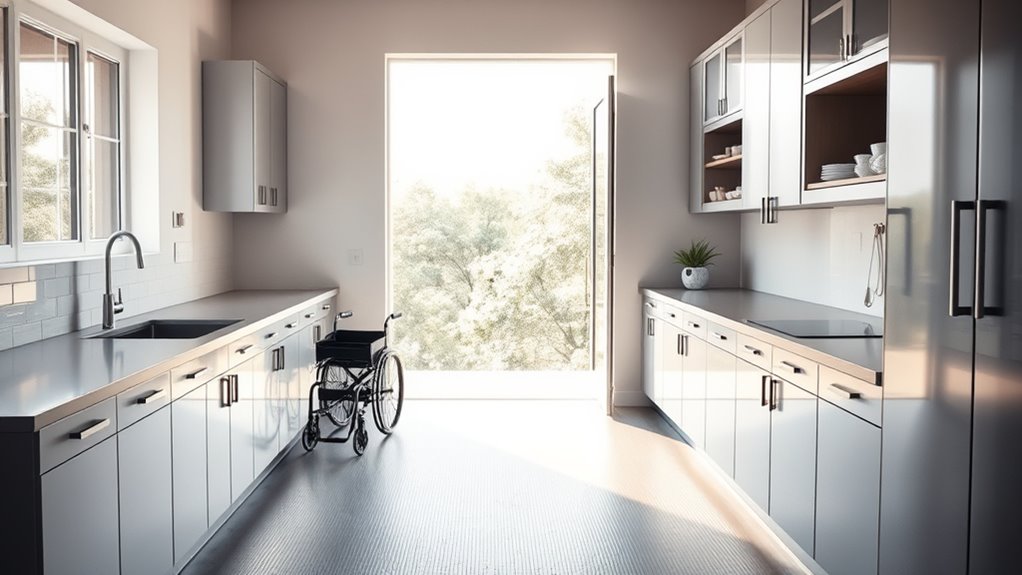

To improve safety and access in your kitchen, focus on strategic appliance placement and better lighting. Position heavy appliances at accessible heights, keep frequently used items within easy reach, and arrange small appliances near outlets to avoid dangling cords. Add task and ambient lighting, especially over work surfaces and high-use areas, to boost visibility. These simple modifications can make your kitchen safer and more functional—continue for more tips to create an even safer, more efficient space.
Key Takeaways
- Organize appliances to create a safer, more efficient workspace, placing heavy items at accessible heights.
- Install bright, energy-efficient lighting and task lights to improve visibility and prevent accidents.
- Keep frequently used items within easy reach to minimize bending and stretching, reducing injury risk.
- Position small appliances near outlets to prevent dangling cords and tripping hazards.
- Incorporate safety features like non-slip mats and clear pathways to enhance overall kitchen safety and accessibility.
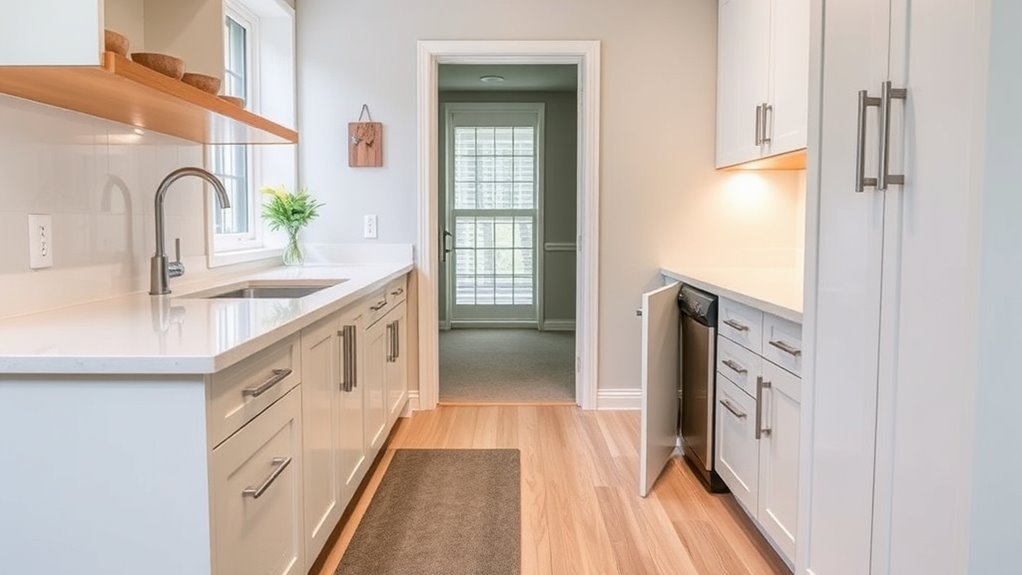
Upgrading your kitchen can markedly improve its functionality and aesthetic appeal. One of the most effective ways to do this is by paying close attention to appliance placement. When you organize appliances thoughtfully, you create a workspace that’s both safer and more efficient. For example, placing heavy appliances like the refrigerator or oven at accessible heights reduces the risk of accidents, especially if you have mobility concerns. Keep frequently used items within easy reach—on countertops or lower cabinets—so you don’t have to stretch or bend unnecessarily. This not only streamlines your workflow but also minimizes the chance of slips or falls. Additionally, consider positioning small appliances like toasters or coffee makers near power outlets to avoid dangling cords that could cause tripping hazards. A well-planned layout ensures that your appliances support your daily routines without cluttering your workspace or compromising safety.
Lighting improvements play a crucial role in enhancing safety and accessibility in your kitchen. Good lighting helps you see clearly, reducing risks associated with cutting, cooking, and cleaning. Installing bright, energy-efficient LED fixtures under cabinets illuminates work surfaces directly, making it easier to prepare food safely. Overhead lighting should be evenly distributed across the entire kitchen to eliminate shadows that can obscure hazards. For added safety, consider task lighting over specific areas like the stove or sink—these spots tend to have higher accident rates when poorly lit. Motion-activated lights can be a smart addition, especially if you often have your hands full or need to navigate the space at night. Proper lighting also enhances the overall aesthetic, making your kitchen feel warm and inviting. It’s a simple upgrade that profoundly improves both safety and ambiance.
Frequently Asked Questions
What Are the Best Materials for Non-Slip Kitchen Flooring?
You should choose slip resistant tiles or textured vinyl flooring for your kitchen. Slip resistant tiles, made from materials like porcelain or ceramic with textured surfaces, prevent falls and provide durability. Textured vinyl flooring offers comfort underfoot and excellent slip resistance, especially in wet areas. Both options are easy to clean and maintain, making them ideal for safer kitchen environments. Prioritize these materials to reduce accidents and enhance safety.
How Can I Modify Cabinets for Easier Access?
You can modify your cabinets for easier access by installing larger, ergonomic cabinet handles that are simple to grip. Consider adding pull-out shelves or drawers with dividers to organize utensils and ingredients, making everything more reachable. Adjusting the height of your cabinets or adding low-threshold entry points also helps. These modifications reduce strain and improve safety, giving you better control and access in your kitchen activities.
What Lighting Options Improve Kitchen Safety?
Imagine your kitchen as a stage, and lighting as your spotlight. Smart lighting with motion sensors automatically brightens your space when you enter, guiding your steps safely. These lights eliminate shadows and dark corners, reducing trip hazards. By installing adjustable, glare-free fixtures, you create a well-lit environment that keeps you safe and confident. With smart lighting and motion sensors, your kitchen becomes a safer, more inviting place to cook and gather.
Are There Portable Modifications for Temporary Use?
Yes, there are portable modifications you can use temporarily. You can opt for rental modifications like adhesive grab bars, non-slip mats, or portable countertop extensions that don’t require permanent installation. These temporary solutions are easy to move and remove, making them ideal for renters or those needing short-term safety upgrades. They provide effective safety improvements without permanent changes, ensuring your kitchen remains accessible and secure during your stay.
How Do I Choose the Right Height for Counters?
To choose the right counter height, start by considering your daily tasks and comfort. Counter height considerations include ergonomic design tips like maintaining a slight bend in your elbows when working. You want a surface that feels natural and reduces strain. Measure your height and aim for a counter height around 36 inches, but adjust if you often prepare meals seated or stand for long periods. The perfect height transforms your kitchen into a safe, efficient space.
Conclusion
By making these simple kitchen modifications, you turn your cooking space into a well-oiled machine, where safety and accessibility flow seamlessly like a gentle river. Think of your kitchen as a welcoming haven, where every step is smooth sailing and no obstacle feels like a storm. With these tweaks, you craft a sanctuary that nurtures confidence and independence, transforming everyday tasks into a graceful dance. Your kitchen becomes not just a room, but a safe harbor for all who enter.