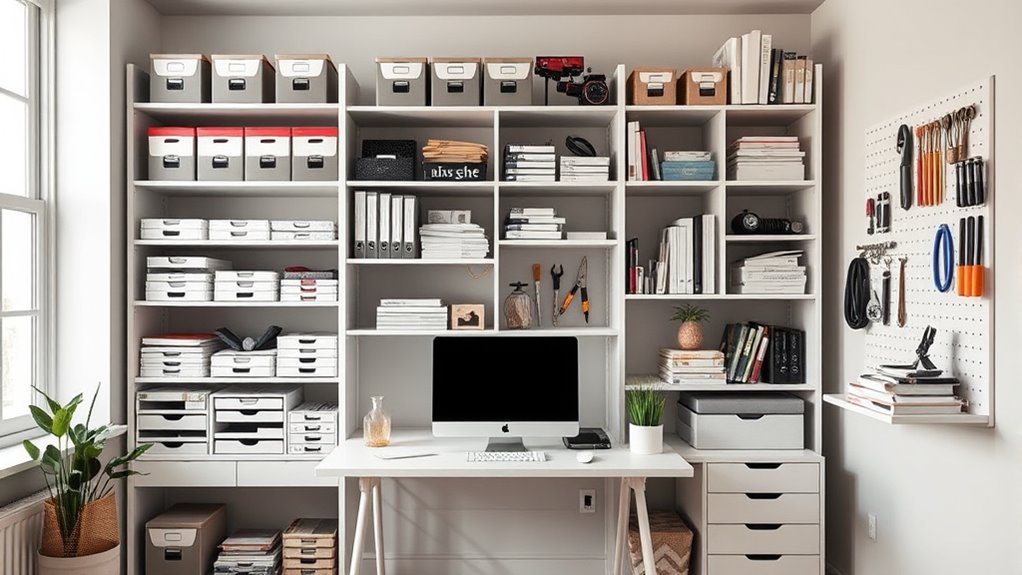

To control clutter, organize your digital and physical spaces with clear systems. Use broad folders with specific subfolders and consistent naming for digital files, while applying simple, color-coded labels for physical storage. Regularly review and update your setup to prevent buildup, dedicating time weekly for maintenance. Combining these strategies creates a sustainable, accessible environment, making clutter a thing of the past. Keep going to discover more tips that can transform your space even further.
Key Takeaways
- Implement digital storage with clear folder structures and consistent naming conventions to reduce physical and digital clutter.
- Use physical labels like color-coding and descriptive tags for quick identification of storage containers.
- Regularly review and update both digital files and physical items to prevent accumulation and maintain organization.
- Allocate dedicated time weekly for organizing, purging, and refining clutter control systems.
- Combine digital and physical labeling techniques for cohesive, efficient organization and easier retrieval.

Keeping clutter under control can transform your space from chaotic to calm. One of the most effective ways to do this is by mastering digital storage and labeling strategies. Digital storage isn’t just for tech-savvy folks; it’s a game changer for organizing your documents, photos, and other files. Instead of piling paper on your desk or stuffing everything into unmarked folders, you can create a streamlined digital system that’s easy to navigate. Start by categorizing your files into broad folders like “Work,” “Personal,” or “Bills,” then break those down into more specific subfolders. Use consistent naming conventions so you can quickly locate what you need without digging through endless clutter. Cloud storage options like Google Drive or Dropbox allow you to access your files from anywhere, reducing physical clutter and giving you peace of mind that your important documents are safe. Regularly cleaning and updating your digital files prevents digital clutter from piling up and becoming overwhelming.
Pair your digital storage with effective labeling strategies to keep everything organized at a glance. Clear, descriptive labels make it easier to find files and folders quickly, saving you time and frustration. Label your physical storage containers just as carefully—use bold, legible tags for boxes, drawers, or bins. When it comes to digital files, adopt a consistent naming system that includes dates, categories, or keywords. For example, “2024_Business_Invoice_January” makes it obvious what’s inside without opening the file. When labeling physical items, consider color-coded labels or folders for different categories, which can enhance visual organization and speed up your retrieval process. The key is consistency—if you develop a system and stick to it, your space remains tidy and manageable over time. Incorporating an understanding of vetting safety products can help you select the most reliable and safe options for your organizational tools, especially when it involves items that may come into contact with children or sensitive environments.
Incorporating digital storage and labeling strategies into your routine doesn’t have to be complicated. Set aside a specific time each week to review, organize, and purge unnecessary files or clutter. This habit prevents buildup and keeps your system functional. Also, keep physical and digital labels simple and intuitive. When you find yourself searching too long for a file or a box, it’s a sign you need to refine your labeling system. Over time, these small adjustments will make a big difference in reducing clutter and increasing efficiency. Remember, the goal isn’t just to tidy up once but to create a sustainable system that makes your space and your mind feel clearer. By implementing smart digital storage and consistent labeling strategies, you’ll reclaim control over your clutter and enjoy a more organized, peaceful environment.

SUAWY 108 Inch Sectional Sleeper Sofa with Pull Out Bed, U Shaped 7 Seat Modular Sectional Sofa with Storage, Sectional Couches for Living Room, Cloud Modular Couch,Removable Sofa Cover, Dark Grey
Multiple Package Issues: Multiple package may not arrive at the same time. If you have any questions about...
As an affiliate, we earn on qualifying purchases.
Frequently Asked Questions
How Often Should I Reassess My Organization System?
You should reassess your organization system every few months, especially if your storage solutions or decluttering routines change. Regular reviews help you identify what’s working and what needs improvement. If you notice clutter piling up or items misplaced, it’s time for a re-evaluation. Staying flexible ensures your system remains effective and tailored to your evolving needs, keeping your space organized and clutter-free.
What Are the Best Tools for Maintaining Clutter Control Long-Term?
Think of your home as a garden that needs constant tending. To keep clutter at bay, use smart storage solutions like labeled bins and multi-purpose furniture. Incorporate decluttering techniques such as regular reviews and the ‘one-in, one-out’ rule. These tools help you stay organized long-term by making tidying effortless and preventing buildup, ensuring your space remains a peaceful, clutter-free oasis.
How Can I Motivate Myself to Stay Organized Consistently?
To stay motivated and organized consistently, focus on habit formation by setting small, achievable routines. Use visual cues like labeled bins or reminders to trigger your habits daily. Celebrate your progress to reinforce positive behavior, and keep your space visually appealing to motivate you. When organization becomes a habit, it feels natural, making it easier to stay on track without extra effort.
Are There Specific Systems for Organizing Digital Clutter?
Yes, there are specific systems for organizing digital clutter. You should start with digital decluttering by deleting unnecessary files and duplicates regularly. Use file categorization to create clear folders for documents, photos, and emails, making retrieval easier. Implement consistent naming conventions and prioritize a routine for maintaining your digital space. These steps help you stay organized, save time, and reduce stress when managing your digital files.
How Do I Handle Sentimental Items I Want to Keep but Don’t Use?
Handling sentimental items is like tending a delicate garden—you want to preserve their essence without letting them take over. Keep only what truly holds sentimental value and consider preservation techniques like scanning photos or using acid-free storage. For items that don’t see daily use, create a special box or album. This way, you honor your memories while maintaining a clutter-free space that feels peaceful and intentional.

Suncast Vertical Outdoor Storage Shed with All-Weather Construction, Vanilla
VERTICAL STORAGE SHED: Designed to efficiently organize and store long-handled tools, gardening equipment, and various outdoor essentials, this...
As an affiliate, we earn on qualifying purchases.
Conclusion
Now that you’ve got the tools to conquer clutter, remember, organization isn’t a one-time gig—it’s an ongoing journey. Stay consistent, tweak your systems when needed, and don’t be afraid to get a little creative. Think of it like tuning up your vintage car; with patience and care, your space will stay tidy. So, roll up your sleeves and keep at it—after all, a clutter-free life is the real treasure in this modern age.
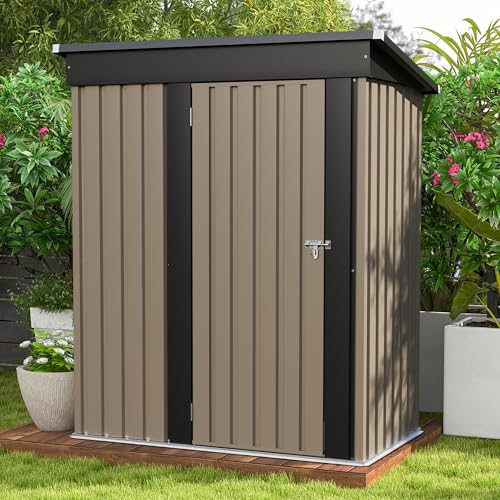
Patiowell 5x3 FT Outdoor Storage Shed, Tool Shed with Sloping Roof and Lockable Door, Metal Shed for Backyard Garden Patio Lawn, Brown
Multiple Uses: The Patiowell compact storage room is versatile, fitting perfectly in your backyard, garden, or anywhere you...
As an affiliate, we earn on qualifying purchases.

WTFGO 36 Cu Ft Resin Outdoor Storage Shed, Weatherproof Horizontal Outdoor Storage Cabinet with Dual Lock Door for Backyard, Patio, Garage, Garden(Black)
Aesthetic & Practical: Featuring a wood-grain finish, this plastic storage shed blends seamlessly into modern backyard settings. It...
As an affiliate, we earn on qualifying purchases.