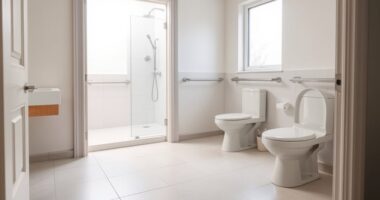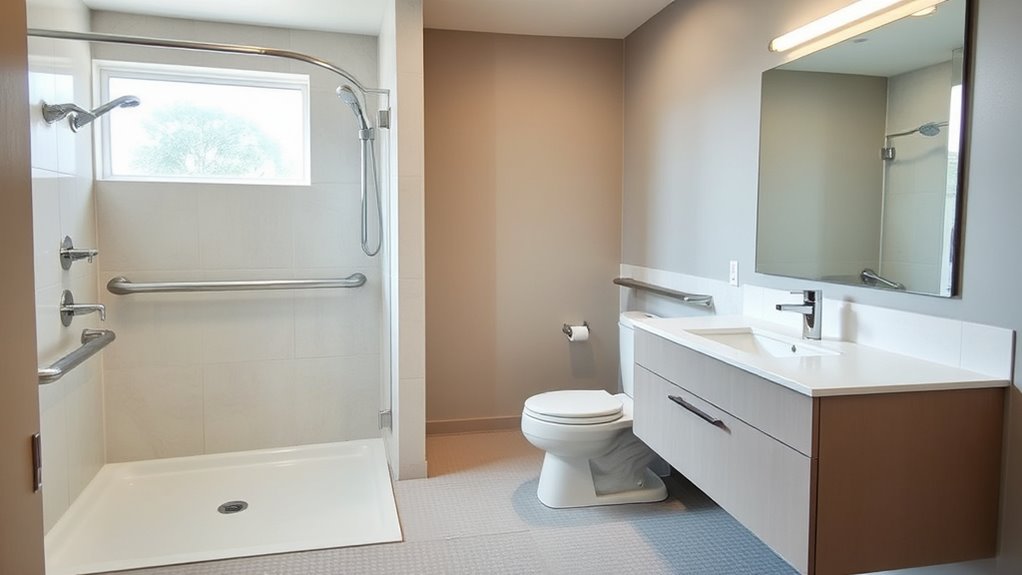

To guarantee bathroom accessibility, start by designing a layout that allows enough space for easy maneuvering, ideally a 60-inch turning diameter. Position grab bars near the toilet and inside the shower at around 33 to 36 inches high for support. Choose fixtures like roll-in showers and wall-mounted sinks that accommodate wheelchair use. Careful planning of these features improves safety and independence—continue exploring for more tips on creating an inclusive bathroom space.
Key Takeaways
- Ensure a minimum of 60 inches diameter clear floor space for easy wheelchair maneuvering.
- Position grab bars near the toilet and inside the shower at 33-36 inches height for safety.
- Use roll-in showers without ledges and wall-mounted sinks to improve accessibility.
- Arrange fixtures within reachable distances to minimize stretching or bending.
- Allocate ample space around fixtures to facilitate safe transfers and movement.

Have you ever struggled to use a bathroom that wasn’t designed for accessibility? If so, you know how frustrating it can be to navigate tight spaces or feel unsure about whether you’ll be able to support yourself safely. One of the most important aspects of bathroom accessibility is layout, which ensures that everyone can use the space comfortably and safely. Properly planned layouts incorporate features like grab bar installation and wheelchair friendly fixtures, making a significant difference in usability.
A well-designed bathroom layout ensures safety and comfort for everyone.
When designing or modifying a bathroom for accessibility, start with the idea of space. You need enough room to maneuver comfortably, especially if you’re using a wheelchair or mobility aid. The clear floor space should be at least 60 inches in diameter to allow for easy turning. This extra space isn’t just for comfort—it’s essential for safety. With adequate room, you can position fixtures so they’re within reach without straining or risking falls.
Grab bar installation is a critical element in bathroom safety. Installing grab bars near the toilet and inside the shower or bathtub provides essential support for getting up and maintaining balance. When installing grab bars, ensure they are securely anchored into wall studs or appropriate backing to support weight. The placement should be at a height that’s easy to reach from a seated position, typically around 33 to 36 inches from the floor. This simple addition offers confidence and independence, especially for seniors or those with limited mobility.
In addition to grab bars, choosing wheelchair friendly fixtures ensures the bathroom is accessible for everyone. These fixtures include a roll-in shower without a ledge, a lowered or adjustable sink, and a toilet with enough clearance to allow for easy transfers. Installing a wall-mounted sink with open space beneath makes it easier for wheelchair users to get close and use the sink comfortably. Likewise, a toilet with a higher seat height or an elevated toilet seat can make transfers smoother and reduce strain.
Frequently Asked Questions
What Are the Latest ADA Regulations for Bathroom Layouts?
You need to know that ADA compliance for bathroom design requires specific clearances, accessible fixtures, and proper signage. The latest regulations specify a 60-inch turning radius for wheelchairs, accessible sinks and toilets, and grab bars at appropriate heights. Make certain your bathroom layout allows for easy maneuvering and meets these standards to provide safe, inclusive access. Staying updated on ADA regulations guarantees your space remains compliant and accessible for all users.
How Can I Modify My Bathroom for Wheelchair Users?
You can make your bathroom wheelchair-friendly by installing bathtub modifications like a roll-in shower or a walk-in tub, making access easier. Focus on grab bar placement, ensuring they’re strategically positioned near the toilet and shower for safety and support. These adjustments not only improve accessibility but also create a safer, more comfortable space. When you plan carefully, you’ll find that small changes make a big difference in usability.
Are There Cost-Effective Solutions for Accessible Bathroom Renovations?
Yes, you can find budget-friendly upgrades for accessible bathrooms. Focus on DIY accessibility projects like installing grab bars, replacing handles, or widening doorways with affordable tools and materials. Look for sales or secondhand fixtures to save costs. These simple modifications make your bathroom safer and more accessible without breaking the bank. With a bit of effort, you can create a more functional space that meets accessibility needs affordably.
What Materials Are Best for Slip-Resistant Bathroom Floors?
Slip-resistant tiles and waterproof flooring are your best choices for slip-resistant bathroom floors. You’ll want to look for tiles specifically designed with textured surfaces or a matte finish to prevent slips. These materials are not only durable but also provide excellent traction, especially when wet. Choosing high-quality waterproof flooring, like vinyl or rubber, guarantees safety and longevity, giving you peace of mind every time you step into the bathroom.
How Do I Ensure Privacy While Maintaining Accessibility?
To guarantee privacy while maintaining accessibility, you should install visual privacy features like frosted glass or privacy screens that don’t hinder movement. Use adjustable or lockable doors and consider strategic placement of fixtures to shield users from view. Address privacy concerns by balancing openness and seclusion, ensuring easy access without sacrificing personal privacy. This way, you create a space that’s both accessible and respectful of privacy needs.
Conclusion
Ensuring your bathroom is accessible makes a big difference—over 60% of seniors avoid using certain bathrooms due to design barriers. By focusing on simple layout basics, you create a safer, more comfortable space for everyone. Imagine a bathroom where you can move freely without obstacles, giving you peace of mind and independence. Making small changes now can profoundly improve daily life, ensuring your bathroom remains a welcoming, functional space for years to come.