Spending time in nature and green spaces boosts your mental, emotional, and physical well-being. It helps reduce stress, anxiety, and depression while improving mood and focus. Engaging with natural environments fosters biodiversity, supports physical activity, and encourages social connections. These benefits strengthen resilience, promote mindfulness, and restore energy. If you want to discover how connecting with nature can transform your health and happiness even further, keep exploring ways to incorporate green time into your routine.
Key Takeaways
- Spending time in natural environments reduces stress, anxiety, and depression, promoting mental calmness and emotional resilience.
- Exposure to green spaces supports biodiversity, which is essential for ecological stability and long-term environmental health.
- Outdoor activities stimulate senses and physical movement, releasing endorphins that boost mood and overall well-being.
- Connecting with nature fosters positive emotions and mindfulness, enhancing mental clarity and emotional health.
- Green spaces facilitate social interactions and community bonding, contributing to emotional support and mental restoration.
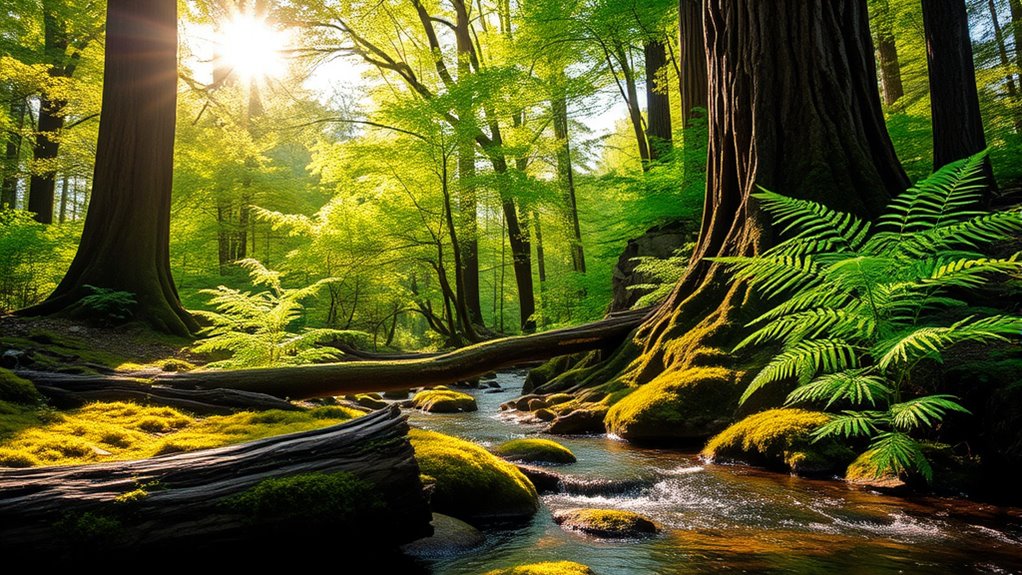
Spending time in nature isn’t just relaxing—it’s essential for restoring your mental and physical well-being. When you immerse yourself in natural environments, you tap into a range of benefits that go beyond simple enjoyment. One of the key advantages is the biodiversity benefits, which refer to the rich variety of plant and animal life thriving in healthy ecosystems. By engaging with these vibrant surroundings, you not only experience beauty, but you also support the preservation of biodiversity, which is *indispensable* for ecological stability. The more you appreciate and protect natural spaces, the better they can sustain diverse life forms, ensuring that future generations can enjoy the same restorative experiences.
Engaging with nature preserves biodiversity, supporting ecological stability, and ensuring future generations enjoy restorative natural experiences.
Being in nature also has a significant mental health impact. It’s well-documented that spending time outdoors can reduce stress, anxiety, and feelings of depression. When you step away from screens and urban noise, your brain shifts into a calmer state, allowing your mind to reset and rejuvenate. Natural settings help lower cortisol levels—the stress hormone—and promote feelings of tranquility and well-being. The calming influence of green spaces can even improve your focus and concentration, making everyday tasks feel less overwhelming. This mental clarity, combined with the emotional lift you get from being in nature, reinforces the importance of regularly carving out time for outdoor activities.
Moreover, engaging with natural environments encourages physical activity, whether it’s hiking, walking, or simply exploring. This physical movement further enhances your mental health, releasing endorphins that boost your mood and energy levels. The multisensory experience of nature—listening to birds, feeling the breeze, smelling fresh foliage—stimulates your senses and fosters mindfulness. These moments of mindfulness can help you stay grounded, increase your resilience to stress, and improve overall emotional health. The positive feedback loop created by connecting with nature supports both your physical and mental wellness, making it a *crucial* part of a balanced lifestyle. Additionally, exposure to natural environments can enhance your overall sense of well-being by promoting positive emotions and reducing feelings of fatigue.
In addition, green spaces often foster social interactions, whether you’re sharing a park with friends or participating in outdoor group activities. These social connections are fundamental for mental health, providing support, reducing loneliness, and strengthening community bonds. All these elements—biodiversity benefits, mental health impact, physical activity, sensory engagement, and social interaction—work together to make green time an invaluable tool for restoration. By prioritizing regular encounters with nature, you invest in your long-term health, resilience, and happiness. It’s clear that nature’s restorative power is something you shouldn’t overlook in your pursuit of a healthier, more balanced life.

AMADA HOMEFURNISHING 8x10 Washable Area Rug, Low-Profile with Non-Slip Backing & Durable Edge Binding, Vintage Large Rugs for Living Room, Bedroom, Dining Room, Blue
Machine Washable: The short pile design of this washable rug is easy to maintain using an upright vacuum...
As an affiliate, we earn on qualifying purchases.
Frequently Asked Questions
How Does Green Time Improve Mental Health?
Green time boosts your mental health by encouraging nature therapy and green mindfulness. When you spend time outdoors, you reduce stress, improve mood, and increase focus. Nature’s calming effects help you disconnect from daily worries, fostering relaxation. Practicing green mindfulness during this time enhances self-awareness and emotional resilience. So, making regular outdoor breaks allows you to recharge mentally, supporting overall well-being and mental clarity.
What Are the Best Green Activities for Stress Relief?
You should try botanical therapy, eco therapy techniques, and mindful walks in nature. These activities help you disconnect from stress, reconnect with the environment, and boost your mood. Engage in gardening, forest bathing, or outdoor yoga to relax your mind and body. By immersing yourself in green spaces, you activate calming sensations, reduce anxiety, and restore your mental clarity. Make green activities a regular part of your stress relief routine.
How Often Should One Engage in Nature for Benefits?
You should aim to engage in nature activities at least 2-3 times per week, following general frequency guidelines for stress relief. The ideal duration varies, but spending about 30 minutes to an hour during each session allows you to reap the benefits fully. Consistent exposure helps reduce stress hormones and boosts your overall well-being. Make it a regular part of your routine for the best mental and physical health outcomes.
Can Urban Parks Provide Similar Restoration as Wilderness?
Urban parks absolutely can provide restoration comparable to wilderness, and sometimes even more! With lush urban greenery and opportunities for botanical therapy, you get a mini escape anytime you step outside. These parks boost your mood, reduce stress, and refresh your mind just like wilderness. So, don’t underestimate the power of city greenery—it’s a quick, accessible way to recharge your body and soul without venturing far from home.
What Environmental Factors Enhance Natural Restorative Effects?
You can enhance natural restorative effects by increasing biodiversity impact and reducing pollution levels. When you support diverse plant and animal life, you boost ecological resilience and create more engaging, calming environments. Lower pollution improves air and water quality, making these spaces healthier for you and wildlife. By focusing on these factors, you help maximize the mental and physical benefits of nature, fostering a more restorative and sustainable environment for everyone.

RELEANY Area Rugs 8'x10' Washable Non-Slip, Floral Vintage Distress Print Pattern Medallion Carpet for Living Room Bedroom Dining Room, Brick Red Rust Neutral Brown Burnt Orange Green
Machine Washable Rugs Easy to Clean: the surface is water-repellent which allows for easy cleanup when beverages are...
As an affiliate, we earn on qualifying purchases.
Conclusion
Spending time in nature is like watering your soul—it nurtures your well-being and restores your energy. When you embrace green spaces, you’re planting seeds of calm and clarity within yourself. Don’t wait for stress to overgrow; instead, let nature be your invigorating rain. Remember, the more you connect with the natural world, the more your inner landscape blooms with peace and vitality. So go outside, and let nature be your guiding light back to balance.

8x10 Area Rugs for Living Room: Floral Washable Rug Vintage Large Soft Boho Non-Slip Carpet Indoor Floor Stain Resistant Carpets for Bedroom Dining Room Farmhouse Nursery Home Office Dark Green
Elegant Floral Rug: This 8x10 area rugs vintage-inspired botanical rug blends rich dark greens, vibrant and delicate floral...
As an affiliate, we earn on qualifying purchases.

Neo Sleep Queen Size Mattress, 12 Inch Hybrid Comfort & Supportive Mattress in a Box, Cooling Gel Memory Foam and Pocket Springs with Pressure Relief, CertiPUR-US Certified, Medium Firm
COMFORTABLE HYBRID SUPPORT - The NEO SLEEP 12 inch Queen Mattress ensures ultimate comfort and balanced support. Soft...
As an affiliate, we earn on qualifying purchases.