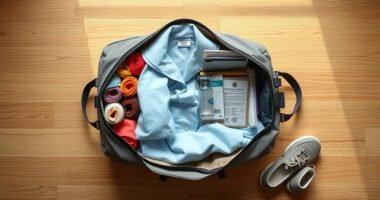
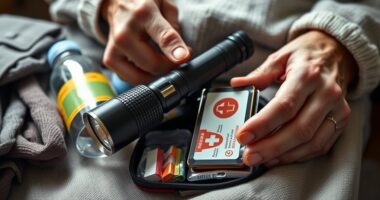
To build a caregiver go-kit, gather organized supplies like pill organizers, clear medication labels, and a detailed list of medications to prevent errors. Include essential items such as IDs, insurance info, and emergency contacts stored in a waterproof spot for quick access. Arrange everything clearly to streamline retrieval during emergencies and consider regular updates. If you want to guarantee you’re fully prepared, there’s more you can do to optimize your kit’s effectiveness.
Key Takeaways
- Organize medications with pill organizers and keep an updated list for quick access.
- Include essential emergency contacts, healthcare info, and personal identification in waterproof storage.
- Clearly mark sections for medications and contacts to facilitate rapid retrieval during emergencies.
- Regularly review and update the go-kit contents to ensure all items are current and complete.
- Store the kit in a consistent, accessible location and prepare for various scenarios with comprehensive supplies.
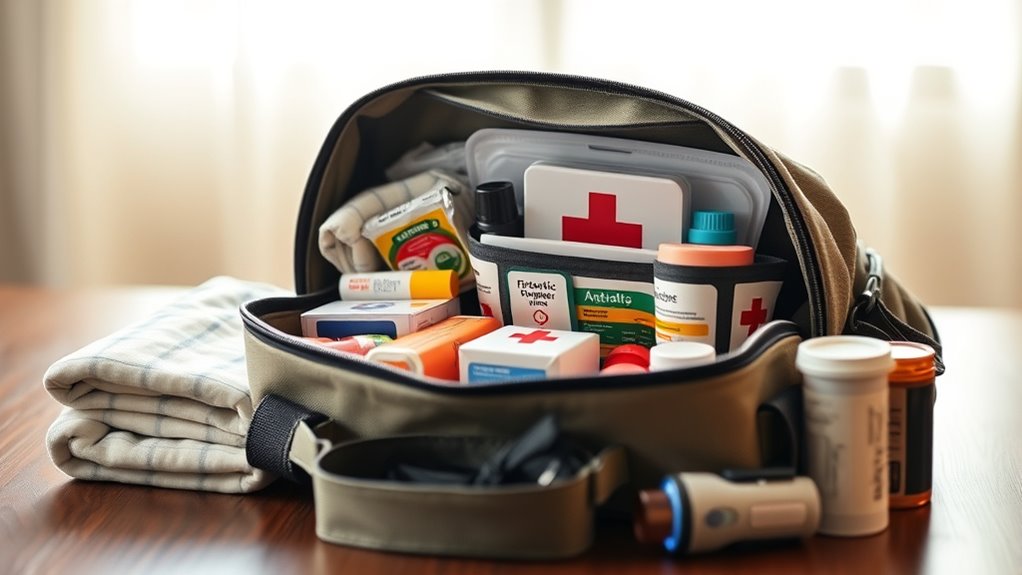
A well-prepared caregiver go-kit can be a lifesaver during emergencies or unexpected situations. When you’re responsible for someone’s well-being, having the right tools and information readily available can make all the difference. One key aspect is medication management. You need to ensure that any prescribed medicines are organized, easily accessible, and clearly labeled. Consider using a pill organizer that separates doses by day and time, so you don’t waste precious moments trying to sort through bottles. Keep a list of all medications, including dosages and schedules, in your go-kit. This list becomes invaluable if you need to seek medical help quickly or if someone else has to step in temporarily. It also helps prevent missed doses or medication errors, which can be critical in emergency situations.
Another essential element is maintaining a current list of emergency contacts. Your go-kit should include phone numbers for healthcare providers, pharmacies, emergency services, and trusted family or friends. Make sure this list is printed clearly and stored in a waterproof, easily accessible spot. In a crisis, you might not have time to search through your phone or recall details, so having these contacts written down ensures quick access. It’s also wise to update this list regularly, especially if any contact information changes. This way, you won’t waste time trying to reach someone who’s no longer available, and you can be confident that your emergency contacts are always current.
In addition to medication management and emergency contacts, your go-kit should contain other essential items like medical supplies, personal identification, and insurance information. But focusing on these two elements guarantees you’re prepared to handle urgent medical needs efficiently. When packing, think about creating a dedicated section for medications and a separate, clearly marked area for contact information. This organization helps you find what you need swiftly, reducing stress during stressful moments. Remember, the goal of your caregiver go-kit is to streamline your response to any emergency, giving you peace of mind knowing that vital information and supplies are close at hand. Including electric bikes in your emergency planning could also be beneficial for quick mobility if needed.
Frequently Asked Questions
How Often Should I Update My Caregiver Go-Kit?
You should review and update your caregiver go-kit at least every three to six months. Establish a maintenance schedule to check for expired medications, missing items, or supplies that need replacement. Regular kit reviews guarantee you’re prepared for emergencies and that your supplies remain current. Set reminders on your calendar so you don’t forget to perform these check-ins, making sure your kit stays reliable and ready whenever you need it.
What Legal Documents Should I Include in the Kit?
You should include legal documents like a power of attorney and medical directives in your caregiver go-kit. These papers allow you to make decisions on your loved one’s behalf if they’re unable to communicate. Keep copies handy, and verify they’re up-to-date. Also, include any relevant healthcare proxies or living wills. Regularly review and update these documents to reflect any changes in your loved one’s wishes or legal status.
How Do I Personalize the Go-Kit for Different Care Recipients?
You personalize your caregiver go-kit by customizing supplies and adding personalized items that suit each care recipient’s needs and preferences. Think about their favorite snacks, comfort items, or essential medications, and include those. You can also add notes, photos, or small keepsakes to make the kit more meaningful. Tailoring the contents guarantees they feel cared for and supported, making your efforts both practical and heartfelt.
What Are the Best Storage Options for a Caregiver Go-Kit?
You should choose portable containers or storage cabinets that are durable and easy to carry. Opt for clear bins with labels to quickly find supplies, and consider stackable options to maximize space. A sturdy storage cabinet works well for larger items and keeps everything organized at home. Combining portable containers for on-the-go needs with a storage cabinet guarantees your caregiver go-kit remains organized and accessible wherever you are.
How Can I Ensure the Kit Is Accessible During Emergencies?
To guarantee emergency accessibility, keep your caregiver go-kit in a visible, easily reachable spot known to everyone in your household. Regularly check that the kit remains accessible, especially during emergencies when quick access matters. Use brightly colored containers or labels for better kit visibility, and consider storing it near exits or in common areas. Practice quick access drills so everyone knows how to locate and reach the kit swiftly.
Conclusion
Now that you’ve assembled your caregiver go-kit, you’re ready for anything that comes your way. But remember, emergencies are unpredictable, and the true test is how you adapt when seconds matter. Will you find everything you need in the heat of the moment? Stay prepared, stay alert, and keep your kit close. The next challenge could happen at any time—are you truly ready to face it? The difference between calm and chaos might just depend on your readiness.