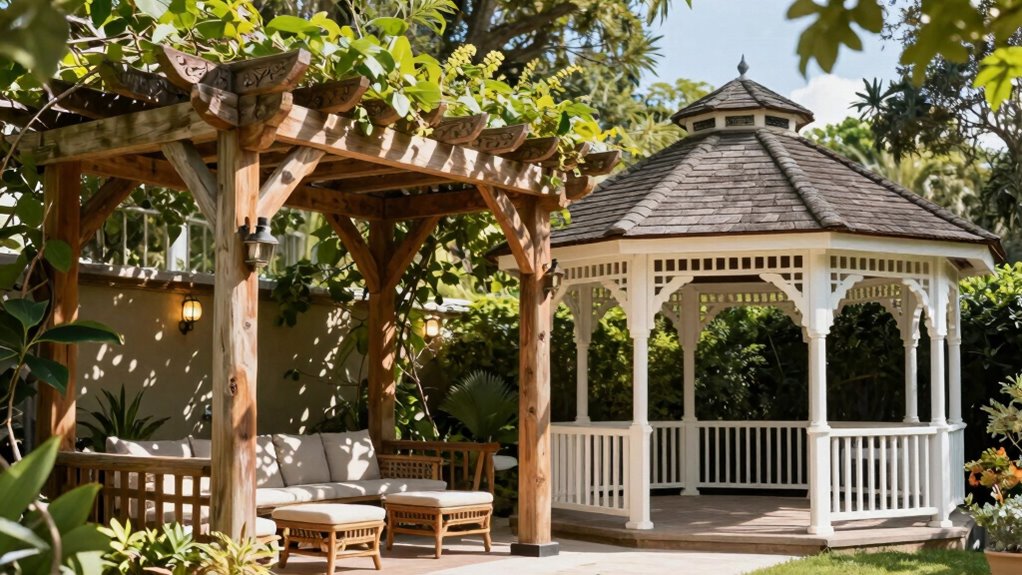

If you’re choosing between a pergola and a gazebo for your outdoor living zone, consider how you want to use the space. Pergolas offer natural shade with climbing plants and versatile lighting, creating a relaxed, garden-like atmosphere. Gazebos provide a cozy, enclosed retreat with solid roofs, ideal for protection from weather. Your choice depends on the level of greenery, shelter, and ambiance you desire—exploring further can help you find the perfect fit.

Give the gift of listening to someone you love
- Choose a 1-, 3-, 6- or 12-month membership
- They pick the audiobooks they love
- Easy to send by email
Key Takeaways
- Pergolas offer open, airy structures ideal for plant integration and versatile lighting options, enhancing natural outdoor living experiences.
- Gazebos provide enclosed, sheltered spaces perfect for year-round comfort and privacy in outdoor zones.
- The open design of pergolas facilitates easier maintenance and customization, while gazebos may require more upkeep due to solid roofs.
- Both structures boost yard aesthetic and function, but choice depends on desired atmosphere and level of outdoor engagement.
- Material durability and climate suitability are crucial factors influencing longevity and performance of either structure.
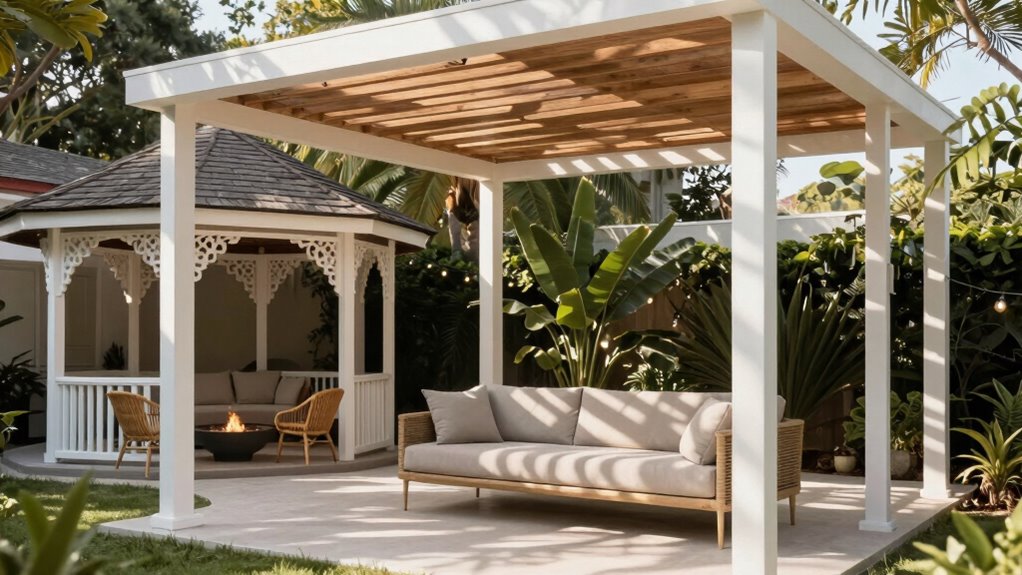
Are you trying to decide between a pergola and a gazebo for your outdoor living space? Both options can elevate your yard’s appeal, but understanding their differences can help you choose the right fit. When it comes to plant integration, a pergola offers more flexibility. Its open, slatted roof allows you to weave climbing plants like ivy, wisteria, or jasmine directly onto the structure. As your plants grow, they create natural shade and add a lush, green backdrop to your outdoor area. You can also train flowering vines along the beams, enhancing visual interest and fragrance. Gazebos, on the other hand, typically have a solid roof and more enclosed design, which can limit direct plant integration. While you can add potted plants around the perimeter or hang hanging baskets, they don’t become part of the structure itself. If integrating greenery is a priority, a pergola provides more opportunities to create a living, breathing extension of your garden. Additionally, plant integration can significantly influence the overall ambiance and appeal of your outdoor space, especially when combined with thoughtful lighting options. Lighting options are another key consideration. Pergolas lend themselves well to creative lighting solutions. Because they have an open roof design, you can easily string fairy lights, lanterns, or Edison bulbs along the beams for a warm, inviting glow. Installing built-in lighting fixtures or spotlights directed upward can highlight the structure’s architectural details at night. The open design allows for versatile lighting arrangements that can be easily customized to suit your mood or event. Gazebos, with their solid roofs and often more enclosed shape, can limit lighting choices somewhat. While you can hang pendant lights or install LED strips around the perimeter, the solid roof can block some light and make it trickier to achieve an even illumination. You might need to rely more on portable lamps or candles inside the gazebo to create ambiance. Ultimately, if your goal is to blend natural greenery with customizable lighting, a pergola offers more freedom and flexibility. It’s easier to incorporate plants and adapt lighting to different occasions. Additionally, structure design can also impact the overall maintenance and durability of your outdoor structure, which is worth considering when making your choice. Proper materials and construction techniques can extend the lifespan of either structure, especially in various weather conditions. When evaluating options, consider the climate of your area, as some materials and designs may perform better in certain weather. If you prefer a cozy, enclosed space that provides shelter from the elements while still offering some outdoor charm, a gazebo might better suit your needs. Both structures can serve as beautiful focal points or functional outdoor retreats, but these differences in plant integration and lighting options can be decisive in your choice. Think about how you want to use your space, what atmosphere you aim to create, and how much you want to involve nature directly in your design.
Products Worth Considering

Withings ScanWatch Light Hybrid Smartwatch – White

Garmin Forerunner 265S GPS Running Smartwatch, 42 mm, Light Pink/Powder Gray

Philips Sonicare DiamondClean 9500 Electric Toothbrush with 3 Brush Heads, Black
As an affiliate, we earn on qualifying purchases.
Frequently Asked Questions
Which Option Is More Cost-Effective Long-Term?
A pergola is generally more cost-effective long-term because it offers flexible design options and a range of material choices like wood, vinyl, or metal, which can fit different budgets. Gazebos tend to be pricier initially due to their more solid structure and materials. With a pergola, you can customize and upgrade over time, making it a smarter, more adaptable investment for your outdoor space.
Are Pergolas or Gazebos Easier to Maintain?
You’ll find pergolas generally easier to maintain than gazebos, especially since they often feature material variety that suits low-maintenance needs. Did you know that 60% of homeowners prefer pergolas for their design versatility? Pergolas require less upkeep thanks to materials like vinyl or aluminum, which resist weathering. Gazebos, often made of wood, can demand more regular maintenance to prevent rot and insect damage, making pergolas a more hassle-free choice for outdoor living zones.
Can Either Structure Support Outdoor Lighting?
Yes, both pergolas and gazebos can support outdoor lighting. You can install decorative lighting or run electrical wiring through either structure, making them versatile for evening gatherings. Pergolas often have open beams ideal for string lights or lanterns, while gazebos, with their solid roof, can accommodate more permanent lighting fixtures. Just guarantee proper wiring and weatherproof fixtures to keep your outdoor space safe and inviting.
How Do Climate Conditions Affect Durability?
Climate conditions are vital to durability, so your material selection and seasonal adaptability are essential. If you face heavy rain or snow, opt for weather-resistant materials like vinyl or treated wood for added longevity. In hot, sunny climates, shade-providing features and UV-resistant finishes help maintain durability. Consider how each structure handles seasonal changes; pergolas with open designs may need more upkeep, while gazebos with solid roofs offer better protection year-round.
Are There Zoning or Building Code Restrictions?
Before you build your outdoor oasis, you should check for zoning variances and building permits. Zoning restrictions can dictate what structures are allowed, while permits guarantee your project complies with local codes. You might need special permissions or face limitations on size, placement, or design. Consulting your local planning office helps avoid hassle, ensuring your pergola or gazebo gets the green light and grows perfectly within community constraints.
Conclusion
So, whether you’re team pergola or squad gazebo, remember: both are perfect for pretending you’ve got a fancy outdoor living zone. One offers a stylish shade, the other a cozy corner—like choosing between a tuxedo or a Hawaiian shirt. Either way, you’ll be the envy of your neighbors, basking under your outdoor masterpiece, while they wonder if you’ve finally lost your mind—or just your sunburn. Now, go on, pick your favorite, and enjoy your backyard throne!