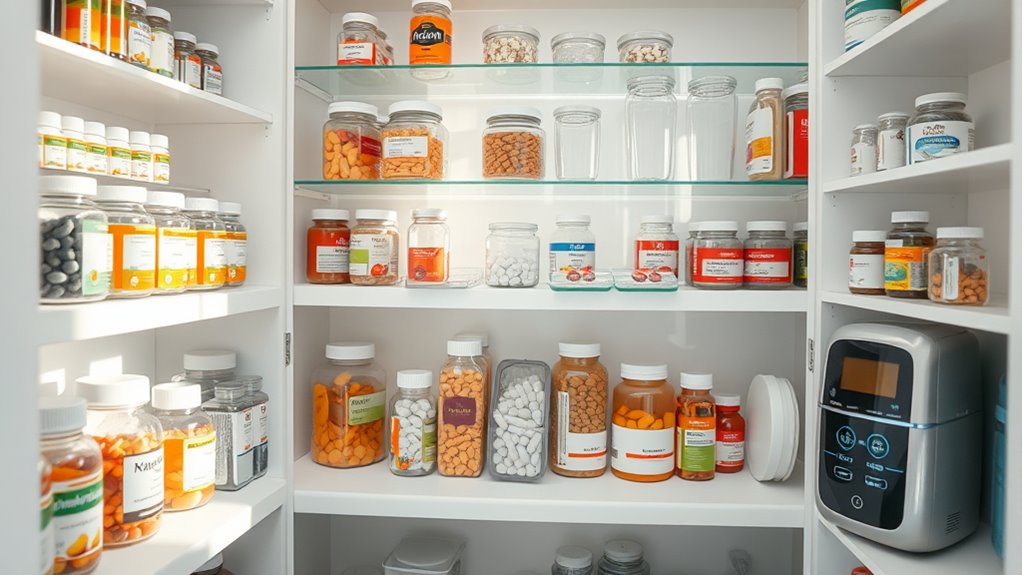

To organize medications at home, use daily or weekly pill organizers to simplify your routine and prevent missed or extra doses. Store medications in clearly labeled, child-proof containers in a dedicated, cool, dry space. Regularly check expiration dates and discard expired meds. Keep a medication list handy to stay on track. For added safety and convenience, consider portable pillboxes for on-the-go needs. Keep exploring to discover more tips for safe and effective medication management.
Key Takeaways
- Use labeled pill organizers and trays to sort medications by day or week for easy tracking.
- Store medications in a designated, secure, and accessible space to prevent confusion and ensure safety.
- Regularly check expiration dates and discard expired meds to maintain safe medication practices.
- Keep a medication schedule or list nearby to monitor adherence and prevent missed doses.
- Choose child-proof containers and secure storage solutions to enhance safety at home.

Keeping your medications organized at home is essential for safety and ensuring you take the right doses at the right times. When you manage your medications properly, you reduce the risk of missed doses, accidental overdoses, and confusion. One of the most effective ways to stay organized is through pill sorting—dividing your medication into daily or weekly compartments. Pill sorting allows you to see at a glance whether you’ve taken your medication for the day, helping you stay consistent. It also minimizes the chances of grabbing the wrong pill or taking an extra dose. You can use various storage solutions, such as pre-filled pill organizers, labeled containers, or stackable trays, to keep your medications orderly. Choose storage solutions that are easy to access yet secure enough to prevent accidental spills or children’s access. Using clear, labeled containers can also help you quickly identify which medication is which, especially if you’re managing multiple prescriptions.
When selecting storage solutions, prioritize safety and convenience. For example, a weekly pill organizer with individual compartments can be your go-to for daily routines, while larger containers can store bulk supplies or medications you take less frequently. Keeping medications in a dedicated, designated space—like a kitchen drawer or a medicine cabinet—helps create a routine and makes it easier to locate what you need. Make sure this space is dry, cool, and out of reach of children or pets. If you travel frequently or need to carry medications on the go, consider portable pill boxes with secure lids that fit easily into your bag. This way, you won’t have to worry about forgetting doses or carrying bulky bottles everywhere.
It’s also important to regularly check your storage solutions for expiration dates, especially if you’re using refillable containers or repurposing old ones. Discard any expired medications properly and replace your pill sorting systems as needed to maintain organization. Keep a medication schedule or list nearby, so you know exactly what you’re taking and when. This not only helps you stay organized but also provides peace of mind, knowing your medication routine is clear and manageable. Proper pill sorting and storage solutions can make a huge difference in maintaining your medication regimen safely and effectively. Staying proactive in organizing your medications means fewer mistakes and greater control over your health. Additionally, understanding the features of home theatre projectors can help you choose the right setup for your entertainment space, ensuring an optimal viewing experience.

AUVON Pill Box 2 Times a Day, Weekly Pill Organizer AM PM with 7 Daily Pocket Case to Hold Vitamin, Medicine, Medication, and Supplement
KEEP TRACK OF YOUR PILLS. You can simply organize your weekly pill organizer 2 times a day at…
As an affiliate, we earn on qualifying purchases.
As an affiliate, we earn on qualifying purchases.
Frequently Asked Questions
How Can I Prevent Medication Mix-Ups With Multiple Caregivers?
To prevent medication mix-ups with multiple caregivers, you should implement clear pill sorting routines and guarantee consistent labeling. Communicate regularly with all caregivers about medication schedules, dosages, and any changes. Use color-coded containers or labels to differentiate medications easily. Keep a shared medication list updated and accessible. By maintaining open caregiver communication and organized pill sorting, you reduce errors and ensure everyone administers medications correctly.
What Are the Best Ways to Track Expired Medications?
You should regularly check your medications for expiration dates, especially when organizing your pills. Use a pill organizer to keep track of doses and make it easier to spot expired meds. Incorporate a medication schedule to set reminders for inspecting and discarding expired pills. Make it a habit to review your supply monthly, and dispose of expired medications properly to stay safe and maintain an effective treatment plan.
How Should I Organize Medications for Travel?
Think of your travel medication kit as a treasure chest, safe and organized. To guarantee travel safety, use a small, labeled container for each type of medicine, and pack essentials in your carry-on. Follow packing tips like including a copy of prescriptions and keeping medicines in original containers. This way, you’ll navigate your journey smoothly, knowing your medications are secure, accessible, and ready when you need them.
Can Medication Organization Help Reduce Accidental Overdoses?
Yes, medication organization can help reduce accidental overdoses. By using pill sorting and proper dosage management, you guarantee each medication is clearly separated and correctly timed. This minimizes the risk of taking too much or mixing up pills. Regularly reviewing your medication setup keeps you aware of what you need and when, making it easier to follow prescribed doses and avoid dangerous mistakes.
What Techniques Improve Medication Adherence at Home?
You can improve medication adherence at home by using pill organizers to keep your medicines sorted and easily accessible. Additionally, setting reminder apps on your phone helps you stay on track with your doses. Establish a routine, like taking medications with meals or a specific daily activity, and regularly check your supplies to prevent missed doses. These techniques make managing your medications simpler and more reliable.

Lock Box for Medicine & Snacks – Childproof Storage Box with Combination Lock, Secure Organizer for Pills, Fridge Food, Phone, Vitamins | Portable Safe for Home, Office, Travel (5.5×5.5×6.3in)
Childproof Medicine & Snack Control – This locked medicine box keeps prescriptions, vitamins, or unhealthy snacks securely stored….
As an affiliate, we earn on qualifying purchases.
As an affiliate, we earn on qualifying purchases.
Conclusion
Organizing your medication at home isn’t just about neatness; it’s about safeguarding your health and peace of mind. When you keep everything in order, you’re the captain of your wellness ship, steering clear of mistakes and missed doses. Remember, a well-organized space is like a trusted compass—guiding you smoothly through each day. So, take charge now, and turn chaos into clarity. Your health deserves that simple, powerful act of care.

Sukuos Extra Large Daily Pill Organizer 7 Day, Easy to Open Weekly Pill Box Case, Portable Medicine Case Vitamin Holder with Clear Lid for Fish Oils or Supplements (Light Pink)
Simple to Open & Close: Sukuos weekly pill organizer opens with minimal force, and the indented flap facilitates…
As an affiliate, we earn on qualifying purchases.
As an affiliate, we earn on qualifying purchases.

iouwei Large Pill Organizer with Medicine Labels – 7 Day Travel Daily Container, Mini Medication Storage Case (Grey, 161 Labels)
Actual Size (Net, No Packaging): 3.8" L × 2.6" W × 1.65" H (9.65 × 6.60 × 4.19…
As an affiliate, we earn on qualifying purchases.
As an affiliate, we earn on qualifying purchases.