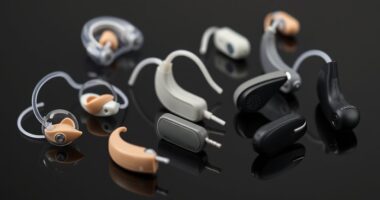
Personal sound amplifiers are budget-friendly and easy to use, making them a quick fix for mild hearing issues. However, they don’t offer the customization, noise reduction, or advanced features that hearing aids provide. Hearing aids are more tailored to your hearing loss and can improve sound clarity better over the long term. If you want to understand which option suits your needs best, there’s more to discover about their differences and benefits.
Key Takeaways
- Personal sound amplifiers are more affordable and available over-the-counter, while hearing aids are custom-fitted and generally cost more.
- Amplifiers are simple to use and suitable for mild hearing issues, whereas hearing aids offer advanced features like noise reduction and Bluetooth.
- Hearing aids are calibrated to an individual’s specific hearing loss, providing more effective and personalized sound correction.
- Amplifiers often amplify all sounds equally, including background noise, while hearing aids optimize sound quality with targeted adjustments.
- Long-term, hearing aids offer reliable, tailored support but require professional fitting, maintenance, and higher initial investment.
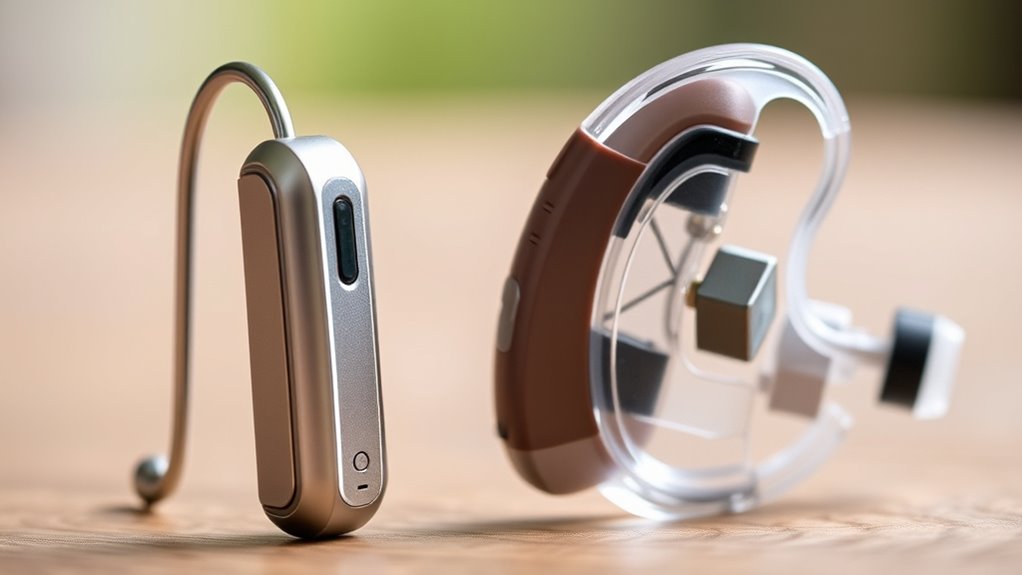
If you’re exploring options to improve your hearing, you might notice that personal sound amplifiers and hearing aids are often compared. While both aim to enhance your ability to hear, they differ considerably in terms of cost comparison and user convenience. Personal sound amplifiers are generally more affordable upfront, making them appealing if you’re on a tight budget or just beginning to explore hearing assistance. They can cost a fraction of what hearing aids do, often ranging from $50 to $300. Hearing aids, however, typically start at around $1,000 per ear and can go much higher depending on technology and features. This price difference makes personal sound amplifiers accessible to many, but it also means they might not provide the same level of customization or effectiveness.
Personal sound amplifiers are a budget-friendly alternative to costly hearing aids.
When it comes to user convenience, personal sound amplifiers are straightforward and easy to use. You can often purchase them over the counter, without the need for a professional fitting or prescription. They usually come with simple controls, allowing you to adjust volume or settings quickly. This simplicity makes them an attractive choice if you’re looking for a quick, no-fuss solution. However, their design isn’t tailored to your specific hearing needs, so they might amplify all sounds equally, including background noise, which can be distracting or overwhelming. Additionally, the effectiveness of personal sound amplifiers can vary depending on individual hearing loss, making them less reliable for some users.
Hearing aids, on the other hand, offer a higher degree of user convenience through personalized programming. After a professional audiologist evaluates your hearing, they can fit you with a device that’s calibrated specifically for your hearing loss. Modern hearing aids often come with features like noise reduction, directional microphones, and Bluetooth connectivity, all designed to enhance your listening experience. Although they require regular maintenance, fitting appointments, and sometimes a learning curve, they provide a more natural and comfortable hearing experience.
While personal sound amplifiers are easy to use right out of the box, they lack the advanced features of hearing aids that optimize sound quality and reduce unwanted noise. If you need a temporary or supplemental solution without the commitment or cost of hearing aids, amplifiers might work for you. However, if you’re seeking long-term, reliable assistance tailored to your specific hearing loss, investing in hearing aids could be worth the extra effort and expense.
Ultimately, your choice depends on your budget, lifestyle, and hearing needs. Personal sound amplifiers excel in affordability and convenience for casual or mild hearing difficulties, but if you require a more detailed, tailored solution, hearing aids are designed to deliver that level of support. It’s also important to consider ongoing maintenance and support when choosing between these options to ensure your hearing health is properly managed over time.
Frequently Asked Questions
Can Personal Sound Amplifiers Replace Hearing Aids Permanently?
Personal sound amplifiers can’t replace hearing aids permanently. While they offer user convenience and some customization options, they lack the advanced features designed to treat hearing loss. Hearing aids are tailored to your specific needs and provide medical benefits, whereas amplifiers mainly boost sound without addressing underlying issues. For long-term hearing health, it’s best to consult an audiologist and use devices specifically designed for hearing impairment.
Are Personal Sound Amplifiers Suitable for Severe Hearing Loss?
Personal sound amplifiers aren’t suitable for severe hearing loss because amplification technology alone can’t address the complex needs of such conditions. If you have severe hearing loss, you need a hearing aid designed with specialized features to provide effective sound clarity and customization. Amplifiers might help in mild cases or specific situations, but for severe loss, professional evaluation and tailored hearing aids are essential for proper hearing support.
What Is the Cost Difference Between Sound Amplifiers and Hearing Aids?
The cost comparison shows that personal sound amplifiers are generally much cheaper, often costing between $50 and $300. In contrast, hearing aids typically range from $1,000 to $6,000 per pair, including adjustments and batteries. The pricing differences stem from advanced technology, customization, and medical features in hearing aids. If budget is a concern, sound amplifiers offer an affordable option, but they may not provide the same level of support or quality.
Do Personal Sound Amplifiers Require a Medical Diagnosis?
Think of personal sound amplifiers as DIY tools for hearing, but they don’t require a medical diagnosis. You won’t need a prescription or medical approval to buy one, making them accessible for general use. However, if you suspect hearing loss, it’s wise to consult a healthcare professional first, since true hearing aids usually require a prescription and medical approval to certify proper fitting and effectiveness.
How Effective Are Personal Sound Amplifiers in Noisy Environments?
Personal sound amplifiers can be effective in noisy environments, especially if they feature directional microphones that focus on sounds in front of you. They help reduce background noise and improve speech clarity, but their performance varies depending on the device quality. Keep in mind, they’re not designed for severe hearing loss, so for ideal results, consider consulting a professional for tailored solutions.
Conclusion
Choosing between personal sound amplifiers and hearing aids depends on your needs. While amplifiers might seem like a quick fix, they’re not a one-size-fits-all solution, and you shouldn’t put all your eggs in one basket. Remember, don’t judge a book by its cover—consult a professional to find the right fit. This way, you won’t be caught between a rock and a hard place when it comes to your hearing health.