

Accessible transportation programs are designed to help you reach medical appointments if you face mobility or financial challenges. These programs include public transit options with discounts or free rides, specialized routes to healthcare facilities, and wheelchair-accessible services with ramps and lifts. Planning ahead and knowing your local transit offerings can make your trips easier and safer. Keep going to learn more about how these programs support your healthcare access and independence.
Key Takeaways
- Community transportation programs provide accessible and affordable options to help individuals attend medical appointments.
- Public transit services often offer discounted or free rides for seniors, disabled persons, and low-income individuals.
- Planning trips in advance and checking local transit routes ensures reliable access to healthcare facilities.
- Accessibility features like ramps, lifts, and reserved spaces accommodate wheelchair users during transit.
- These programs enhance health outcomes and independence by removing transportation barriers to medical care.
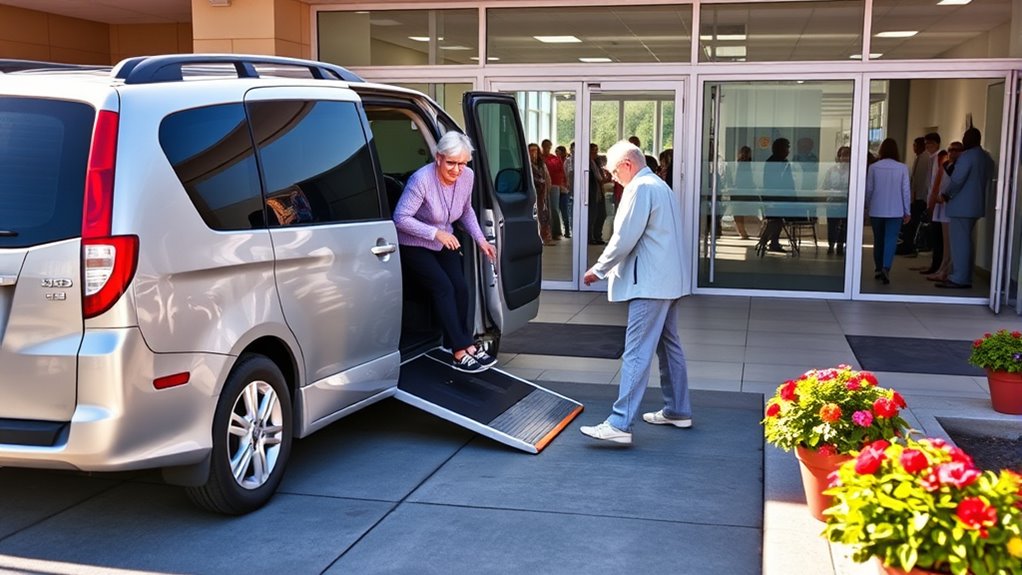
Getting to your medical appointments can sometimes be challenging, especially if you don’t have reliable transportation. Thankfully, many communities offer programs designed to help you get where you need to go, whether you rely on public transportation or need accessible options. These programs aim to reduce barriers and ensure everyone has access to healthcare, regardless of mobility or financial situation.
Public transportation services are often the backbone of these programs. Buses, trains, and transit systems may offer discounted fares or free rides for seniors, people with disabilities, or low-income individuals. When planning your trip, check if your local transit authority provides special accommodations or routes that serve healthcare facilities. Many transit agencies also have partnerships with medical providers to facilitate easier access to appointments. Be sure to ask about schedules, routes, and fare discounts, so you can plan your trip efficiently. These services are especially helpful if you don’t own a vehicle or prefer not to drive, as they expand your mobility options without the added expense or stress.
Public transit often offers discounted fares and special routes for healthcare access.
Wheelchair accessibility is a critical component of many transportation programs. If you use a wheelchair, you’ll want to confirm that the transit options available to you are fully accessible. Most modern buses and trains are equipped with ramps, lifts, and designated spaces for wheelchairs, making it easier and safer to travel. Some programs specifically focus on wheelchair-accessible transportation, providing door-to-door or curb-to-curb services tailored to your needs. These services often require advance booking, so it’s a good idea to plan ahead and familiarize yourself with how to reserve a ride. Many programs also offer training or assistance on how to use accessible features, making sure you feel comfortable and confident during your trips. Additionally, understanding the health benefits of accessible transportation can motivate more communities to invest in these vital services, ensuring better health outcomes for users.

USKITS NEMT and DOT Compliant Kit – Caregiver Transportation Kit for Wheelchair Accessible Vans, Busses and Shuttles, with Two Window Breaker Hammers for Easier Emergency Evacuation!
This kit helps meet DOT and NEMT Compliance!
As an affiliate, we earn on qualifying purchases.
As an affiliate, we earn on qualifying purchases.
Frequently Asked Questions
How Do I Qualify for Free Transportation Services?
You qualify for free transportation services if you face accessibility barriers that make it hard to get to medical appointments. Check if local volunteer programs offer ride services for seniors or individuals with disabilities. You may need to provide proof of your condition or income. Contact your healthcare provider or local social services to find specific programs in your area that can help you access these free or low-cost transportation options.
Are Transportation Services Available After Hours or on Weekends?
Think of transportation services as your trusty night owl, ready to help even when the sun’s gone down. Yes, many programs offer after-hours and weekend options, providing you with scheduling flexibility like a well-tuned clock. You can access these transportation options to guarantee you never miss essential medical appointments, regardless of the time. Just check with your specific program for availability, and they’ll help you navigate those off-hours journeys smoothly.
Can Transportation Be Arranged for Non-Medical Emergencies?
Yes, transportation can be arranged for non-medical emergencies through transportation planning services. These services often include options like emergency rides or community support programs that help you get to urgent situations outside regular medical appointments. To access this, contact your local transportation provider or social services, and they can help coordinate a safe and timely ride for non-medical emergencies, ensuring you get the help you need when it matters most.
What Documentation Is Required to Access These Programs?
To access transportation programs, you’ll need proof of residency and a physician’s note. The proof of residency confirms you live within the program’s service area, while the physician’s note verifies your medical need for transportation. Make sure to gather these documents before applying. Submit copies as required, and keep originals for your records. This documentation helps make certain your application is complete and speeds up the approval process.
How Far in Advance Should I Schedule Transportation?
Think of scheduling your transportation like planting a seed—early planning guarantees it grows smoothly. You should book your ride at least 48 hours before your appointment, so you get timely appointment reminders and avoid surprises with transportation costs. This way, you’re prepared and your journey is seamless, just like a well-tended garden. Planning ahead lets you focus on your health, not last-minute transportation worries.

Vive Gait Belt (300lbs) Transfer Belt with Handles – Medical Nursing Safety Patient Assist – Bariatric, Elderly, Handicap, Physical Therapy – PT Gate Strap Quick Release Metal Buckle, Grabbing Teeth
EASY MOVEMENT & TRANSFERS FROM A TRUSTED BRAND: Safely assist patients or loved ones with ease using our…
As an affiliate, we earn on qualifying purchases.
As an affiliate, we earn on qualifying purchases.
Conclusion
So, you’d think getting to your medical appointments would be simple, right? But sometimes, finding reliable transportation feels like an endless quest. Ironically, programs meant to help often leave you stranded in the waiting game. Still, don’t lose hope—these services exist just enough to remind you that, even in healthcare, sometimes the journey is the hardest part. Keep trying; your health’s worth the effort—even if the ride isn’t always smooth.
discounted public transit passes for seniors
As an affiliate, we earn on qualifying purchases.
As an affiliate, we earn on qualifying purchases.

EZ-ACCESS Transitions 1” Portable Self Supporting Aluminum Modular Entry Ramp
Modular entry ramp offers a versatile answer to ensure convenient mobility wherever you need it; Designed for doorways,…
As an affiliate, we earn on qualifying purchases.
As an affiliate, we earn on qualifying purchases.