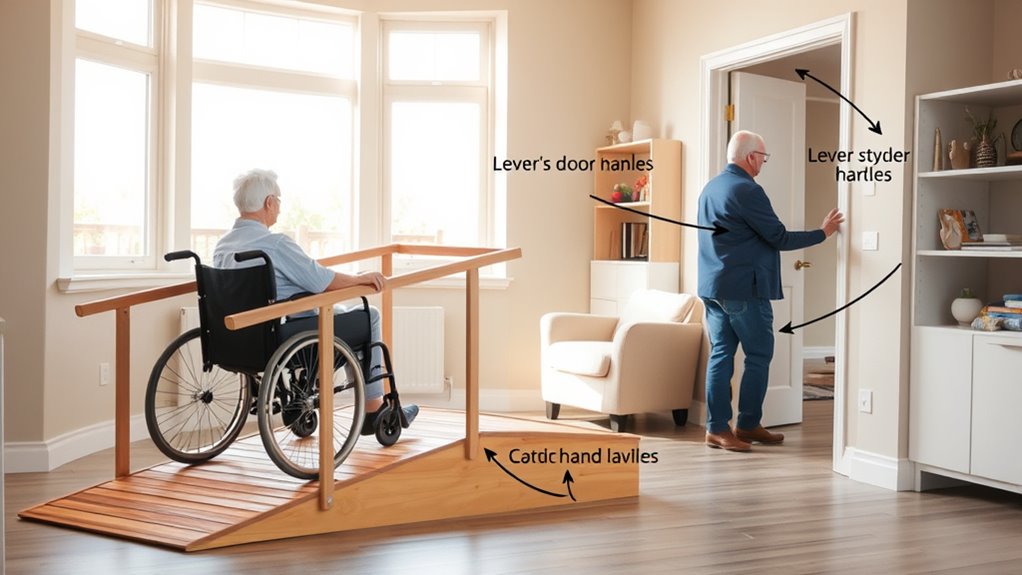

ADA basics for home care focus on ensuring that clients with disabilities can live safely, independently, and with dignity through reasonable accommodations. This includes making modifications like grab bars, widened doorways, or ramps tailored to individual needs. By complying with legal standards, you create a welcoming environment that promotes safety and respect. Understanding these requirements helps you better serve clients and avoid legal issues, and if you continue, you’ll discover more about implementing effective accommodations.
Key Takeaways
- Reasonable accommodations in home care ensure clients with disabilities can access and perform daily activities safely and independently.
- Modifications like ramps, grab bars, and widened doorways are common accommodations to improve accessibility.
- Assessing individual needs is essential to tailor appropriate accommodations for each client.
- Compliance with ADA guidelines helps prevent legal issues and demonstrates commitment to equitable care.
- Accessibility promotes client dignity, independence, and positive health outcomes in the home setting.
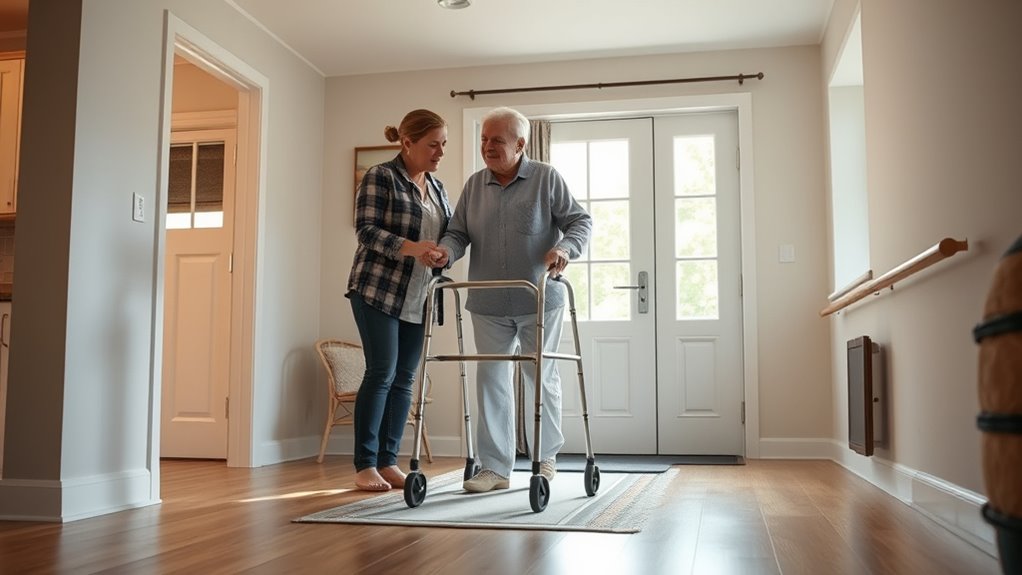
Are you familiar with the Americans with Disabilities Act (ADA) and how it applies to home care? If not, it’s important to understand that the ADA is designed to guarantee equal access and opportunities for individuals with disabilities. When providing home care, you need to take into account the ADA’s requirements for accessibility features and legal compliance. These aren’t just guidelines; they’re essential steps to make sure the environment is safe, functional, and welcoming for your clients.
In a home care setting, accessibility features are modifications or accommodations that help individuals with disabilities navigate and perform daily activities comfortably. This can include installing grab bars in bathrooms, widening doorways, or adding ramps to entrances. These features aren’t just about convenience—they’re about enabling independence and safety. By incorporating appropriate accessibility features, you help clients live more comfortably and reduce the risk of accidents. Remember, the goal is to create an environment that respects their needs and promotes dignity.
Accessibility features like grab bars, widened doorways, and ramps promote safety and independence for clients.
Legal compliance with the ADA isn’t limited to public spaces or commercial buildings. While private homes aren’t explicitly covered under all ADA provisions, if you’re providing care in a setting that interacts with the public or involves service providers, you need to be aware of the law’s mandates. Making sure your home care practices align with ADA standards can help prevent legal issues and demonstrate your commitment to providing equitable services. This might involve training staff on disability awareness or ensuring that any modifications meet current accessibility guidelines.
When planning for accessibility, it’s crucial to assess each client’s individual needs. What works for one person might not suit another. For example, some clients may need a wheelchair-accessible shower, while others might require visual or auditory cues to support their independence. Taking the time to evaluate these needs ensures that your modifications are effective and tailored. Additionally, staying informed about evolving accessibility guidelines helps you adapt your home care approach and maintain legal compliance.
Furthermore, understanding the disability rights outlined in the ADA can help you foster a more inclusive and respectful environment for your clients. By prioritizing accessibility features and adhering to ADA standards, you not only comply with legal requirements but also foster trust and positive relationships with your clients. Your proactive approach demonstrates that you value their independence and well-being, which can lead to better outcomes and higher satisfaction. Remember, making a home accessible isn’t just about meeting legal standards—it’s about empowering your clients to live their lives fully and comfortably.

TAILI Grab Bars for Bathtubs and Showers 2 Pack Suction Grab Bar, Heavy Duty Shower Handle Removable Bath Handrails for Seniors and Elderly, Bathroom Safety Grip No Drilling Waterproof,Grey
Matters need Attention: Only suitable for tiles measuring 4×4 inches or larger. For the safety of the seniors…
As an affiliate, we earn on qualifying purchases.
As an affiliate, we earn on qualifying purchases.
Frequently Asked Questions
How Do I Request an Accommodation in My Private Residence?
To request an accommodation in your private residence, start by identifying the specific home modification you need, like wheelchair ramps or grab bars. Talk to your caregiver support team or landlord about your needs and provide documentation if required. Clearly explain how the modification will improve your safety and independence. Be proactive, communicate openly, and work together to find solutions that accommodate your needs while respecting property rules.
Are There Costs Associated With Reasonable Accommodations?
Costs for reasonable accommodations vary, but you can conduct a cost evaluation to determine expenses and explore financial assistance options. You might pay out-of-pocket, seek grants, or look for government aid programs. By understanding your needs, assessing costs, and exploring available resources, you can make informed decisions about funding accommodations. This proactive approach helps you balance expenses while ensuring your home meets your accessibility needs effectively.
What Documentation Is Needed to Support My Accommodation Request?
You’ll need medical documentation or disability verification from a healthcare professional to support your accommodation request. This documentation should clearly describe your disability, how it affects your daily activities, and recommend specific accommodations. Providing detailed, up-to-date medical records helps guarantee your request is properly reviewed and approved. Be sure to include any relevant test results or statements from your healthcare provider to strengthen your case.
Can Accommodations Be Denied if They Are Too Costly?
The idea that accommodations can be denied over cost implications is a common misconception—you won’t face a decision that massive! Under the ADA, accommodations shouldn’t impose an undue financial burden or hardship. While costs are considered, they won’t automatically lead to denial if they’re too costly. Instead, the focus is on balancing the financial impact with your needs, ensuring fairness without overwhelming the provider’s resources.
How Long Does It Take to Approve a Request for Accommodation?
The approval process for a request for accommodation usually takes a few days to a few weeks, depending on the complexity of your request and the timing considerations involved. You should expect some back-and-forth during the approval process, as the employer or provider reviews your documentation and evaluates your needs. To speed things up, provide complete and clear information upfront, and stay in communication throughout the process.
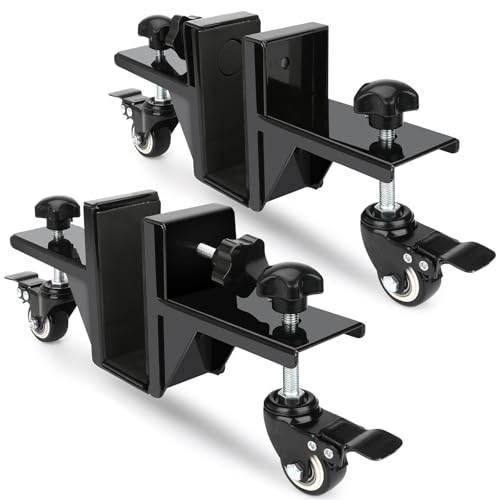
Door Installation Hardware Tool Kit for 1-10/32" and 1-30/32" Pre-Hung, Slab, and Solid Core Doors – The Single Person, Hands-Free Door Install Kit and Works Well with Heavy Doors
Widely Used: Our Adjustable Door Installation Tool Kit is perfect for installing French doors, Solid Core Doors, Pocket…
As an affiliate, we earn on qualifying purchases.
As an affiliate, we earn on qualifying purchases.
Conclusion
By understanding and implementing ADA accommodations in your home care, you’re not just making life easier—you’re transforming your space into an unstoppable fortress of accessibility! Imagine a home so accommodating that even the most complex needs are met effortlessly, making every day feel like a breeze. With these basics, you’re not just complying; you’re creating an environment so welcoming and inclusive, it could turn anyone’s world around. Get ready to revolutionize your home care game!

FACHNUO 2 Feet Portable Wheelchair Ramp, Non-Skid Aluminum Handicap Ramps with Handle, Folding Threshold Wheel Chair Ramp for Home Steps, Stairs, Entry, Threshold, Doorways, Scooter, 800LBS Capacity
⚠【2FT WHEELCHAIR RAMP】 (Unfolded Size: 24" x 29.2" x 2", Folded Size: 24" x 13.2" x 3.2", Weighs…
As an affiliate, we earn on qualifying purchases.
As an affiliate, we earn on qualifying purchases.

Aging in Place: a Practical Guide for Living in the Comfort of Home – Insights from a Physical Therapist
As an affiliate, we earn on qualifying purchases.
As an affiliate, we earn on qualifying purchases.