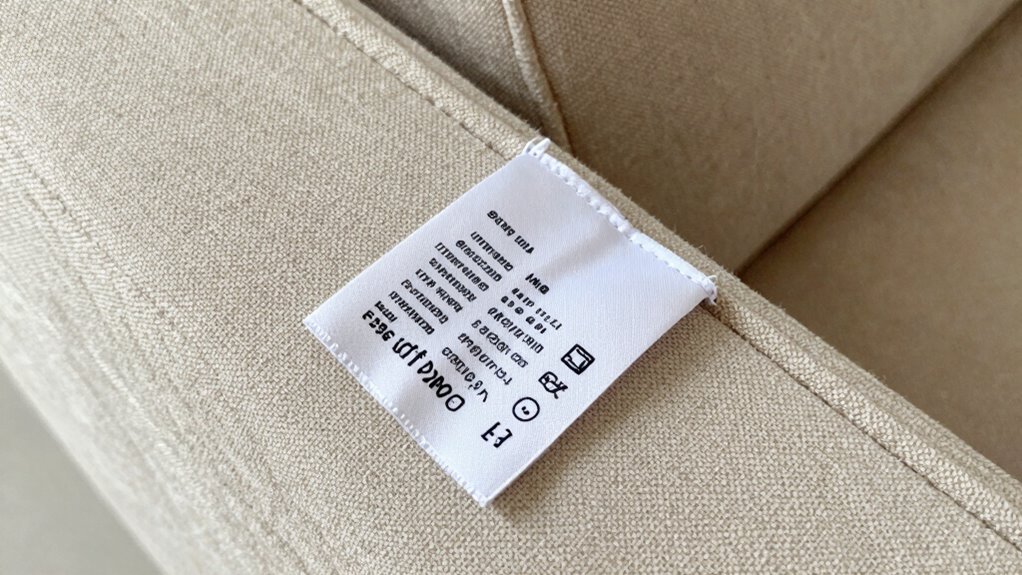

To decode furniture upholstery labels, look for the durability rating, which shows how well the fabric resists scratches, stains, and fading, and choose higher ratings for busy households. Check the cleaning codes like “W,” “S,” “WS,” or “X” to see what cleaning methods are safe—water-based, solvent, or vacuum only. Understanding fabric composition and matching labels to your lifestyle helps you select and maintain furniture confidently; keep exploring to learn more.
Key Takeaways
- Look for durability ratings indicated by symbols or codes to assess fabric longevity and suitability for your household.
- Identify cleaning codes (“W,” “S,” “WS,” “X”) to determine appropriate cleaning methods and prevent damage.
- Check fabric composition to understand environmental impact and maintenance requirements.
- Match label information with your lifestyle, considering traffic level, pets, and cleaning preferences.
- Study upholstery labels carefully during shopping to make informed, long-lasting furniture choices.
Have you ever looked at a furniture upholstery label and wondered what all those codes and numbers mean? It’s common to feel overwhelmed by the jumble of letters, symbols, and numbers, but understanding these labels is crucial for caring for your furniture properly. The first thing you should focus on is fabric durability. Many labels include a “double asterisk” or a specific code indicating how long the fabric is expected to last with regular use. This durability rating helps you gauge whether the fabric can withstand daily wear and tear in your household. For example, a higher durability rating suggests the fabric is more resistant to scratches, stains, and fading—making it ideal for high-traffic areas or homes with kids and pets. Conversely, a lower rating indicates the fabric might be better suited for occasional use or decorative purposes where it won’t face constant stress. Knowing how to interpret these durability ratings can help you make smarter choices when selecting furniture. Next, you’ll want to pay close attention to the cleaning codes on the label. These codes provide crucial information about how to clean and maintain your upholstery without causing damage. Typically, they include symbols or letters like “W,” “S,” “WS,” or “X,” each representing different cleaning methods. For example, “W” indicates that water-based cleaning solutions are safe, while “S” means only solvent-based cleaners can be used. “WS” suggests both methods are acceptable, offering more flexibility, while “X” advises against cleaning with liquids altogether, often meaning only vacuuming or light brushing is recommended. Being familiar with cleaning code symbols can help you avoid using harsh chemicals or techniques that could ruin the fabric or compromise its appearance. Understanding fabric composition can also help you select materials that align with your environmental values and lifestyle. Proper maintenance based on the fabric’s durability and cleaning instructions ensures your piece stays looking its best for years to come. When you’re shopping for new furniture, take a moment to study the label carefully. Recognize what the durability rating and cleaning codes tell you, and match those details to your lifestyle. If you have pets or children, look for higher durability ratings and cleaning codes that allow for easy spot cleaning. Additionally, being aware of sustainable fabric options can help you create a more eco-friendly home environment. If you prefer delicate fabrics, choose options with lower durability ratings but make sure you’re prepared for the specific cleaning methods they require.

Sunbrella Outdoor Fabric by The Yard | Canvas Navy | Official Sunbrella Seller | Indoor or Outdoor Upholstery Fabric for Chairs, Cushions, Drapery, Pillows, Furniture
- Official Sunbrella Seller: Authentic Sunbrella fabric by the yard
- Weather Resistant: Resists fading, mold, and mildew
- Indoor & Outdoor Use: Suitable for furniture, cushions, and more
As an affiliate, we earn on qualifying purchases.
As an affiliate, we earn on qualifying purchases.
Frequently Asked Questions
How Often Should Upholstery Labels Be Checked for Updates?
You should check upholstery labels for updates at least once a year, especially if you notice changes in the label material or if new regulations are introduced. The update frequency depends on how often manufacturers change their labeling practices or materials. Staying informed helps guarantee you’re using accurate, current information about your furniture’s care and materials, which can affect its longevity and safety. Regular checks keep you up-to-date with the latest standards.
Are There Eco-Friendly Upholstery Label Options Available?
Imagine a green leaf, symbolizing hope and freshness—eco-friendly upholstery labels do exist. You can choose sustainable fabric options with eco certifications, ensuring your furniture supports the environment. These labels often feature symbols indicating organic, recycled, or natural materials, so you know your purchase aligns with eco-conscious values. By selecting furniture with eco-certified labels, you contribute to a healthier planet, making a positive impact with every cozy, stylish piece you bring home.
Can Upholstery Labels Be Legally Mandated in All Regions?
Upholstery labels aren’t legally mandated in all regions, but regulations vary. In some areas, regulations require labels to specify label material and guarantee regulatory compliance, helping you identify fabric type and care instructions. You should check local laws to see if labels are mandatory where you live. Even if not required, labels provide valuable info for consumers, so manufacturers often include them voluntarily to promote transparency and safety.
How Do I Identify Vintage or Antique Upholstery Labels?
To identify vintage or antique upholstery labels, think of them as treasure maps guiding you through history. Look closely for faded or delicate tags, often made of paper or fabric, with handwritten or stamped info. Vintage labels usually feature intricate fonts and older manufacturer details, while antique labels might show signs of wear, hand-sewn edges, or classic symbols. Recognizing these features helps you reveal the story behind your furniture’s age.
Do Upholstery Labels Indicate Fire Safety Standards?
Yes, upholstery labels often indicate fire safety standards. They usually include information about flame retardant treatments or compliance with fire safety regulations. When you check the label, look for symbols or statements that specify fire safety standards like “Meets Federal Fire Safety Regulations” or similar wording. Ensuring label compliance helps you select safe furniture, giving you peace of mind and meeting legal requirements for fire safety.
Conclusion
By understanding the symbols, reading the care instructions, and recognizing the fabric codes, you empower yourself to care for your furniture confidently. Decoding upholstery labels helps you preserve the look, feel, and longevity of your pieces. It’s about knowing what to do, knowing what to avoid, and knowing how to keep your furniture beautiful. With this knowledge, you’ll protect your investment, extend its life, and enjoy your furniture for years to come.