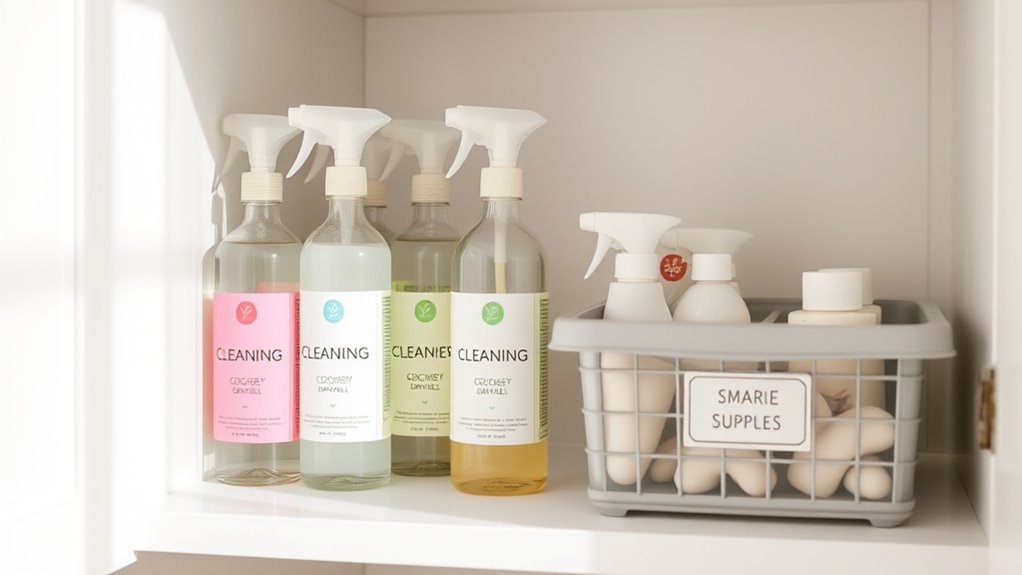

To store cleaning products safely, keep them in designated, secure areas away from food and children. Use childproof containers with tight caps and clear labels for easy identification. Regularly check for damages or leaks, and make sure items are stored on high shelves or in locked cabinets. Eco-friendly packaging is a great choice, but always verify its durability. Following these steps helps prevent accidents—continue exploring to discover more tips for safe cleaning practices.
Key Takeaways
- Store cleaning products in locked cabinets out of children’s reach and away from food items.
- Use childproof containers with safety caps and regularly check for damage or tampering.
- Label all containers clearly to ensure proper identification and handling instructions.
- Choose eco-friendly packaging that is durable, leak-proof, and environmentally sustainable.
- Follow manufacturer guidelines for safe handling, reseal caps tightly, and conduct regular safety inspections.
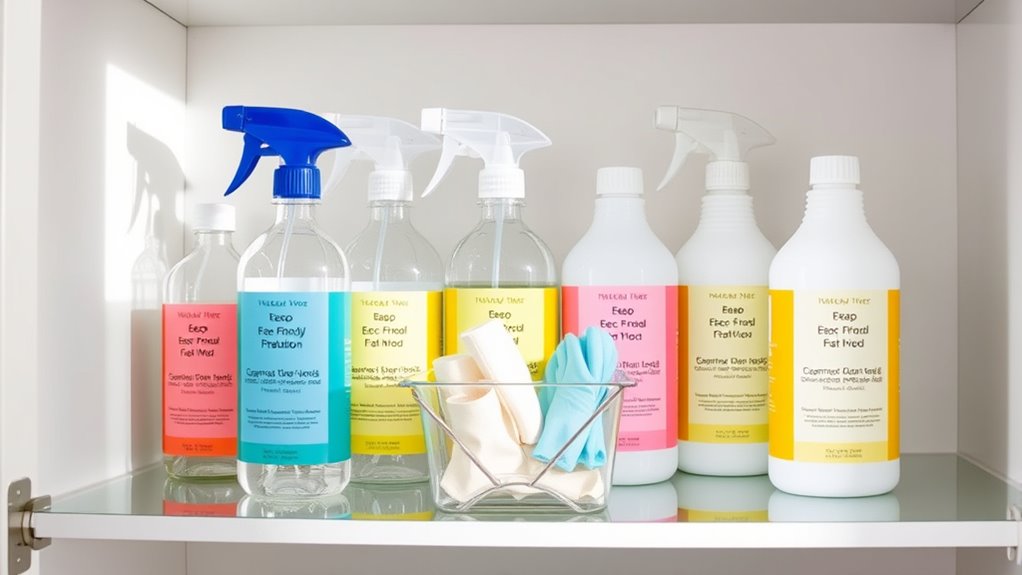
Keeping cleaning products properly stored is essential for safety and effectiveness. When you’re organizing your cleaning supplies, pay attention to how they’re packaged. Eco friendly packaging is a smart choice because it reduces environmental impact, but it also encourages you to handle products with more care. Look for bottles and containers made from recycled or biodegradable materials. These are often designed to be durable, yet environmentally conscious, helping you minimize waste while keeping your home safe. If your cleaning products come in eco friendly packaging, make sure to verify that they’re still sturdy and leak-proof, so they won’t spill or break if accidentally knocked over. Proper labeling is also important; clear labels help you quickly identify each product and prevent misuse, especially in households with children. Additionally, understanding essential oils for cleaning can enhance your natural cleaning routine and promote safer alternatives. Childproof containers are another critical aspect of safe storage. You want to ensure that your cleaning products are stored in containers that are difficult for children to open, even if they’re curious or determined. Childproof containers typically feature safety caps or locking mechanisms that require adult strength or specific actions to open. When selecting containers, choose those with tamper-evident features, so you can easily detect if someone has tampered with the product. Always store these childproof containers out of reach—preferably on high shelves or in locked cabinets—to prevent accidental ingestion or contact. Even with childproof containers, it’s best to keep cleaning products separate from food and beverages to eliminate any risk of confusion. Consistently check the condition of your containers and packaging. If you notice cracks, leaks, or damaged labels, replace or transfer the contents to a new, secure container immediately. This prevents spills and minimizes the chance of accidental exposure. Keep your cleaning supplies in a designated area, ideally a locked cabinet or storage closet, to further restrict access. When you’re using cleaning products, always follow the manufacturer’s instructions for safe handling and storage. After use, ensure caps are tightly sealed before returning containers to their storage spot. This habit prevents leaks and keeps the products effective for future cleaning tasks.

Oxalic Acid (8 lbs) 99.6% Pure – Metal & Wood Cleaning and Bleaching, Rust Removal (C2H2O4) – HDPE Container w/Resealable Child Resistant Cap
Hundreds of Home, Garden, Laboratory, Industrial, and Commercial Uses!
As an affiliate, we earn on qualifying purchases.
As an affiliate, we earn on qualifying purchases.
Frequently Asked Questions
Are Natural Cleaning Products as Effective as Chemical Ones?
Natural cleaning products can be just as effective as chemical ones, depending on the task. You might find that natural cleaning agents like vinegar or baking soda work well for everyday surfaces and mild stains. However, for heavy-duty cleaning or disinfecting, chemical effectiveness may be stronger. It’s important to choose the right product for your needs, balancing safety and cleaning power to get the best results.
How Can I Child-Proof Cleaning Product Storage?
To child-proof cleaning product storage, you should prioritize child safety by keeping products out of their reach and sight. Use high shelves with child-proof locks or store them in locked cabinets. Implement storage tips like labeling containers clearly and avoiding decanting cleaners into other bottles. Always make certain caps are tight, and never leave cleaning supplies unattended, especially when children are nearby. These steps help keep your home safe for your little ones.
What Should I Do if Someone Ingests a Cleaning Product?
Imagine your home as a castle, and a cleaning product as a hidden trap. If someone ingests it, act fast—call poison control immediately and follow their emergency procedures. Don’t induce vomiting or give anything by mouth unless instructed. Keep the person calm, and if they’re unconscious or having trouble breathing, seek emergency medical help right away. Staying calm and following these steps can help protect your castle and its inhabitants.
Are There Environmentally Friendly Cleaning Products Available?
Yes, eco-friendly alternatives are widely available. You can choose cleaning products made from natural ingredients that are safe for the environment. Look for labels indicating biodegradable packaging, which minimizes waste and pollution. These products often lack harsh chemicals, making them safer for you and nature. By opting for eco-friendly options, you help reduce your carbon footprint while maintaining a clean home. Always read labels to guarantee they meet your environmental standards.
How Often Should Cleaning Products Be Replaced?
You should check cleaning products regularly to guarantee freshness. Generally, replace them when they reach their product expiration date or if their effectiveness diminishes. Storage lifespan varies, but most products last about a year if stored properly in a cool, dry place. Keep an eye out for changes in color, smell, or texture, and don’t hesitate to discard and replace products to keep cleaning safe and effective.

LISSIMO Metal Storage Cabinet,Garage Storage Cabinet with 2 Lockable Doors and 2 Adjustable Shelves, 36'' Steel Tool Cabinet for Garage, Office, Home, School(White)
【Large Storage Space with Adjustable Shelf】The metal cabinet with 2 adjustable shelves offer the flexibility to customize the…
As an affiliate, we earn on qualifying purchases.
As an affiliate, we earn on qualifying purchases.
Conclusion
By choosing safe cleaning products and storing them properly, you’re not just protecting your home—you’re safeguarding your entire world. A small mistake could turn your sanctuary into a hazardous battleground. Think of it like wielding a sword—without proper care, you risk cutting more than just grime. So, take these precautions seriously, because your safety and peace of mind are worth more than all the sparkling countertops in the universe. Stay vigilant, stay safe!

OCMML 8oz Clear Glass Spray Bottles with Silicone Sleeve–Refillable Spray Bottles for Cleaning Solutions,Hair,Plants&Essential Oils–Leakproof,Adjustable Nozzle,Reusable,Eco-Friendly (1 Pack)
Premium Glass & Silicone Sleeve Protection:Crafted from high-clarity, durable glass, these 8 oz glass spray bottles provide a…
As an affiliate, we earn on qualifying purchases.
As an affiliate, we earn on qualifying purchases.

44 Pack Labels for Storage Bins, 3×5 Inches Index Card Holder Organizer, Clear Adhesive Pockets, Plastic Label Holders for Tote Library Card Bins Box Drawer Classroom Organization
📑【For 3×5 Inch Cards】The outer size of clear adhesive pockets is 3.7 x 5.3 inch, specifically designed to…
As an affiliate, we earn on qualifying purchases.
As an affiliate, we earn on qualifying purchases.