

Mind–body approaches are backed by research showing they effectively reduce stress and improve overall health. Techniques like deep breathing, meditation, and guided imagery activate the parasympathetic nervous system, lower cortisol levels, and boost emotional resilience. They help manage physical responses like muscle tension and high blood pressure while supporting better sleep and mood. Incorporating these practices into your daily routine can create lasting benefits. Stay with us to explore how these strategies can make a real difference in your well-being.
Key Takeaways
- Research supports that mind–body techniques effectively reduce stress and improve emotional resilience.
- Practices like deep breathing and meditation lower cortisol levels and enhance overall well-being.
- Regular use of these methods can improve sleep, mood, and physical health markers such as blood pressure.
- Evidence indicates that mind–body approaches strengthen the mind–body connection, promoting better health management.
- These techniques are accessible, requiring no special equipment, and yield cumulative health benefits over time.
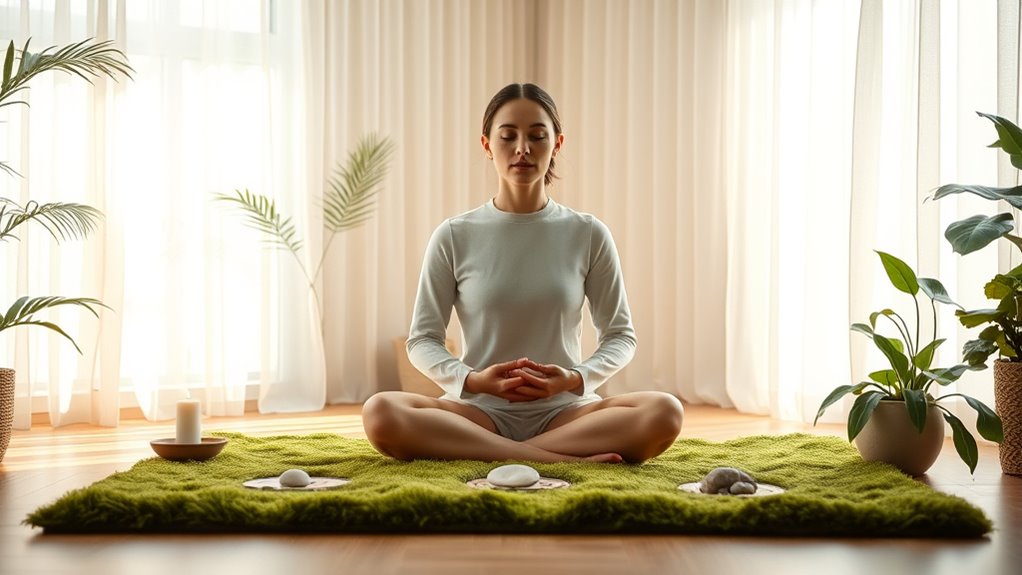
Mind–body approaches are techniques that recognize the connection between mental and physical health, emphasizing that your thoughts, emotions, and attitudes can influence your overall well-being. These methods often focus on reducing stress, which is a common factor affecting both mental and physical health. When stress levels rise, your body responds with increased heart rate, muscle tension, and hormonal shifts, all of which can lead to health issues over time. By practicing stress management strategies through mind–body techniques, you can help mitigate these effects and promote a sense of calm and balance.
One of the most effective ways to support stress management is through relaxation techniques. These include practices like deep breathing, progressive muscle relaxation, meditation, and guided imagery. Deep breathing exercises, for instance, activate your parasympathetic nervous system, which helps slow your heart rate and calm your mind. When you consciously focus on slow, deep breaths, you signal to your body that it’s safe to relax, reducing the physical symptoms of stress. Progressive muscle relaxation involves tensing and then relaxing different muscle groups, which can ease physical tension and foster mental tranquility. Meditation, especially mindfulness meditation, encourages you to focus on the present moment, helping you detach from stress-inducing thoughts and emotions. Guided imagery involves visualizing peaceful scenes to promote relaxation, making it easier to let go of worries. Incorporating mind–body techniques into your daily routine can enhance your overall resilience against stress.
These relaxation techniques are backed by research showing their effectiveness in managing stress. Regular practice can lower cortisol levels, your body’s primary stress hormone, and improve overall emotional resilience. As you incorporate these techniques into your daily routine, you may notice improved sleep, better mood, and enhanced focus. Mind–body approaches don’t require special equipment or extensive time commitments, making them accessible options for anyone seeking stress relief. Even a few minutes of mindful breathing or muscle relaxation can produce noticeable benefits.
Furthermore, engaging in these techniques can enhance your body’s natural ability to recover from stressful situations. Over time, your mind–body connection strengthens, making it easier to stay calm amidst everyday challenges. As you become more adept at managing stress, you may also find that your physical health improves, with reduced headaches, lower blood pressure, and a stronger immune response. These approaches empower you to take an active role in your mental and physical health, creating a holistic pathway toward well-being. Ultimately, integrating stress management and relaxation techniques into your routine can foster a more balanced, healthier life, highlighting the profound impact your mind has on your body and vice versa.

Mindsight 'Original Breathing Buddha' Guided Visual Meditation | 3 Modes to Slow Your Breathing & Calm Your Mind | Stress & Anxiety Relief | Wellness Gift | Adults, Kids, Classrooms | USB Rechargeable
- Purpose: Calm, focus, and promote peaceful sleep
- Usage: Three breathing modes and night light
- Breathing Modes: 4/7/8, 5/5, 4/4/4 box breathing
As an affiliate, we earn on qualifying purchases.
As an affiliate, we earn on qualifying purchases.
Frequently Asked Questions
What Are the Main Differences Between Mind–Body Approaches and Traditional Medicine?
You’ll notice that mind–body approaches differ from traditional medicine because they focus on a holistic perspective, considering your mental, emotional, and physical health together. They often involve treatment mechanisms like meditation, yoga, or relaxation techniques to promote overall well-being. Unlike traditional medicine, which tends to target specific symptoms or diseases, mind–body methods aim to restore balance and support your body’s natural healing processes.
How Do Mind–Body Techniques Impact Mental Health Conditions?
You might think mind–body techniques aren’t effective, but they actually promote holistic healing and stress reduction, which markedly improve mental health conditions. When you practice methods like meditation, yoga, or tai chi, you help calm your mind, reduce anxiety, and manage depression. These approaches work by addressing emotional and physical factors, supporting your overall well-being. Over time, they can lead to lasting improvements in mental health, complementing traditional treatments.
Are There Specific Populations That Benefit Most From These Approaches?
You’ll find that elderly populations and chronic illness groups benefit most from mind–body approaches. These techniques help reduce stress, improve mood, and enhance overall well-being, making them especially effective for managing age-related or long-term health challenges. By actively engaging in practices like meditation or yoga, you can experience better mental clarity and physical comfort, tailored to meet the unique needs of these groups.
What Are the Potential Risks or Side Effects of Mind–Body Practices?
Did you know about 5% of people experience adverse reactions to mind–body practices? You should be aware of potential risks, such as adverse reactions like dizziness or anxiety, especially if you have underlying health conditions. Contraindications include pregnancy or certain medical issues. Always consult a healthcare professional before starting new practices to minimize risks and guarantee safety, because, although beneficial, these approaches aren’t risk-free.
How Can One Effectively Integrate Mind–Body Methods Into Daily Life?
To effectively integrate mind–body methods into your daily routine, start with small, consistent habits like morning meditation or deep breathing during breaks. Incorporate these practices into your existing schedule to promote habit formation. Set reminders, create a dedicated space, and stay patient as routines develop. Over time, these mindful activities become natural parts of your day, helping you manage stress, improve focus, and enhance overall well-being.
Conclusion
You hold the key to your well-being, much like a lighthouse guiding ships through storms. Mind–body approaches act as your beacon, illuminating the path toward balance amidst life’s chaos. By embracing these practices, you nurture the connection between your mind and body, transforming challenges into opportunities for growth. Remember, the lighthouse’s steady light reminds you that even in darkness, clarity and health are within your reach—if you choose to follow the guiding beam.