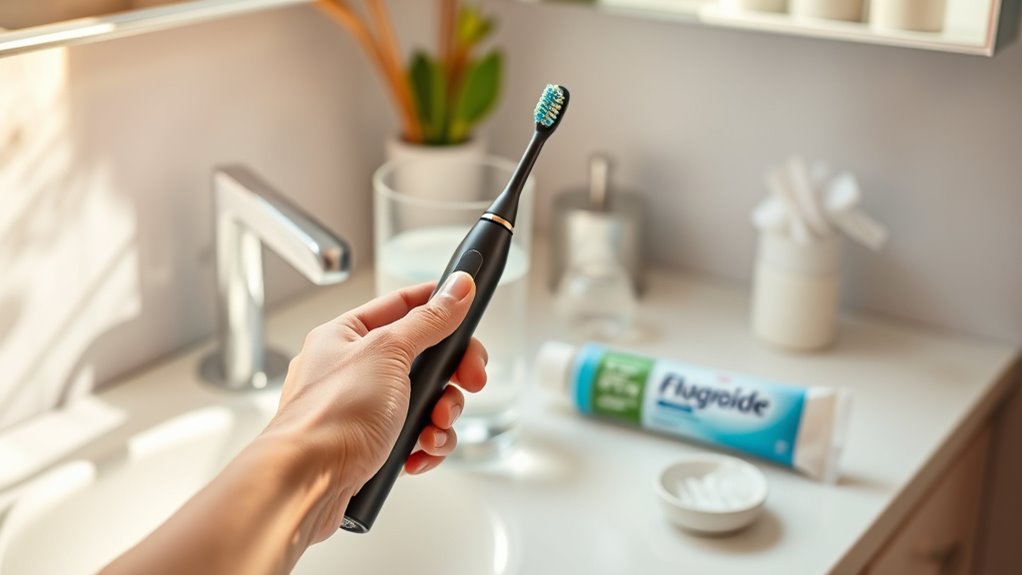

To care for your oral health at home, brush twice daily with fluoride toothpaste, floss daily to remove plaque, and use mouthwash suited to your needs. Regular professional checkups are essential to catch issues early. Brighten your smile with teeth whitening and stay motivated by maintaining good habits. Consistent effort keeps your mouth healthy and beautiful. Keep going, and you’ll discover more tips to support your long-term dental well-being.
Key Takeaways
- Brush teeth at least twice daily with fluoride toothpaste for two minutes each session.
- Floss daily to remove plaque and food particles between teeth.
- Use mouthwash suited to your dental needs to reduce plaque and freshen breath.
- Incorporate teeth whitening practices to motivate consistent oral hygiene habits.
- Schedule regular dental checkups for early detection and professional care.
Maintaining good oral health at home is essential for preventing dental problems and keeping your smile healthy. One of the ways you can do this is by incorporating effective practices like teeth whitening and understanding the mouthwash benefits. Teeth whitening isn’t just about aesthetics; it also encourages you to stay committed to your oral hygiene routine. When your teeth are brighter, you’re more likely to brush and floss regularly to maintain that shine. Plus, choosing a good teeth whitening product or treatment can boost your confidence and motivate you to keep your mouth in top shape. Remember that over-the-counter whitening kits or professional treatments can help remove surface stains caused by coffee, tea, or smoking, but they work best when combined with daily habits like brushing and flossing.
Good oral hygiene includes teeth whitening and daily brushing for a healthier, brighter smile.
Speaking of daily habits, mouthwash benefits play a critical role in your at-home dental care routine. Mouthwash can reach areas that brushing and flossing might miss, helping to reduce plaque buildup and freshen your breath. When selecting a mouthwash, look for options that contain fluoride, as this ingredient strengthens your enamel and helps prevent cavities. Some mouthwashes also have antibacterial properties, which help combat germs that cause bad breath, plaque, and gum disease. Using mouthwash consistently after brushing can enhance your oral hygiene by reducing bacteria and promoting a healthier mouth environment. It’s a simple step that can make a noticeable difference in your overall dental health.
In addition to using teeth whitening products and mouthwash, maintaining a consistent routine of brushing at least twice a day for two minutes each time is essential. Using a fluoride toothpaste ensures your teeth are protected against decay. Flossing daily is equally important because it removes plaque and food particles between your teeth where a toothbrush can’t reach. If you’re unsure about which mouthwash benefits suit your needs best, consult your dentist for personalized recommendations. They can guide you toward products that match your dental health status, whether you need cavity protection, gum disease prevention, or fresh breath.
Lastly, don’t forget that regular dental checkups are key to catching issues early and maintaining your oral health at home. Combining professional care with your daily routine of teeth whitening, mouthwash use, and proper brushing and flossing will help you enjoy a healthy, beautiful smile for years to come. Consistency, along with informed choices, is your best defense against dental problems and keeps your mouth functioning at its best. Additionally, understanding the benefits of mouthwash can help you select the right product for your specific needs.

Colgate Cavity Protection Fluoride Toothpaste, Mint, 6 Pack, 6 oz
- Pack Size: 6 tubes of 6 oz each
- Cavity Protection: Fights cavities effectively
- Deep Cleaning: Thoroughly cleans teeth
As an affiliate, we earn on qualifying purchases.
As an affiliate, we earn on qualifying purchases.
Frequently Asked Questions
How Often Should I Replace My Toothbrush at Home?
You should replace your toothbrush every three to four months, as part of proper toothbrush lifespan and replacement frequency. Over time, the bristles wear out, reducing effectiveness in cleaning your teeth and gums. If you notice frayed or bent bristles sooner, swap it out earlier. Regular replacement helps prevent bacteria buildup and maintains good oral hygiene. Keep track of your replacement schedule to guarantee your toothbrush works effectively.
What Are Natural Remedies for Sensitive Teeth?
You can try natural remedies like applying a paste of baking soda and water to reduce teeth sensitivity. Rinsing with salt water can also soothe your gums. Using a desensitizing toothpaste with natural ingredients like aloe vera or coconut oil may help. Avoid acidic foods, and maintain good oral hygiene. These natural remedies can gradually lessen your teeth sensitivity, offering relief without harsh chemicals.
Can Diet Affect My Oral Health at Home?
Your diet can dramatically impact your oral health, like a tiny spark igniting a wildfire. Eating sugary snacks fuels bacteria that cause cavities and gum disease, while acidic drinks erode your enamel. What you consume at home shapes your smile’s future, so choose nutrient-rich foods, limit sugary treats, and stay hydrated. Your diet impact is powerful—nurture your teeth daily to keep them strong and healthy for years to come.
How Do I Properly Floss to Prevent Gum Disease?
To properly floss and prevent gum disease, you should use correct flossing techniques. Gently slide the floss between your teeth, curving it around each tooth in a C-shape, and move it up and down to remove plaque. Be sure to floss daily, especially near the gumline. Consistent flossing helps prevent gum disease by removing debris and bacteria, keeping your gums healthy and reducing inflammation.
Are There Specific Home Treatments for Bad Breath?
Think of your mouth as a garden, and halitosis remedies as the gentle rain that refreshes it. To combat bad breath, try mouth fresheners like sugar-free gum or sprays after meals, and incorporate good oral hygiene practices. Regular brushing, flossing, and tongue cleaning help reduce bacteria. Using natural remedies like rinsing with hydrogen peroxide diluted in water or herbal teas can also keep halitosis at bay and keep your breath fresh.
Conclusion
Taking care of your oral health at home is essential. Did you know that brushing twice a day reduces your risk of cavities by 40%? By sticking to a consistent routine, you can keep your smile healthy and bright. Remember to floss daily and visit your dentist regularly. Small daily habits make a big difference—so stay committed and enjoy the confidence that comes with a healthy, beautiful smile.