To prepare your care home for hurricanes and floods, develop a clear emergency plan that includes staff training, resident support, and communication strategies. Identify safe shelter areas, stockpile essential supplies, and check that emergency equipment is operational. Regular drills and facility upgrades enhance resilience, minimizing chaos during severe weather. Ensuring coordinated response efforts and reliable communication can protect everyone involved. Keep exploring for more tips on how to stay prepared and resilient in emergencies.

Turn quiet afternoons into listening time
- Thousands of audiobooks, podcasts and originals
- Listen on your phone, tablet or Echo — also offline
- Cancel anytime
Key Takeaways
- Develop comprehensive emergency plans including evacuation routes, shelter areas, and communication protocols tailored for hurricanes and floods.
- Stockpile essential supplies like food, water, medications, and protective gear, and ensure emergency equipment is fully operational.
- Train staff regularly on response procedures, resident support, and the use of emergency equipment through drills and practical exercises.
- Establish multiple communication channels and maintain updated contact lists for staff, residents, and emergency services.
- Incorporate facility upfitting and resilience measures to enhance safety, support response efforts, and minimize chaos during storms.
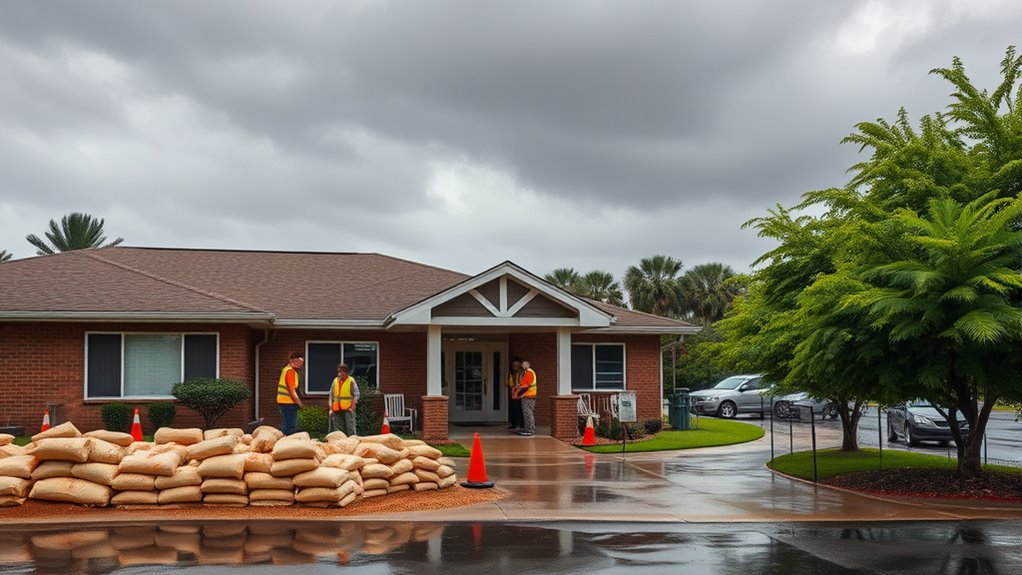
When a hurricane or flood threatens, care homes must act swiftly to protect residents and staff. Rapid response hinges on effective emergency communication, clear procedures, and well-trained personnel. You need to make certain that everyone understands their roles in an emergency, which starts with thorough staff training. Regular drills simulate real-life scenarios, helping staff become familiar with evacuation routes, shelter-in-place protocols, and emergency supplies. This preparation minimizes chaos and confusion when a storm is imminent, ensuring actions are swift and coordinated. Incorporating upfitting fundamentals into your safety plans can enhance your facility’s resilience by ensuring that emergency equipment and modifications support effective response efforts.
Emergency communication is the backbone of your preparedness plan. You should establish multiple channels—such as phone trees, text alerts, loudspeakers, and email notifications—to reach staff, residents, and families quickly. In a crisis, reliable communication can be the difference between a safe evacuation and dangerous delays. Keep contact lists updated regularly, and verify that staff know how to access emergency information at all times. It’s equally important to coordinate with local emergency services and public agencies so you can receive timely alerts and instructions, reducing the risk of misinformation spreading within your care home.
Staff training should cover not only the technical aspects of emergency response but also how to handle residents’ specific needs during a disaster. Many residents may require assistance with mobility, medication, or communication. Your team must be equipped to provide support while maintaining safety and dignity. Training sessions should include practical exercises like evacuations, use of emergency equipment, and first aid. Reinforcing these skills periodically ensures staff remain confident and prepared. Assigning clear roles during an emergency—such as designated evacuation coordinators or communication leaders—further streamlines your response.
Another crucial aspect of your preparedness involves pre-storm planning. You need to identify the safest areas within your facility where residents can shelter if evacuation isn’t immediately possible. Stockpile essential supplies, including food, water, medications, and protective gear, and verify that all equipment is in working order. Regularly review and update your emergency plans, incorporating lessons learned from previous drills or actual emergencies. This proactive approach reduces panic and delays, enabling your team to act decisively.
care home emergency preparedness kit
As an affiliate, we earn on qualifying purchases.
As an affiliate, we earn on qualifying purchases.
Frequently Asked Questions
How Often Should Emergency Drills Be Conducted in Care Homes?
You should conduct emergency drills at least twice a year in care homes. Regular drills promote community engagement and guarantee staff are prepared for hurricanes and floods. These exercises help identify gaps in your plan, improve response times, and boost staff wellness by reducing anxiety during actual emergencies. Consistent practice keeps everyone alert, confident, and ready to act swiftly, ultimately safeguarding residents and staff during severe weather events.
What Are the Key Communication Protocols During a Storm?
Did you know that effective emergency communication can reduce response time by up to 30%? During a storm, you should establish clear communication protocols, including emergency alerts and designated contact points. Staff coordination is essential; make certain everyone knows their roles and updates are shared promptly. Keep lines open, use reliable communication tools, and verify understanding regularly to guarantee everyone’s safety and swift action during the storm.
How Can Care Homes Ensure Staff Are Adequately Trained for Emergencies?
You can guarantee staff are adequately trained for emergencies by providing regular staff training sessions focused on emergency protocols. Use real-life scenarios to practice responses, and update training materials frequently to reflect current procedures. Encourage open communication, ask for feedback, and conduct drills to reinforce skills. By prioritizing ongoing education, you boost staff confidence and preparedness, ensuring everyone knows their roles during a crisis.
What Special Equipment Is Recommended for Flood Preparedness?
You should equip your care home with flood barriers to prevent water ingress and protect residents’ safety. Additionally, install emergency lighting to guarantee visibility during power outages caused by flooding. Regularly inspect and maintain these items to ensure they’re functional when needed. Having these tools in place helps you respond swiftly, minimizes damage, and keeps residents safe during flood emergencies.
How Can Family Members Stay Informed During a Hurricane or Flood?
You can stay informed during a hurricane or flood by signing up for community notification systems, which send alerts directly to your phone or email. Regularly check trusted news sources and official updates from local authorities. Make sure your family communication plan is in place, so you know how to reach loved ones quickly. Staying connected and aware helps you respond promptly and keeps everyone safe during emergencies.
Conclusion
Preparing your care home for hurricanes and floods might seem overwhelming, but staying proactive can make all the difference. By having plans in place, keeping supplies ready, and ensuring staff are trained, you protect both residents and staff. Remember, isn’t it worth the effort to keep everyone safe and secure? Don’t wait until the storm hits—take action now so you can face any weather with confidence and peace of mind.
Cold & flu season Picks
humidifiers
As an affiliate, we earn on qualifying purchases.