
To guarantee safety with bed rails, start by verifying proper installation according to the manufacturer’s instructions, making sure all parts are secure and snug against the mattress. Choose rails with rounded edges and no gaps to prevent injuries or entrapment. Regularly check for wear, damage, or signs of active chewing. Position the rails carefully to balance safety and accessibility. Proper setup and vigilance are key—stay tuned to learn more about safe practices to keep your child protected.
Key Takeaways
- Ensure bed rails are compatible with your mattress and bed frame before installation.
- Securely attach all parts, checking for tight fit and stability to prevent wobbling or gaps.
- Choose rails with rounded edges, smooth surfaces, and proper height to prevent falls and injuries.
- Regularly inspect for wear, damage, or signs of chewing to maintain safety.
- Supervise children using bed rails and teach safe ways to get in and out of bed.

Have you ever worried about falling out of bed during the night? If you’re caring for a child, especially a young one who’s still mastering coordination, this concern becomes even more pressing. Bed rails can provide a sense of security and help prevent accidental falls, but it’s vital to prioritize child safety when choosing and installing them. Proper installation tips are essential to guarantee the rails serve their purpose without creating additional hazards. Before you set up, always check that the bed rails are compatible with your mattress and bed frame. Most rails come with specific guidelines about fit and installation, so reading the manufacturer’s instructions carefully is a must. Secure attachment is key; loose rails can become a safety risk, so make sure all clamps, screws, and brackets are tight and correctly positioned. When installing, you want the rail to be snug against the mattress, with no gaps large enough for a child to slip through or get trapped in. It’s a good idea to test the stability of the rail once installed by gently applying pressure and ensuring it doesn’t wobble or shift. Ensuring the proper fit and stability of the bed rail is crucial for safety and effectiveness.
Child safety doesn’t end with installation, though. Consider the height of the rail—ideally, it should be high enough to prevent falls but not so high that it’s difficult for your child to get in and out of bed safely. Rounded edges and smooth surfaces are also important to avoid scratches or cuts. If the bed rail has a fabric cover or padding, make sure it’s securely attached and free of tears that could pose a choking hazard. Regularly inspect the rails for signs of wear or damage, especially if your child is particularly active or tends to chew on the edges.
It’s also smart to think about the overall bed setup. Position the bed away from windows, cords, or furniture that could cause injury if your child climbs or falls. If your child is very young, consider a bed rail with additional features like a mesh side panel for visibility and ventilation. Remember, the goal is to minimize risks while allowing your child to sleep comfortably and securely. Always supervise your child’s use of bed rails and teach them how to get in and out of bed carefully. When installed correctly and used thoughtfully, bed rails become a reliable safety measure that can give you peace of mind, helping your little one rest safely through the night.
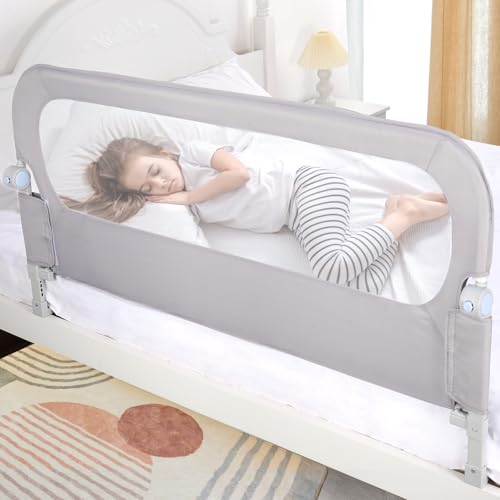
NUTIKAS Baby Bed Rail Guard for Toddlers – 47" Toddler Bed Side Rails for Twin, Full, Queen Bunk Size Bed Swing Down Bedrail Extral Tall Child Safety Side Railing Guards for Kids
Swing Down Bed Rail: The flip down feature is cool so your child can climb in and out.Putting…
As an affiliate, we earn on qualifying purchases.
As an affiliate, we earn on qualifying purchases.
Frequently Asked Questions
Are Bed Rails Suitable for All Age Groups?
Bed rails aren’t suitable for all age groups. For children, they enhance child safety by preventing falls, but they can pose risks if not used properly. For adults with mobility issues, bed rails offer support and help with repositioning. However, for healthy adults, they might be unnecessary or even unsafe. Always consider individual needs, ensuring the bed rails promote safety without creating additional hazards for either children or adults.
How Do I Install Bed Rails Securely?
Installing bed rails securely is like building a sturdy bridge—you need a solid foundation. First, choose the right bed rail types for your bed frame. Follow the manufacturer’s installation tips closely, ensuring all brackets and screws are tightly fastened. Check for stability by gently testing the rails once installed. Proper installation not only keeps you safe but also gives you peace of mind, knowing your bed rails are securely in place.
Can Bed Rails Be Used With Adjustable Beds?
Yes, you can use bed rails with adjustable beds, but you need to verify for compatibility. Look for adjustable bed-compatible rails designed to fit various bed configurations. Some bed rail models have features that allow for secure attachment regardless of the bed’s position. Always verify the specific bed rail’s instructions and ensure they accommodate different bed configurations to keep you safe and secure when adjusting your bed.
What Are the Potential Risks of Using Bed Rails?
Using bed rails is like building a fortress around your bed, offering safety but also potential pitfalls. You face fall hazards if rails aren’t properly secured or if you try to climb over them. Entrapment risks exist if gaps are too wide, trapping limbs or even your head. Always make certain rails are correctly installed, and regularly check for loose parts to prevent accidents and keep your sleep environment safe.
Are There Alternative Safety Options to Bed Rails?
Yes, there are bed rail alternatives and safety device options you can consider. You might use mattress safety straps, bed wedge cushions, or guard rails designed specifically for safety without the risks associated with traditional bed rails. These options provide support and prevent falls while allowing easier access and mobility. Always evaluate each safety device option to ascertain it suits your needs and promotes a safe sleeping environment.
NUTIKAS Baby Bed Rail Guard for Toddlers – 47" Toddler Bed Side Rails for Twin, Full, Queen Bunk Size Bed Swing Down Bedrail Extral Tall Child Safety Side Railing Guards for Kids
Swing Down Bed Rail: The flip down feature is cool so your child can climb in and out.Putting…
As an affiliate, we earn on qualifying purchases.
As an affiliate, we earn on qualifying purchases.
Conclusion
Think of bed rails as guardians standing watch over your loved ones, symbolizing safety and reassurance. They’re like gentle shields, protecting dreams from falling into the chaos of the night. With careful consideration, you create a fortress of comfort, where trust and security reside. By choosing wisely, you turn your bed into a haven—where peace of mind is the true champion and safety is always within reach, cradling your loved ones in gentle protection.
NUTIKAS Baby Bed Rail Guard for Toddlers – 47" Toddler Bed Side Rails for Twin, Full, Queen Bunk Size Bed Swing Down Bedrail Extral Tall Child Safety Side Railing Guards for Kids
Swing Down Bed Rail: The flip down feature is cool so your child can climb in and out.Putting…
As an affiliate, we earn on qualifying purchases.
As an affiliate, we earn on qualifying purchases.

Surface Mount Bed Rail Brackets – Secure Fit, Easy Installation Metal Brackets for Wood Frame – DIY-Friendly Durable Bed Support Tool – Ideal Furniture Hardware for Home Improvement Projects
Strong Bed Support: Our bed rail metal corner brackets ensure secure, lasting connections between rails and headboards; perfect…
As an affiliate, we earn on qualifying purchases.
As an affiliate, we earn on qualifying purchases.