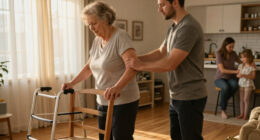
To set up your bedroom for safe transfers, make sure your bed height is adjustable so your feet rest flat on the floor. Keep pathways clear of clutter, cords, and rugs that may cause trips, and use non-slip mats for added safety. Install good lighting, such as bedside lamps or nightlights, to improve visibility. Place furniture close but stable, and add grab bars near the bed for support. Making these changes can greatly reduce fall risk and boost your confidence during transfers. Keep exploring for more helpful tips.

Turn quiet afternoons into listening time
- Thousands of audiobooks, podcasts and originals
- Listen on your phone, tablet or Echo — also offline
- Cancel anytime
Key Takeaways
- Adjust bed height to foot level when seated for easier transfers and stability.
- Keep pathways clear and furniture arranged to facilitate safe movement and use of mobility aids.
- Use non-slip rugs and maintain a clean, level floor to prevent slips and trips.
- Install bright, even lighting and nightlights to improve visibility during transfers.
- Regularly reassess and modify the environment to adapt to changing needs and ensure ongoing safety.
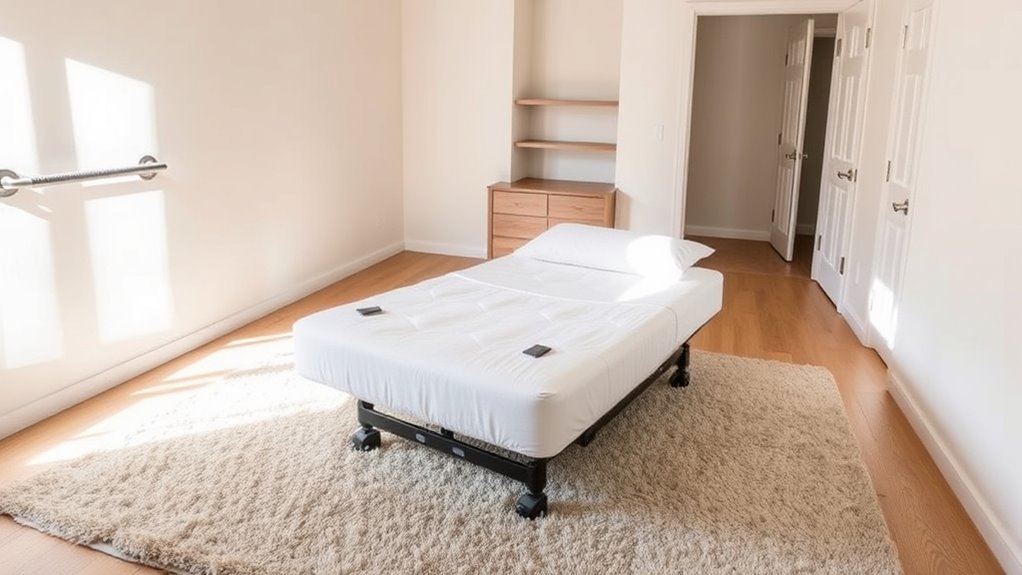
Creating a safe bedroom environment is essential for smooth and secure transfers, especially if you or a loved one have mobility challenges. One of the first steps is to focus on bed height adjustment. When the bed is at the proper height, it makes getting in and out easier and reduces the risk of falls or strains. Ideally, the bed should be high enough to allow your feet to rest flat on the floor when seated, but not so high that you struggle to sit or rise comfortably. Adjustable beds or beds with removable legs can help you find that perfect height, ensuring stability and ease during transfers. When you set the bed height correctly, you minimize the effort needed to move between the bed and wheelchair or walking aid, making the process safer and less tiring.
Proper bed height reduces effort and risk during transfers, making mobility easier and safer.
Next, your furniture arrangement plays a crucial role in creating a safe space for transfers. You want to keep the pathway clear of clutter, rugs, or cords that could cause trips or slips. Position your furniture so that there’s enough space around the bed for movement and for using mobility aids. For example, place a chair or bedside table within easy reach but not in a location that obstructs your path. Keep frequently used items within arm’s reach to avoid unnecessary stretching or reaching that could lead to imbalance. Consider placing a sturdy grab bar or handrail near the bed to provide additional support during transfers. Ensure that the furniture is stable and secure; avoid furniture that wobbles or shifts when leaned on. Additionally, placing a non-slip mat under any rugs or on the floor can prevent slipping accidents during transfers.
Lighting is another vital aspect of furniture arrangement. Bright, even lighting reduces shadows and helps you see clearly, making transfers safer. Use bedside lamps or wall-mounted lights to eliminate dark corners or areas that could obscure obstacles. If your mobility challenges include poor vision, consider installing motion-activated lights or nightlights to provide continuous illumination at night.
Finally, regularly reassess your bedroom setup as your needs evolve. What works today might not be suitable tomorrow, so stay attentive to any difficulties you encounter during transfers. Adjust furniture placement, bed height, or lighting as needed to maintain a safe environment. By carefully managing bed height adjustment and furniture arrangement, you create a more accessible, secure space that supports independence and reduces the risk of injury during transfers.
adjustable bed for mobility assistance
As an affiliate, we earn on qualifying purchases.
As an affiliate, we earn on qualifying purchases.
Frequently Asked Questions
What Are the Best Types of Beds for Safe Transfers?
The best beds for safe transfers are those with adjustable height, allowing you to set the bed to a comfortable level for transferring. Look for beds that accommodate transfer aids like grab bars or transfer boards, making movement easier and safer. A bed with a stable frame and low lip also reduces the risk of falls, ensuring you can transfer securely with less effort and increased confidence.
How Can I Improve Bedroom Lighting for Safety?
You can improve your bedroom lighting for safety by installing soft, warm lights to enhance nighttime visibility without causing glare. Use bedside lamps with adjustable brightness and consider motion-sensor lights for quick access during the night. Keep pathways well-lit and free of obstacles to prevent accidents. These adjustments help you see clearly, reduce glare, and navigate safely, making nighttime transfers easier and more secure.
Are There Specific Mattress Heights Recommended for Transfers?
For safer transfers, choose a mattress with a transfer height around 20-23 inches, making it easier to sit and stand. Opt for a medium firmness mattress to provide adequate support without being too soft or hard. This height allows you to use your legs efficiently and reduces fall risk. Ensuring the mattress is at the right height and firmness can substantially improve your safety during transfers.
What Safety Accessories Can Assist With Transfers?
You can enhance safety during transfers by using transfer aids like grab bars, transfer belts, and slide sheets. Safety straps are also helpful to secure your position and prevent falls. These accessories provide stability and support, making transfers smoother and safer. Always make certain they’re properly installed and used correctly. Combining transfer aids with good body mechanics reduces injury risk and boosts confidence during mobility tasks.
How to Organize Furniture to Maximize Space for Transfers?
You should arrange furniture to create clear pathways, focusing on space optimization for transfers. Move larger pieces like beds and dressers against the walls, leaving enough room for mobility aids. Keep essential items within easy reach, and avoid clutter or obstacles in transfer areas. Use open space in the center of the room to facilitate smooth movements, ensuring you have a safe, unobstructed route for transfers at all times.
Conclusion
Design your bedroom deliberately, ensuring essentials are accessible and arrangements are advantageous. By creating a clutter-free, carefully considered space, you foster confidence, comfort, and safety. A thoughtfully set-up sanctuary supports smooth, secure transfers, sparking serenity and strength. Remember, a well-woven, welcoming environment isn’t just practical — it empowers your independence, eases your experience, and elevates everyday living. Prioritize safety with purpose, and let your bedroom become a bastion of bold, beautiful balance.
Halloween Picks
halloween
As an affiliate, we earn on qualifying purchases.