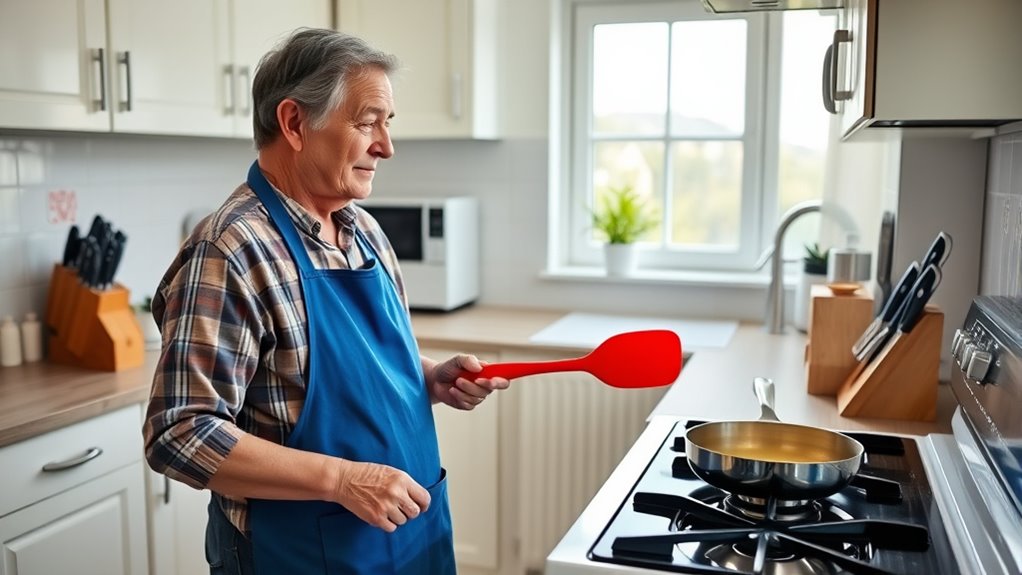

To guarantee kitchen safety for someone with cognitive impairment, keep the environment clutter-free and install safety devices like stove knob covers. Use clear labels and simple routines for tasks like turning off appliances. Regularly check for hazards and involve the person in safety practices. Employ visual cues and communicate safety steps clearly to build familiarity. Staying vigilant helps prevent accidents and promotes independence—keep exploring for more ways to create a safer kitchen environment.
Key Takeaways
- Keep the kitchen clutter-free and well-organized to prevent trips and falls.
- Use safety devices like stove knob covers and cabinet locks to reduce hazards.
- Install and regularly test smoke and carbon monoxide alarms for early detection.
- Store sharp objects and hot items out of reach to minimize injury risks.
- Implement visual cues and simple routines to guide safe kitchen use and emergency procedures.

Caring for someone with cognitive impairment requires special attention to kitchen safety, as daily tasks can become confusing or risky. One of the most critical aspects is medication management. When your loved one struggles with memory or understanding, they might forget if they’ve taken their medication or accidentally take too much. To prevent this, set up a simple, consistent routine. Use clear, labeled containers and keep medications in a designated, easy-to-find spot. Consider using a pill organizer with compartments for each dose and day. If possible, involve a healthcare professional to establish a safe medication schedule and review it regularly. Keep medications out of reach from the person you’re caring for to avoid accidental overdose or misuse. Regularly checking that prescriptions are current and clearly labeled helps prevent errors and confusion. Incorporating technology solutions such as medication reminder apps can further support adherence and safety.
Emergency preparedness is another essential component of kitchen safety. In case of fire, gas leaks, or other emergencies, you need a plan that your loved one can follow easily. Install smoke detectors and carbon monoxide alarms in key areas, especially the kitchen. Make sure everyone knows how to operate them and test them monthly. Keep a fire extinguisher nearby, and show your loved one how to use it safely, or ensure you’re the one ready to handle small fires. Prepare an emergency kit with essentials like bottled water, non-perishable snacks, a flashlight, and a phone charger. Keep important contact numbers visible near the phone, including emergency services, healthcare providers, and a trusted neighbor or friend. Practice emergency drills with your loved one so they understand what to do if a fire occurs or if they feel unwell. Simplify instructions as much as possible, and use visual cues to help them remember steps.
Throughout all of this, communication is key. Regularly review safety protocols with your loved one to reinforce understanding. Make safety measures part of your daily routine so they become second nature. This way, your loved one feels supported and secure, reducing anxiety and confusion. By managing medications carefully and preparing for emergencies, you create a safer environment that promotes independence while minimizing risks. Remember, your proactive approach not only protects their physical health but also helps maintain their dignity and sense of control. Being vigilant and prepared ensures that you’re ready to handle potential hazards swiftly, giving both of you peace of mind in the kitchen and beyond.

Safety 1st Child Proof Stove Knob Covers, Clear View Stove Knob Safety Covers (Set of 5)
CHILD PROOF DESIGN: These baby proofing stove knob covers that fit over your stove knobs are specifically created…
As an affiliate, we earn on qualifying purchases.
As an affiliate, we earn on qualifying purchases.
Frequently Asked Questions
How Can I Adapt Kitchen Tools for Someone With Cognitive Impairment?
You can adapt kitchen tools for someone with cognitive impairment by using adaptive utensils with easy-to-grip handles and built-in stabilizers. Incorporate visual cues like color-coded or clearly labeled items to help identify tools and ingredients quickly. These modifications simplify tasks, reduce frustration, and promote independence. By customizing utensils and adding visual cues, you make cooking safer and more manageable, encouraging confidence and skill development in the kitchen.
What Are Effective Ways to Teach Kitchen Safety to Cognitively Impaired Individuals?
You might think teaching kitchen safety is overwhelming, but using memory aids and step-by-step instructions simplifies it. Break tasks into small, manageable steps and use visual cues or labels to reinforce safety practices. Repetition helps solidify knowledge, and positive reinforcement encourages confidence. By consistently guiding them through each step, you make safety skills easier to remember and apply, reducing risks and promoting independence in the kitchen.
How Do I Handle Emergencies if a Cognitively Impaired Person Is in the Kitchen?
In emergencies with a cognitively impaired person in the kitchen, you act quickly by following established emergency protocols, like calling emergency services and providing first aid if needed. Conduct a risk assessment beforehand to identify hazards and guarantee safety measures are in place. Stay calm, speak clearly, and guide them away from danger. Your preparedness and quick response can prevent accidents and protect their well-being effectively.
Are There Specific Appliances Designed for Safer Use by Cognitively Impaired Individuals?
Think of smart appliances as gentle guardians in your kitchen, guiding your loved one safely. They’re designed with safety features like automatic shut-offs, simplified controls, and voice activation, making them easier and safer to use. These devices reduce risks and provide peace of mind, ensuring that your cognitively impaired loved one can participate in cooking with fewer hazards. Embrace smart appliances to create a safer, more manageable kitchen environment.
How Can I Involve Cognitively Impaired Family Members in Meal Preparation Safely?
You can involve your cognitively impaired family members in meal preparation safely by focusing on simple tasks and ensuring supervision. Incorporate family involvement by choosing easy, safe meal planning activities together, like washing vegetables or setting the table. Use adaptive tools and clear, step-by-step instructions to boost confidence. Keep the environment clutter-free, and always supervise closely to prevent accidents and encourage meaningful participation in the meal process.

Daviky Pill Organizer 4 Times a Day – Pill Box 7 Day, Large Weekly Medicine Pill Organizer for Travel with Removable Individual Containers, Pill Case to Hold Daily Vitamins, Supplements and Medication
Carry More but Portable – Overall 8''x 5''x 1.4'' and 4.8" x 1.2" x 1'' for each compartment,…
As an affiliate, we earn on qualifying purchases.
As an affiliate, we earn on qualifying purchases.
Conclusion
By taking these simple safety steps, you can prevent accidents and keep your loved ones safe in the kitchen. Remember, a little preparation goes a long way—it’s better to be safe than sorry. Stay vigilant, make adjustments as needed, and don’t let safety fall by the wayside. With patience and care, you can turn the kitchen into a secure space where everyone feels comfortable and confident. After all, an ounce of prevention is worth a pound of cure.

First Alert Combination Smoke & Carbon Monoxide Alarm, Battery Operated Detector with Test & Silence Button, SMICO100, 3-Pack
First Alert's Precision Detection advanced sensing technology complies with new industry standards to reduce cooking nuisance alarms and…
As an affiliate, we earn on qualifying purchases.
As an affiliate, we earn on qualifying purchases.

Kidde Fire Extinguisher for Kitchen, Residential, Single-Use, 711A
Reliable Fire Protection: Stop tough grease fires
As an affiliate, we earn on qualifying purchases.
As an affiliate, we earn on qualifying purchases.