
To reduce noise and stress at home, focus on soundproofing your space by sealing gaps, adding heavy curtains, rugs, and acoustic panels to absorb sound. Combine this with scent calming methods like lavender diffusers or candles to create a soothing atmosphere. Keep the environment uncluttered with calming colors and soft lighting, and regularly maintain these strategies. If you want to discover more ways to craft a peaceful sanctuary, continue exploring how to best tailor your home environment.

Turn quiet afternoons into listening time
- Thousands of audiobooks, podcasts and originals
- Listen on your phone, tablet or Echo — also offline
- Cancel anytime
Key Takeaways
- Implement soundproofing techniques like sealing gaps and adding acoustic panels to minimize external noise.
- Use calming scents such as lavender or chamomile through diffusers or candles to promote relaxation.
- Incorporate soft furnishings, rugs, and curtains to absorb sound and create a cozy atmosphere.
- Choose calming colors and soft lighting to reduce visual stress and enhance tranquility.
- Combine soundproofing and scent calming methods to establish a peaceful, stress-reducing home environment.
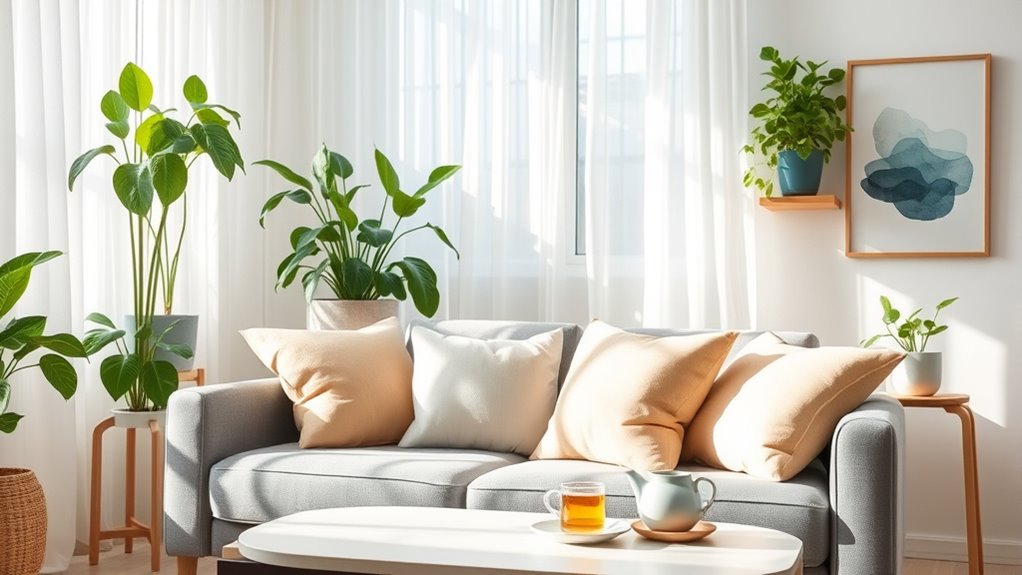
Creating a calming home environment begins with intentionally designing your space to promote relaxation and peace. One of the most effective ways to reduce noise and create a serene atmosphere is by employing soundproofing techniques. You can start by sealing gaps around windows and doors to block out external sounds. Adding heavy curtains or acoustic panels absorbs sound waves, preventing noise from traveling through walls and windows. If your home is near busy streets or noisy neighbors, consider installing weatherstripping or door sweeps for added insulation. Using rugs and soft furnishings also dampens sound, making your rooms quieter and more soothing. These soundproofing methods don’t require major renovations but can make a significant difference in lowering ambient noise levels, helping you feel more relaxed in your daily environment. Additionally, choosing appropriate materials for your soundproofing efforts can further enhance their effectiveness and durability.
Alongside soundproofing, scent calming methods play a vital role in fostering tranquility. Aromatherapy is a powerful tool to influence your mood and create a peaceful space. Light a lavender or chamomile diffuser, or place scented candles around your home. These fragrances are known for their calming properties, helping to reduce stress and promote restful sleep. You can also incorporate scent calming methods by simmering herbs like rosemary or mint on the stove, releasing natural aromas that lift your spirits and clear your mind. Using essential oils in a diffuser allows you to control the intensity of the scent, creating a subtle, continuous calming effect. When combined with soundproofing techniques, these scent calming methods help establish an environment that engages your senses gently, making your home a sanctuary from daily stressors.
Creating a calming home environment isn’t just about blocking out noise or adding pleasant smells; it’s about designing a space that nurtures your well-being. Keep clutter to a minimum to avoid visual chaos that can add to your stress. Incorporate calming colors like soft blues or earth tones on your walls and furnishings to evoke a sense of tranquility. Soft lighting, such as warm lamps or dimmable fixtures, complements your soundproofing and scent strategies by creating an inviting atmosphere. Regularly maintaining your chosen scent calming methods, like changing diffuser oils or replacing candles, ensures consistency in your calming routine. Remember, the goal is to craft a space that signals safety and relaxation at every turn. By combining effective soundproofing techniques with scent calming methods, you set the stage for a peaceful environment where stress melts away, and you can truly unwind.
As an affiliate, we earn on qualifying purchases.
Frequently Asked Questions
How Can I Minimize Noise From Neighbors Effectively?
You can minimize noise from neighbors effectively by soundproofing your windows with double-glazed panes or window inserts to block out sound. Additionally, use noise-canceling devices like white noise machines or earplugs to create a quieter environment. Combining these methods helps reduce external noise, making your home more peaceful. Regularly check and maintain these solutions to make certain they continue to work efficiently, enhancing your overall comfort.
Are There Specific Plants That Help Reduce Stress at Home?
Certain indoor plants, like lavender, snake plants, and peace lilies, are great stress reducing foliage that can help you feel calmer at home. These plants not only improve indoor air quality but also offer calming benefits through their soothing appearance and aroma. Incorporating these stress reducing foliage into your space can create a more peaceful environment, helping you relax and unwind after a busy day.
What Are Quick Fixes for Noisy Appliances?
Think of noisy appliances as unwelcome guests overstaying their welcome. To quiet them quickly, try soundproofing techniques like placing foam pads or mats under appliances, sealing gaps around doors and vents, and using fabric covers. Also, rearrange appliance placement, keeping noisy devices away from bedrooms and common areas. These simple steps can instantly soften disruptive sounds, turning your home into a peaceful retreat where tranquility reigns.
Can Certain Colors Promote Calmness in a Room?
Yes, certain colors can promote calmness in a room. Using color psychology and color therapy principles, you can choose soft shades like blues, greens, and lavenders to create a soothing atmosphere. These colors are known to reduce stress and foster relaxation. Incorporate them into walls, furnishings, or decor to help you feel more peaceful and centered, turning your space into a calming retreat.
How Does Lighting Influence Relaxation and Stress Levels?
Lighting influences relaxation and stress levels by setting the right lighting ambiance. You’ll feel more at ease with soft, warm lights that mimic natural light, which helps your body relax. Natural light during the day boosts your mood and reduces stress, so try to open curtains or use daylight bulbs. Avoid harsh, bright lights at night, as they can disrupt your sleep and increase anxiety.
Conclusion
By implementing these tips, you can transform your home into a peaceful sanctuary. Reducing noise and stress creates a space where you can truly relax and recharge. Remember, a calm environment is the foundation for a happy, healthy life. Think of it as tending to a garden—you must nurture it regularly to see it flourish. With patience and effort, your home will become a haven that feels just right whenever you walk through the door.
Columbus Day / Indigenous Peoples' Day Picks
long weekend sales
As an affiliate, we earn on qualifying purchases.