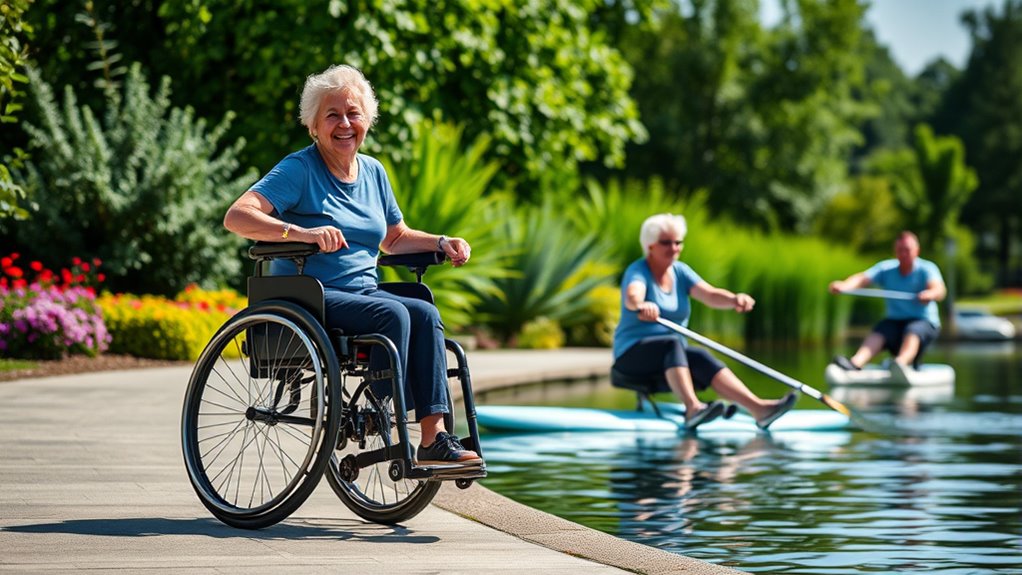

If you have limited mobility, adaptive sports and recreation can help you stay active and socially engaged. Options like inclusive recreation programs are designed specifically for seniors, offering activities that promote physical well-being and independence. Virtual coaching makes exercising at home easy and personalized, while wheelchair basketball provides a fun way to build strength and camaraderie. Keep exploring to discover more ways to enjoy active, fulfilling lifestyles tailored for you.
Key Takeaways
- Inclusive recreation programs tailor activities to seniors’ abilities, promoting physical health and social engagement in accessible environments.
- Virtual coaching offers personalized, flexible exercise options that reduce mobility barriers and foster consistent participation.
- Adaptive sports like wheelchair basketball enhance strength, coordination, and social interaction for seniors with limited mobility.
- Community-based adaptive sports provide opportunities for seniors to stay active, build camaraderie, and improve overall well-being.
- Combining accessible recreation and adaptive sports supports independence and active lifestyles for seniors with mobility challenges.
Have you ever wondered how seniors can stay active and enjoy the benefits of recreation? The good news is that there are many inclusive options designed specifically for people with limited mobility. One exciting development is the availability of virtual coaching, which allows you to participate in guided exercise programs from the comfort of your home. With virtual coaching, you can receive personalized instructions tailored to your abilities, making it easier to stay motivated and consistent. This approach also offers flexibility—you can schedule sessions around your daily routine and avoid the barriers of transportation or mobility challenges. Many programs include interactive features, so you can ask questions, get real-time feedback, and feel connected to a community of peers who share your interests. This digital approach makes staying active more accessible and less intimidating, especially if you’re new to exercise or have specific health concerns.
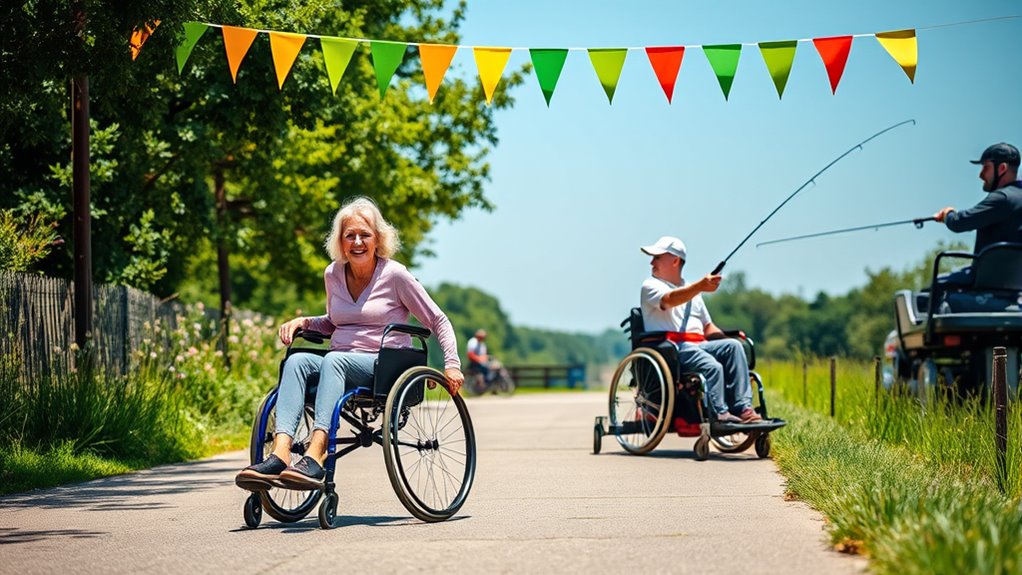
Another fantastic option for seniors with limited mobility is wheelchair basketball. This adaptive sport transforms traditional basketball into a dynamic, inclusive activity that promotes physical activity, social interaction, and a sense of achievement. Whether you’re a seasoned athlete or trying it out for the first time, wheelchair basketball provides an excellent workout while fostering camaraderie among participants. The sport is adaptable to various skill levels and physical capabilities, emphasizing teamwork and strategy over physical strength alone. Participating in wheelchair basketball can boost your confidence, improve upper body strength, and enhance coordination. Many local communities and recreation centers now offer wheelchair basketball leagues or pickup games, making it easier to get involved regardless of your location or mobility level. Even if you’re new to the sport, it’s welcoming and designed to accommodate different needs.
Both virtual coaching and wheelchair basketball exemplify how adaptive sports and recreation are evolving to support seniors with limited mobility. These options are not only about physical activity—they also promote mental well-being by providing opportunities for socialization and a sense of purpose. The key is to find activities that excite you and fit your lifestyle. Whether you prefer participating from home through virtual coaching or joining a local wheelchair basketball team, these options help you stay active, engaged, and healthy. Additionally, home security systems can be tailored to provide peace of mind and safety for seniors engaging in outdoor activities or living independently. Remember, age and mobility limitations shouldn’t hold you back from enjoying the many benefits that recreation offers. With the right tools and support, you can continue to lead an active, fulfilling life well into your senior years.
adaptive exercise equipment for seniors
As an affiliate, we earn on qualifying purchases.
As an affiliate, we earn on qualifying purchases.
Frequently Asked Questions
Are Adaptive Sports Suitable for Seniors With Severe Mobility Impairments?
Yes, adaptive sports are suitable for seniors with severe mobility impairments. With the help of assistive technology, you can participate safely and comfortably. These activities promote social engagement, helping you stay connected with others and boost your mental well-being. Adaptive sports are designed to accommodate various abilities, empowering you to enjoy physical activity and maintain an active lifestyle despite mobility challenges.
What Funding Options Are Available for Adaptive Sports Programs?
You can access funding for adaptive sports programs through grant opportunities offered by organizations like the National Recreation and Park Association. For example, a community partnership with a local hospital might secure a grant to provide inclusive activities. These collaborations help offset costs and expand access, making it easier for seniors with limited mobility to participate. Reach out to local agencies and explore available grants to support your adaptive sports initiatives.
How Can I Find Local Adaptive Sports Clubs for Seniors?
You can find local adaptive sports clubs for seniors by checking community centers in your area, as they often host or promote these programs. Additionally, explore online resources like local government websites, adaptive sports organizations, and social media groups dedicated to senior recreation. These platforms provide updated information on nearby clubs, activities, and schedules, making it easier for you to get involved and stay active with adaptive sports tailored for seniors.
Are Adaptive Sports Safe for Seniors With Chronic Health Conditions?
Think of adaptive sports as a well-balanced dance with careful steps. You’re safer when you conduct a thorough risk assessment and get medical clearance from your healthcare provider. While adaptive sports are generally safe, especially with proper supervision and modifications, it is crucial to listen to your body and communicate any concerns. With these precautions, you can enjoy the benefits while minimizing risks.
What Equipment Is Needed for Adaptive Sports Activities?
You’ll need assistive devices like braces, canes, or wheelchairs to participate safely. Adaptive clothing makes movements easier and guarantees comfort during activities. Depending on the sport, you might also use specialized equipment like adapted paddles, handcycles, or sport-specific prosthetics. Always check with your activity coordinator or therapist to make sure you have the right gear, and remember, proper equipment helps improve safety and enjoyment while participating.
Conclusion
Embracing adaptive sports and recreation can truly transform your life, proving that age or mobility limitations are no match for your spirit. With every new activity, you open boundless joy and strength you never thought possible—it’s like discovering a new world where you’re unstoppable. Don’t let anything hold you back; your journey to vibrant, active living begins today. Embrace these opportunities and show the world that your zest for life knows no limits!