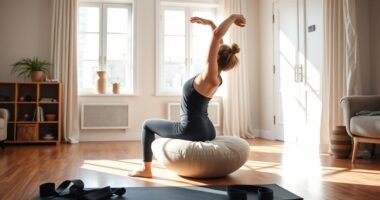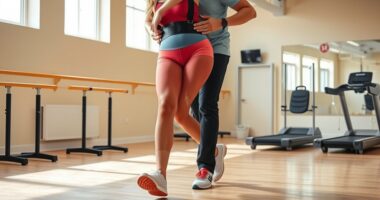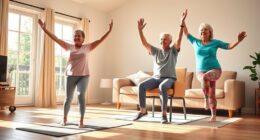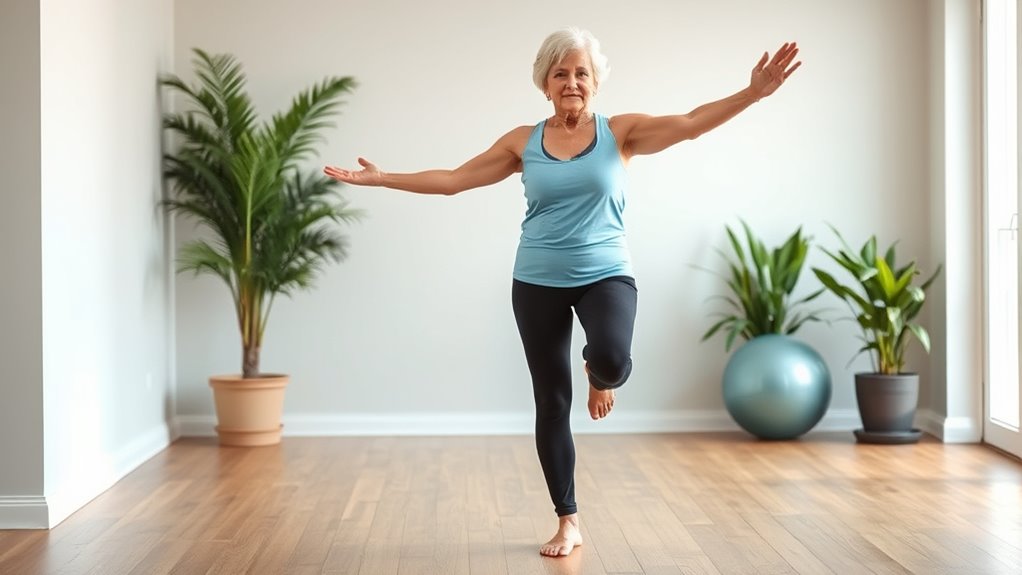

To improve your stability and prevent falls, focus on simple balance exercises like ankle circles, heel-to-toe walks, and standing on one foot. Incorporate ankle strengthening and eye-focused activities to boost both support and visual awareness. Use sturdy supports like chairs or walls for safety and start with easy routines, gradually increasing difficulty. Staying consistent and attentive to safety helps you build confidence and stability—keep going to learn more effective ways to stay steady.
Key Takeaways
- Incorporate ankle strengthening exercises like heel-to-toe walks and ankle circles to enhance stability.
- Practice standing on one foot with support to improve balance and proprioception.
- Combine visual focus exercises with balance drills to boost spatial awareness and coordination.
- Use sturdy supports, such as chairs or walls, during exercises for safety and fall prevention.
- Dedicate daily time to balance routines, gradually increasing difficulty for sustained improvement.
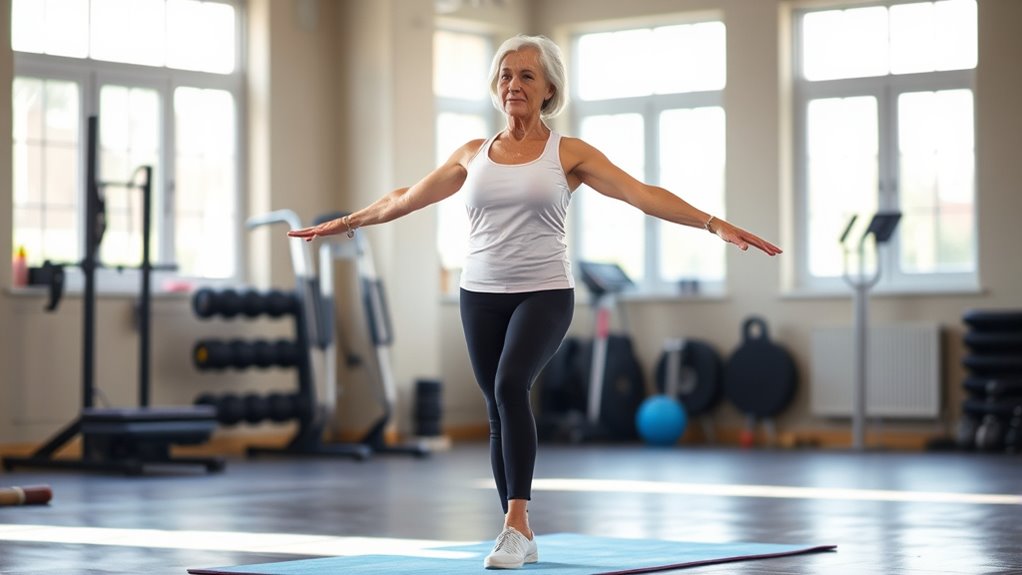
Maintaining good balance is vital for seniors to stay safe and independent. As you age, your body becomes more susceptible to falls, which can lead to serious injuries. Incorporating balance exercises into your routine can considerably reduce this risk. One effective way to improve your stability is by focusing on ankle strengthening. Your ankles play a fundamental role in maintaining balance, especially when standing or walking. Simple exercises like ankle circles, heel-to-toe walks, or standing on one foot can strengthen these muscles, enhancing your ability to respond quickly to uneven surfaces or sudden shifts in your position. Stronger ankles provide better support and help prevent wobbling or falling, making everyday activities safer and more manageable. Using a total-cost clarity approach when choosing exercise tools or supports can help you stay consistent and motivated in your routine.
Alongside ankle strengthening, vision enhancement is a key component in maintaining good balance. As you age, vision often declines, affecting depth perception and awareness of your surroundings. Improving your visual acuity can make a noticeable difference in your stability. Regular eye checkups ensure your prescriptions are up to date, and wearing appropriate glasses can sharpen your vision. Additionally, working on your visual focus—such as practicing eye exercises—can improve your ability to quickly gauge distances and detect obstacles. This heightened awareness allows you to adjust your movements more effectively, reducing the likelihood of missteps. When combined with physical exercises, enhanced vision creates a more thorough approach to balance improvement.
Incorporating balance exercises that target both ankle strength and vision can be simple yet highly effective. For example, practicing standing on one foot while focusing on a fixed point can sharpen your visual focus and challenge your ankle stability simultaneously. As you get better, try closing your eyes briefly during these exercises to further engage your proprioception—the sense of your body’s position in space—while still being cautious. Always ensure you have a sturdy support nearby, such as a chair or wall, to hold onto if needed. Consistency is key; dedicating a few minutes daily to these exercises can lead to noticeable improvements over time.

5-Minute Balance Exercises for Seniors: The Illustrated Guide to Fall Prevention with Simple Home Exercises to Improve Balance and Posture & Never Fear Falling Again + 30-Day Workout Plan!
As an affiliate, we earn on qualifying purchases.
As an affiliate, we earn on qualifying purchases.
Frequently Asked Questions
When Should Seniors Start Balance Exercises?
You should start balance exercises as soon as your fall risk assessment indicates it’s beneficial, typically around age 60 or earlier if you have concerns. Incorporate age-appropriate activities tailored to your ability level, and consult with your healthcare provider to guarantee safety. Starting early helps improve stability, reduce fall risk, and maintain independence. Regular practice makes these exercises more effective and easier to integrate into your daily routine.
Can Balance Exercises Be Done Daily?
Yes, you can do balance exercises daily, and many experts recommend incorporating them into your daily routine for best results. Consistent exercise frequency helps improve stability and reduces fall risk. You might start with a few minutes each day and gradually increase the duration as your strength and balance improve. Just listen to your body and avoid overexertion, ensuring safe and effective progress over time.
Are There Any Risks Involved With Balance Exercises?
Yes, there are some risks involved with balance exercises, but you can mitigate them through proper risk assessment and injury prevention strategies. Always start slowly, use a sturdy support, and avoid risky movements. Consulting a healthcare professional before beginning new exercises helps identify individual risks. Paying attention to your body’s signals and stopping if you feel pain or dizziness also ensures you stay safe while improving your stability.
How Long Does It Take to See Improvements?
You can typically see improvements within 4 to 6 weeks of regular balance exercises, but timing expectations vary based on your consistency and starting fitness level. Progress indicators include increased stability, better coordination, and reduced fall risk. Keep practicing consistently, and you’ll notice your balance becoming steadier over time. Remember, patience and persistence are key to achieving lasting benefits from your exercises.
Can Balance Exercises Replace Other Fall Prevention Strategies?
Balance exercises alone can’t fully replace other fall prevention strategies. They work best when combined with complementary therapies like strength training and environmental modifications, such as removing trip hazards and installing grab bars. You should adopt a thorough approach, integrating these strategies to effectively reduce fall risk. Regularly practicing balance exercises enhances stability, but addressing environmental factors and other therapies ensures better safety and fall prevention in your daily life.
Conclusion
By practicing these balance exercises, you’re planting strong roots that keep you steady against life’s gusts. Think of your stability as a blossoming tree, growing taller and more resilient with each step. Embrace these movements like a gentle breeze guiding you toward safety and confidence. With consistent effort, you’ll turn the winds of uncertainty into a calm, steady harbor—ensuring your golden years stay vibrant, secure, and full of grace.